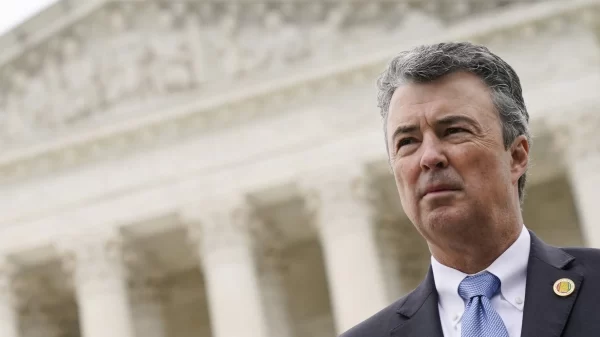









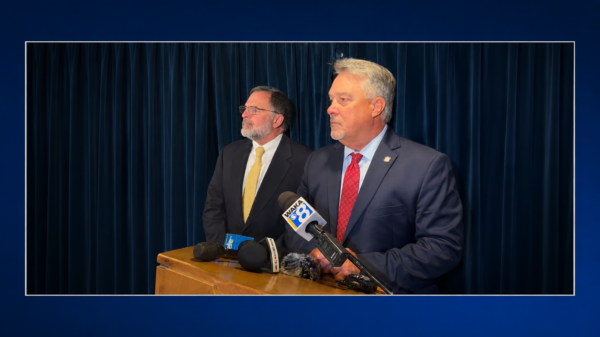
















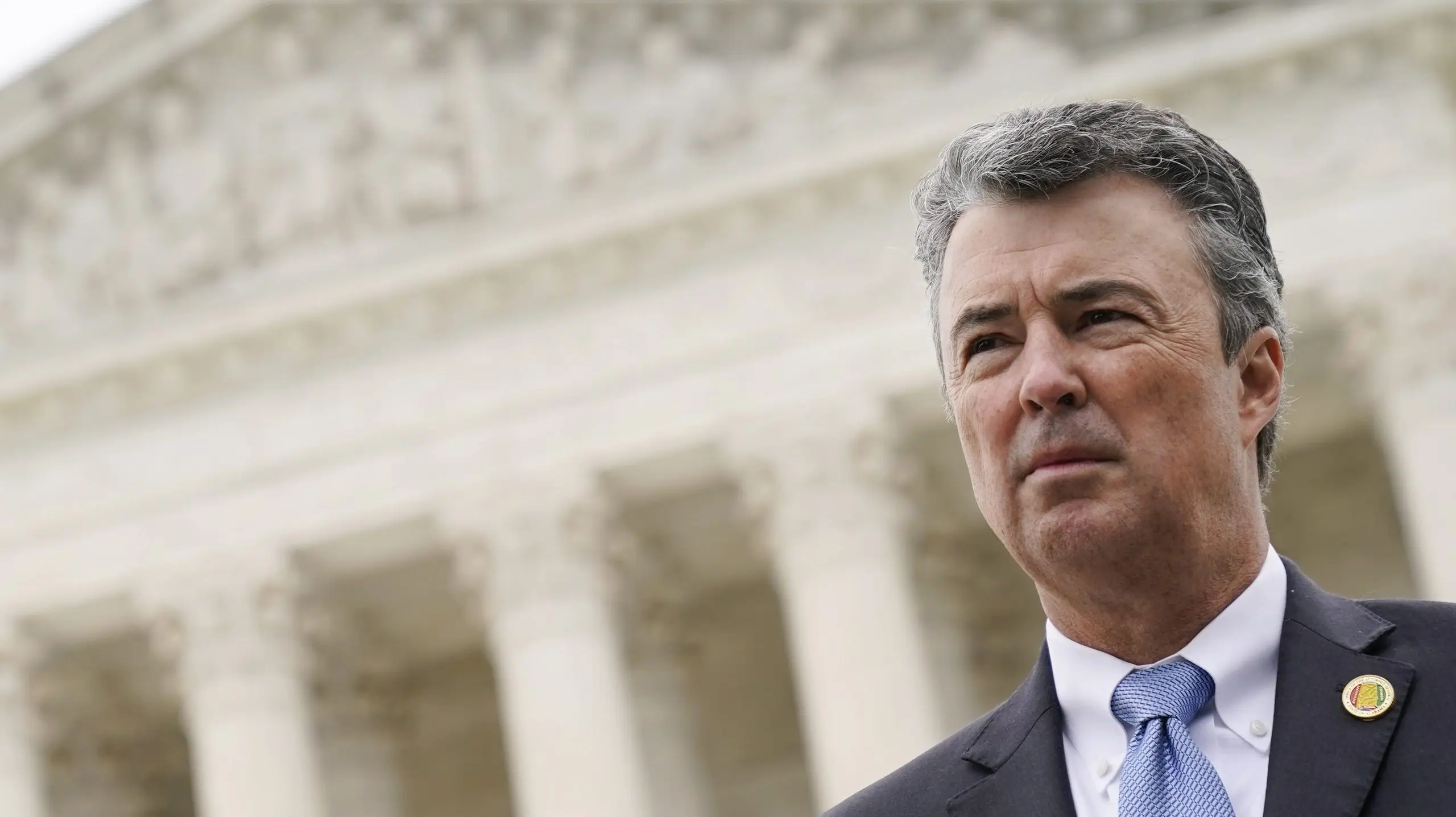
Alabama Attorney General Steve Marshall on Monday defended coach-led prayers on Auburn University’s men’s baseball team and Christian imagery on some new team uniforms.
Marshall sent a letter to the Freedom From Religion Foundation, a nonprofit that earlier this month criticized the university for allowing men’s baseball coach Butch Thompson to lead the team in prayer before practices and games and for adopting new uniforms featuring Christian imagery.
Current team practice uniforms feature the phrase “Jesus Won” on the front and a Christian cross on the back.
Former Auburn outfielder Mason Maners also serves as the team’s chaplain, a position Marshall’s office said includes “offering Bible studies and praying with the team.”
FFRF demanded that Auburn “stop suffusing its men’s baseball program with religion,” a request the organization said was prompted by a complaint from “a concerned Auburn University family member.”
Marshall, in his response to FFRF, said he advised the university “not to assent” to the organization’s calls to “investigate and take action” in response to religious activities among members of the baseball program.
“Freedom From Religion’s latest crusade is a swing and a miss. Coaches and athletes don’t lose their religious rights just because they attend a public school,” Marshall said in a written statement released Monday.
“The Supreme Court has been clear that the days of censoring employees and students to remove religion from public view are over,” Marshall continued. “Auburn—and all Alabama schools—should know that the Attorney General’s Office will stand with them in protecting the religious liberties of their employees and students. Do not surrender.”
On June 11, FFRF sent a letter to Auburn legal counsel Jaime S. Hammer arguing that the team’s use of Christian imagery and participation in teamwide prayers violated the Establishment Clause of the U.S. Constitution.
Marshall’s response criticized FFRF’s citation of Establishment Clause cases decided before the U.S. Supreme Court’s rejection of the Lemon test, a long-standing principle used in separation of church and state cases that came from the court’s 1971 ruling in Lemon v. Kurtzman.
The test established a three-pronged approach to Establishment Clause cases, holding that a government action must have a legitimate secular purpose, that its primary effect must neither advance nor inhibit religion and that it must not foster “excessive government entanglement” with religion.
The Supreme Court rejected the Lemon test in its 2022 ruling in Kennedy v. Bremerton School District, holding that Establishment Clause cases should be evaluated by “reference to historical practices and understandings.”
Kennedy was brought by Joseph A. Kennedy, a former assistant football coach, against the Bremerton School District after the district placed him on leave for kneeling and offering a brief prayer after games.
Both Marshall and FFRF cited Kennedy in their letters about the Auburn team’s religious activities. FFRF argued that the facts in Kennedy differ from the men’s baseball team’s religious practices, while Marshall argued that the new Establishment Clause standards set by the ruling do not prohibit the team’s conduct.
“It is important to note that this situation is readily distinguishable from the Supreme Court’s ruling in Kennedy v. Bremerton School District,” FFRF wrote. “In Bremerton, the Court held that a high school football coach’s quiet, private post-game prayer was constitutional.”
“University employees are free to pray privately or to worship on their own time in their own way,” the organization continued. “Entangling the university’s sports teams with Christianity needlessly marginalizes students and players who are part of the nearly one in three Americans who now identify as religiously unaffiliated.”
Marshall, meanwhile, cited the Supreme Court’s 2014 ruling in Town of Greece v. Galloway, a case referenced in the Kennedy majority opinion in which the court ruled in favor of a New York town’s practice of opening board meetings with predominantly Christian prayer.
Marshall also pointed to Shurtleff v. City of Boston, another case cited in Kennedy, in which the Supreme Court unanimously ruled that Boston violated a private organization’s First Amendment rights by denying its application to temporarily fly a “Christian flag” at Boston City Hall.
“The Supreme Court has offered several ways to measure state action against the Nation’s historical tradition,” Marshall wrote. “Your vague fear that prayer might ‘marginalize’ the religiously unaffiliated is not one of them.”
Marshall asked FFRF to withdraw its letter to Auburn’s legal counsel.
While Marshall’s office claimed FFRF “threatened to sue” Auburn, the foundation’s letter does not reference potential legal action over its complaints regarding the men’s baseball team.
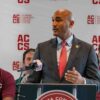
Marshall’s pushback against FFRF’s criticism of religious practices on the men’s baseball team follows similar condemnations of the foundation last week from prominent Alabama Republicans.
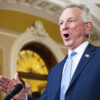
Responding to FFRF’s request that Auburn investigate religious activity in athletics, U.S. Senator Tommy Tuberville, R-Alabama, criticized the organization and alleged FFRF “hates God and America.”
In its response to Tuberville’s comments, FFRF accused him of displaying “a fundamental misunderstanding of both the Constitution and FFRF’s mission.”
Alabama Lieutenant Governor Will Ainsworth, whom FFRF criticized in 2019 for using his office to promote religion, also released a statement last week responding to the foundation’s letter to Auburn.
“I encourage all Alabamians to join me in praying that the foundation’s members will one day find God’s grace,” Ainsworth said.