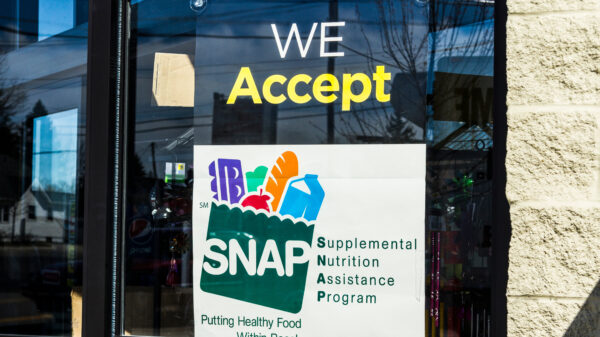























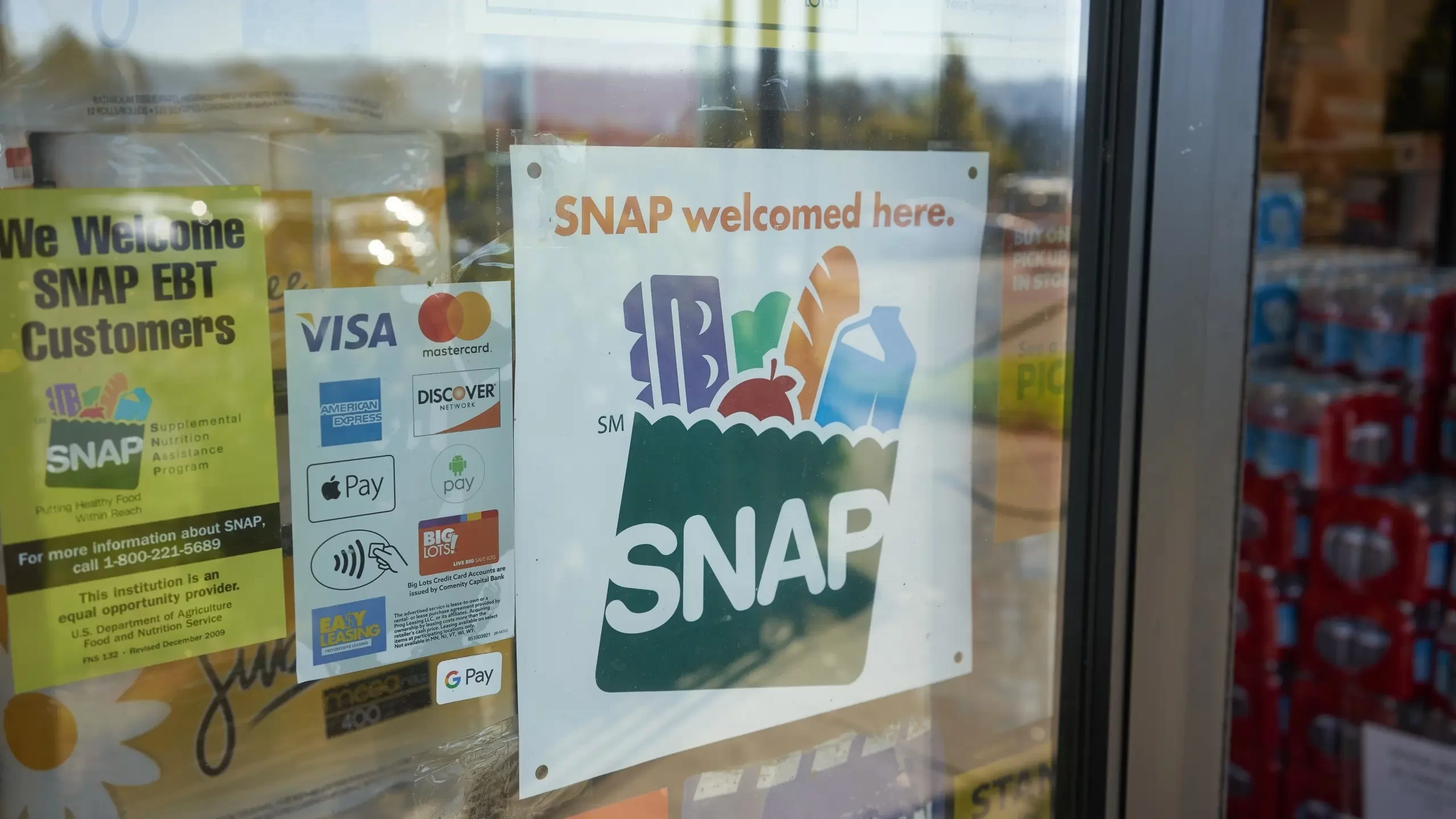
A new report from the Center on Budget and Policy Priorities found that 81,800 Alabamians lost Supplemental Nutrition Assistance Program benefits since last year.
Monthly SNAP enrollment fell 11 percent from July 2025 to May 2026. Enrollment among children fell 7 percent during the same period, with 23,300 fewer Alabama children enrolled.
The decline follows the implementation of expanded SNAP work requirements and cost-sharing requirements under last year’s One Big Beautiful Bill Act.
The law expanded work requirements to older adults and eliminated exemptions for veterans, people experiencing homelessness and young adults who recently left foster care. Previously, work requirements did not apply to people 54 or older or adults with dependents younger than 18.
Beginning in October 2027, the law will require states with SNAP payment error rates above 6 percent to contribute to the program’s operating costs.
During a Wednesday press call, nonprofit leaders highlighted the Center on Budget and Policy Priorities report and called on Congress to reverse or delay the SNAP cost-sharing requirements.
The webinar featured representatives from the American Academy of Pediatrics and Invest in Louisiana. Advocates urged Congress to delay the cost-sharing deadline or reverse the requirement to prevent states from taking on additional costs that could further destabilize SNAP.
Ty Jones Cox, vice president for food assistance at the Center on Budget and Policy Priorities, said new employment reporting requirements and states’ efforts to reduce error rates are driving the 2026 decline in SNAP enrollment.
“People need food assistance today just as much as they did a year ago,” Cox said. “And they’re simply being cut off from assistance as states scramble to limit their exposure to the massive new cuts they face.”
“States are working hard to reduce their error rate, but they’re up against the wall,” Cox added. “The law didn’t give them any time or resources to do so. So that creates an enormous incentive for states to slash their error rate by any means necessary, and that’s what we’re seeing—more paperwork, shorter certification, more red tape, even if it means eligible families lose benefits they’re entitled to when they can’t get through these bureaucratic obstacles.”
Nationwide, about 4.5 million people, including 1.5 million children, have left SNAP enrollment since last July.
Cox said both her organization and the Congressional Budget Office underestimated the law’s effect on SNAP enrollment. The CBO projected last August that the One Big Beautiful Bill Act would reduce monthly participation by 2.4 million people.
The upcoming cost-sharing requirements pose a threat to SNAP in Alabama. The state could need more than $170 million in additional funding next year unless it lowers its SNAP payment error rate below 6 percent. Alabama’s 2025 error rate was 9.5 percent, up from 8.32 percent in 2024.
During a January budget presentation to Alabama legislators, Legislative Services Agency Deputy Director Kirk Fulford said the state does not have enough money to cover the potential funding shortfall.
“We don’t have $174 million,” Fulford said.
The cost-sharing burden Fulford cited would exceed the Alabama Department of Human Resources’ entire 2026 budget by more than $20 million. The department administers SNAP.
The One Big Beautiful Bill Act enacted work-reporting and cost-sharing requirements to reduce fraud. But Dr. Andrew Racine, president of the American Academy of Pediatrics, said most SNAP payment errors result from administrative or filing mistakes rather than intentional fraud. Error rates also include both overpayments and underpayments.
“The overwhelming amount of errors are deemed mistakes. Sometimes by the agency, sometimes by the family,” Racine said.
“When you see this large decline in the number of people getting benefits, we know, from the quality control system that is in place in SNAP, that most of the errors are not about ineligible people getting benefits, but are about people getting the wrong amount of benefits, sometimes too much, and sometimes too low,” he said.
In an interview after Wednesday’s press briefing, LaTrell Clifford Wood, hunger policy director for Alabama Arise, said the U.S. Department of Agriculture estimates each SNAP dollar generates $1.50 to $2 in economic activity.
Wood said limiting Alabamians’ ability to use SNAP to purchase food would threaten both enrolled families and the state economy. She said Alabama grocers, which have already expressed concerns about reduced income from SNAP beneficiaries, may have to raise prices to remain open.
“That’s why I make the economic case for SNAP, just as much as the moral case. Because we could see the loss of retailers who maybe cannot sustain their business,” she said. “That will decrease food access for everybody in a state where we are struggling with transportation, we are struggling with infant and maternal health. Access to food is essential to our public health as a whole.”
Wood urged Alabamians to consider how the One Big Beautiful Bill Act’s SNAP changes could affect affordability.
“As the One Big Beautiful Bill continues to punish working families and reward billionaires by virtue of class alone, I really think we need to be asking ourselves as Alabamians, as we’re moving into election season, what these things mean and what our lawmakers are doing to ensure that we can live affordable lives,” Wood said.
Racine said reduced SNAP access could also harm children’s educational and health outcomes. One in five U.S. households with children is food insecure, he said.
“A hungry child cannot concentrate as well in school. They simply have other things on their mind,” Racine said. “As a consequence, they don’t oftentimes perform as they might otherwise do in school, and they will fall behind. A hungry child doesn’t have the energy resources to go out and play the way they should with their peers, and that has consequences for long-term health.”
Racine urged Congress to reverse or delay the plan to shift SNAP administrative costs to states, saying the cost-sharing deadline unnecessarily risks American children’s health.
“To the extent that we are making policy decisions today, about foregoing the opportunity to feed hungry children, we are having consequences that will haunt us going forward a generation from now,” he said. “It’s entirely avoidable.”
Racine said food insecurity could worsen significantly if states cannot meet cost-sharing requirements and leave SNAP.
“That is the worst possible outcome for children,” he said.
On Monday, a national coalition of more than 200 mayors sent a letter urging the Senate Agriculture Committee to delay cost-sharing requirements through the next Farm Bill “or any related agricultural relief legislation.”
Irondale Mayor James Stewart Jr., Montgomery Mayor Steven Reed and Tuscaloosa Mayor Walter Maddox endorsed the request.