
















Arnold Powell traveled from Fayetteville, Georgia, to Montgomery for the weekend to tour the city and its civil rights history.
He didn’t know Saturday morning that he would stumble upon more history in the making, as Democratic members of Congress prepared to speak out against Republican plans to revert to maps that dilute the power of Black voters.
“I’m glad I’m here because I saw something this morning, and I want to say it,” Powell said, choking back tears. “We are brawling for our vote, just like they did on the Riverfront. We’re brawling for our vote, and we’re going to fight until we get it.”
Thousands of others also traveled to Montgomery on Saturday to rally for Black voting rights, although most came well aware of the planned “All Roads Lead to the South” rally at the state Capitol. The rally included speakers from the Alabama Legislature and top Democratic members of Congress, including U.S. Representative Alexandria Ocasio-Cortez and U.S. Senator Cory Booker.

Representative Alexandria Ocasio-Cortez speaks at a rally in Montgomery, Alabama. (Jacob Holmes/APR)
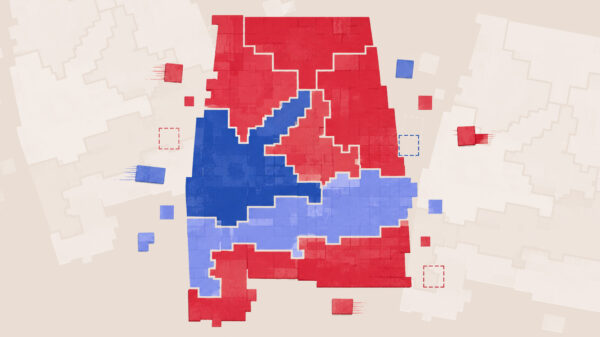
Organizers said the rally marked the beginning of a movement in response to redistricting taking place across the country, but specifically in the South, where new district lines are cutting through Black populations to divide the Black vote in hopes of increasing the number of Republican seats in the U.S. House of Representatives.
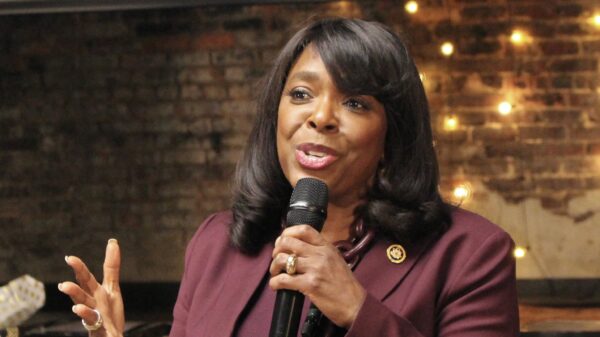
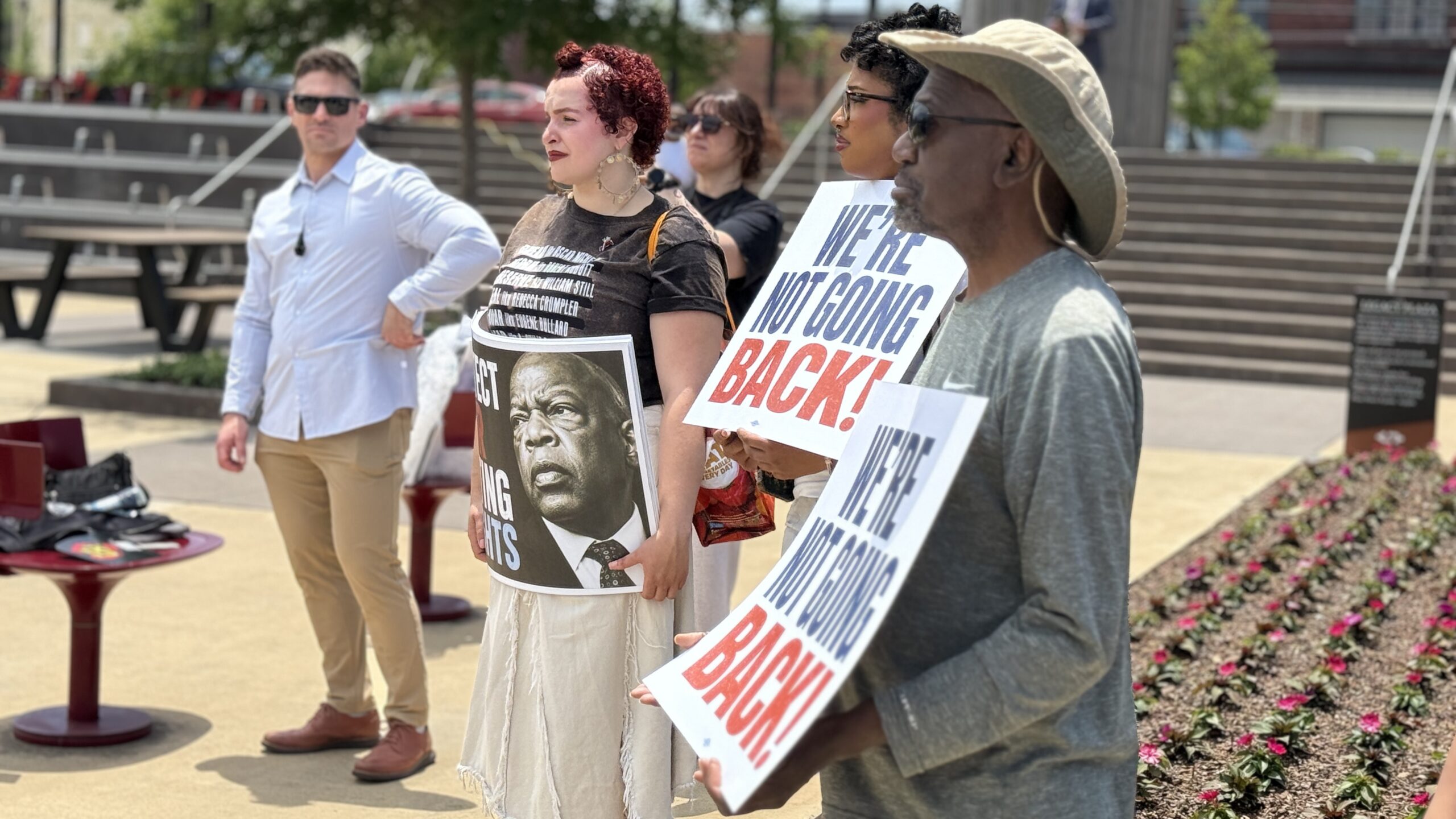
While organizers prepared the major rally a few blocks away at the Capitol, U.S. Representative Terri Sewell of Alabama led a news conference at Legacy Plaza at the statue of John Lewis, tying Saturday’s historic gathering to the civil rights icon and the movement of the 1960s.
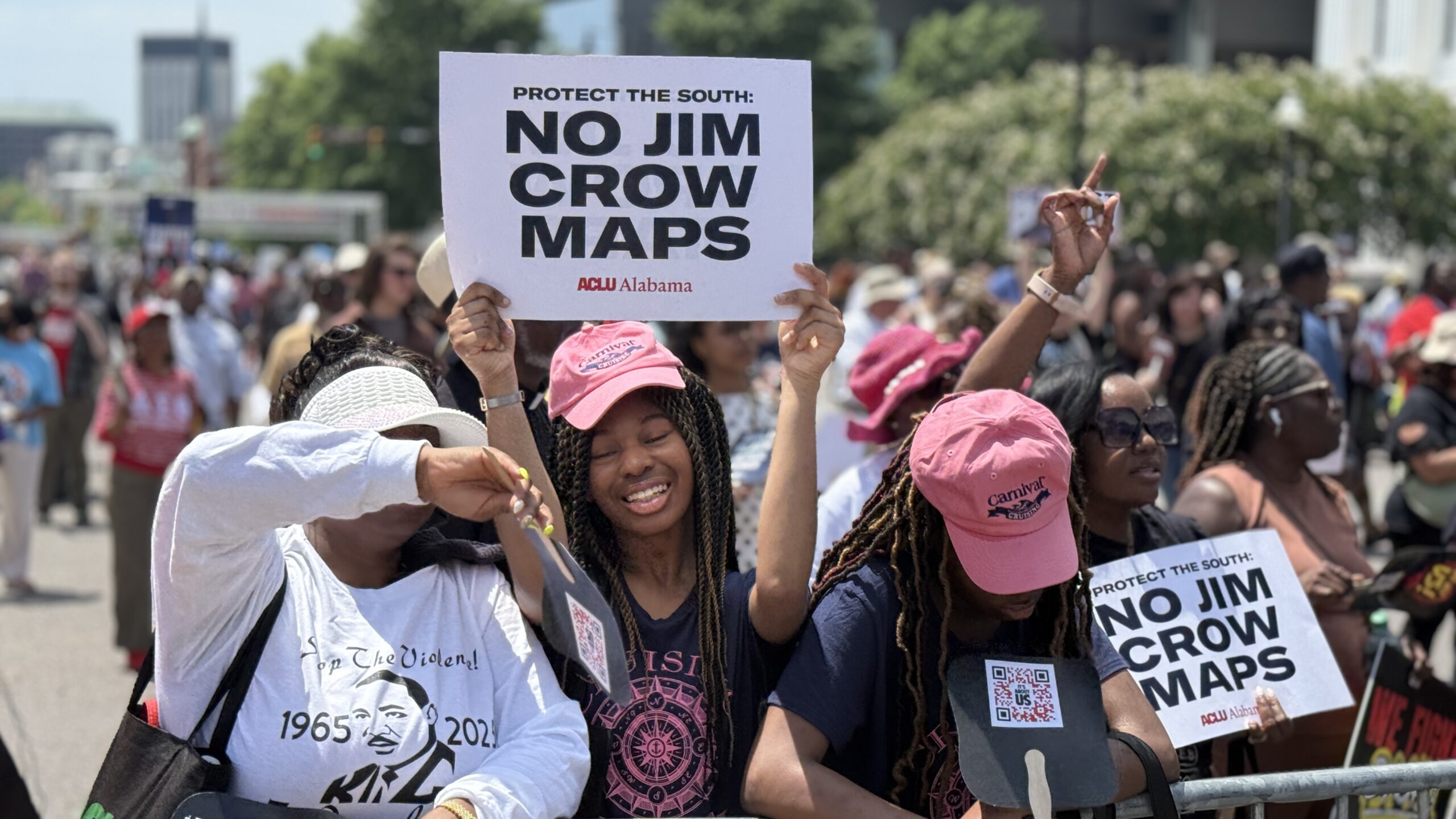
A demonstrator holds up a sign at the “All Roads Lead to the South” event in Montgomery on May 16, 2026. (Jacob Holmes/APR)
“Every gain in the battle for civil rights has come because of ordinary people organizing, mobilizing, marching, praying and demanding that this nation live up to its highest ideals of democracy, justice and equality—and that is exactly why we’re here today,” Sewell said, surrounded by 15 Democratic lawmakers from nine other states. “We are gathered at a moment of great consequence across the South and across America. We are witnessing a coordinated attack on Black political power and representation.”
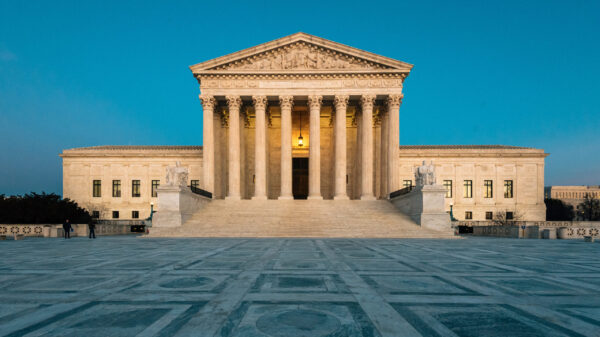
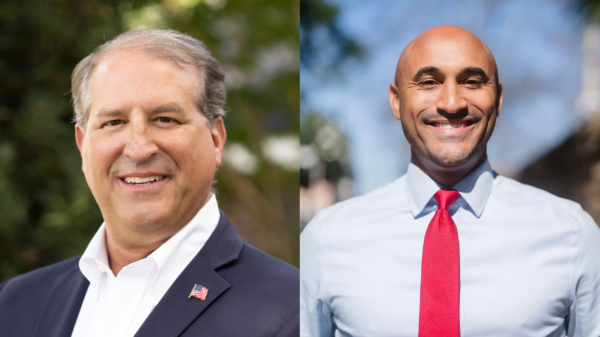
Until last week, Black voters in Alabama had been winning the fight against maps that a federal court had ruled racially discriminatory against Black voters. But Alabama’s Republican supermajority scrambled to authorize special primary elections in the wake of Louisiana v. Callais, hoping the new U.S. Supreme Court ruling would change the legal landscape for the state. Within 48 hours, the Supreme Court reversed its earlier decision and allowed the state to use its own maps instead of the court-ordered maps that created a second “opportunity district” where Black voters helped elect U.S. Representative Shomari Figures.
A federal court will hear a request for an emergency injunction Friday on whether to continue holding Alabama to the court-drawn maps, three days after primary elections based on those maps. If the federal court allows Alabama to use its own maps from 2023 instead, a special election in August will replace the results of affected congressional districts.
Meanwhile, Black voters plan to continue fighting for their voting power.