








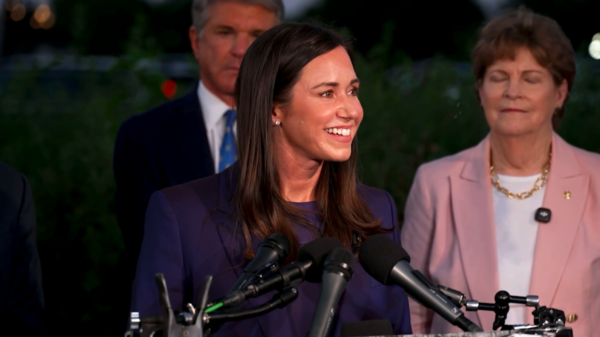










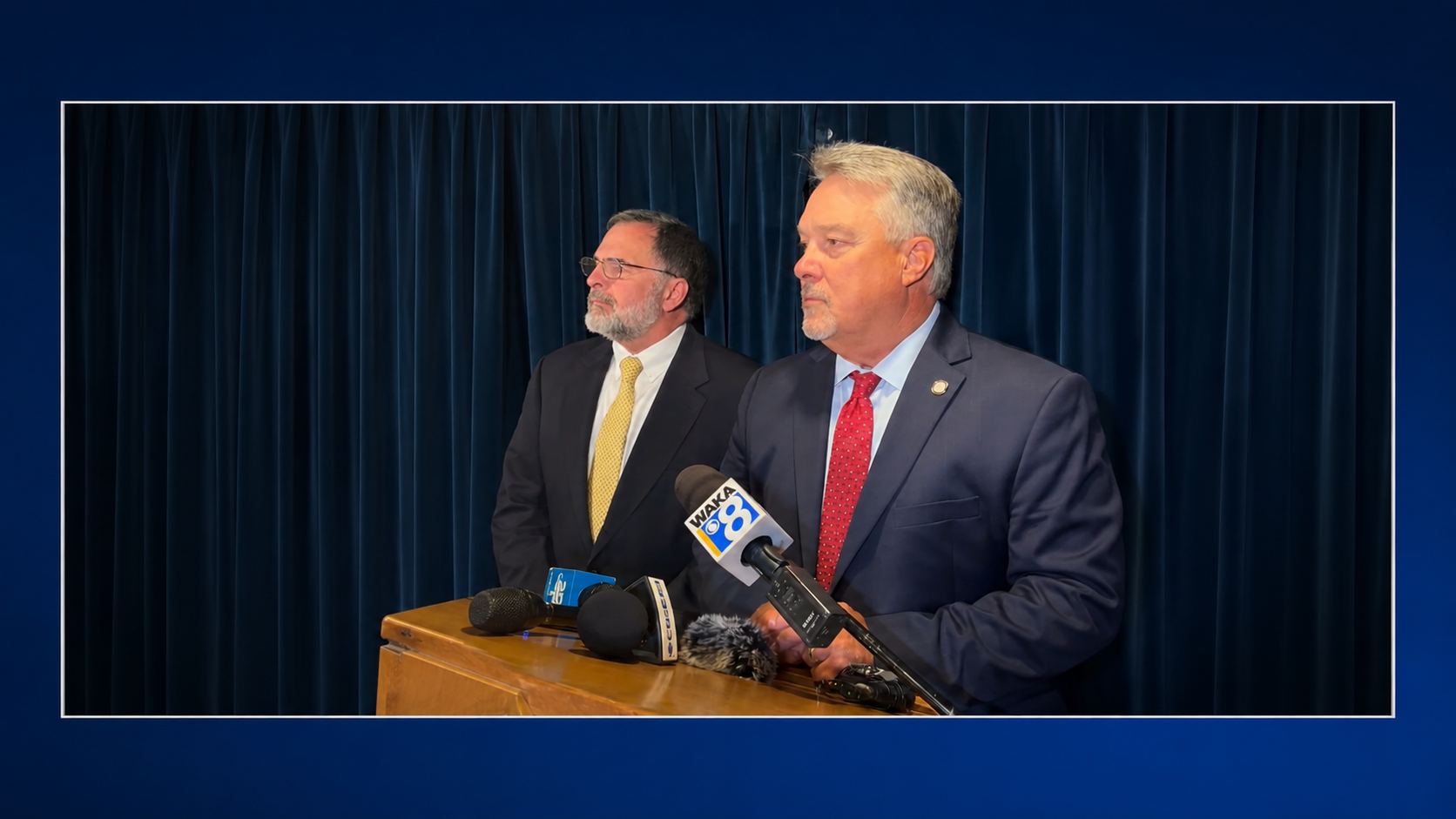
Speaker of the House Nathaniel Ledbetter is disputing accusations that he called for overturning the 14th Amendment to the U.S. Constitution after remarks made during a Friday press conference on Alabama’s redistricting litigation sparked backlash online.
A review of the full exchange, including follow-up questions and clarifications later in the press conference, shows Ledbetter was referring to federal court findings against Alabama’s congressional maps — not the constitutional amendment itself.
The controversy stemmed from remarks Ledbetter made while discussing legislation approved by the Alabama Legislature that would trigger new primary elections in several congressional districts and two Montgomery-area state Senate districts if Alabama prevails in ongoing court challenges over redistricting maps.
The legislation follows the U.S. Supreme Court’s recent ruling in Louisiana v. Callais, a decision many Republican-led states view as a potential opening to challenge court-ordered congressional districts created through prior Voting Rights Act litigation.
During the press conference, Ledbetter discussed the possibility that the ruling could allow Alabama to revisit congressional districts altered through federal litigation.
“Well, it certainly gives us an opportunity to look at those congressional districts again,” Ledbetter said, referring to the legal obstacles surrounding Alabama’s maps. “And certainly hope that the Supreme Court will overturn Amendment 14. Gives us a shot to revisit those.”
Standing alone, the remark sounded explosive.
In modern American politics, few constitutional issues carry more historical and political weight than the 14th Amendment, which guarantees equal protection under the law and was ratified following the Civil War.
But the exchange did not end there.
Ledbetter continued discussing what he viewed as federal court interference with Alabama’s redistricting authority, arguing lawmakers — not courts — should draw district lines.
“It’s our job to draw those district lines,” Ledbetter said. “And for the court to interfere with that … I thought it was a slap in our face, because we’d spent hundreds of thousands of dollars in reapportionment drawing those maps.”
The confusion partly stems from the evolving legal posture of Alabama’s redistricting cases. The original Allen v. Milligan dispute focused largely on Section 2 of the Voting Rights Act. But later rulings involving Alabama’s revised 2023 congressional map also included findings tied to the 14th Amendment’s Equal Protection Clause.
After reporters pressed him on the remark, Ledbetter attempted to clarify.
“What happened in Louisiana gave us a clear runway,” Ledbetter said. “But because of the court order that we had with Amendment 14, it kind of doesn’t give us the ability to move forward.”
Rep. Chris Pringle then stepped in and framed the issue more precisely, explaining that courts had found Alabama’s maps violated both Section 2 of the Voting Rights Act and the 14th Amendment.
“The court changed the process by which you get a Section 2 violation,” Pringle said. “But the court, just like in Louisiana, said that their Section 2 violation rose to the level of a 14th Amendment violation. So naturally, our attorneys are going to appeal that decision.”
A reporter then asked directly whether Ledbetter meant overturning the constitutional amendment itself or overturning the court’s 14th Amendment finding against Alabama’s maps.
“So you’re talking about the court removing that charge or overturning that charge, not overturning the 14th Amendment?”
“Yes,” Ledbetter responded.
The misunderstanding largely arose because Ledbetter compressed a complicated legal issue into a single phrase. Alabama’s current congressional litigation now involves both Voting Rights Act claims and constitutional findings tied to the 14th Amendment — a distinction Pringle later articulated more clearly during the exchange.
No part of the exchange shows Ledbetter advocating repeal of the 14th Amendment itself.
Later Friday, a federal court effectively signaled that Alabama’s latest congressional map dispute now rests with the U.S. Supreme Court.
According to court filings, Alabama requested a decision from the Supreme Court by May 14 at 10 a.m. EDT. Associate Justice Clarence Thomas, who handles emergency matters arising from the 11th Circuit, ordered plaintiffs challenging Alabama’s maps to respond by Monday, May 11, at 5 p.m. EDT.
APR later reached out to Ledbetter directly for clarification regarding his remarks.
“Alabama’s 2023 congressional map currently has a Section 2 VRA and 14th Amendment violation against it. I simply stated that we want those violations lifted so we can move forward with our 2023 congressional map, not that the 14th Amendment needs to be removed from the U.S. Constitution,” Ledbetter said.
“This is a total lie and is refuted by my comments in Friday’s press conference, which are on video for anyone to see.
“Unfortunately, this blatant attempt to misconstrue my comments, cause division, and attack my character is a perfect example of why people struggle to trust certain media outlets in this day and age.”
The distinction mattered because Alabama’s redistricting litigation now involves both Voting Rights Act claims and constitutional findings under the 14th Amendment — a legal nuance that became blurred during the back-and-forth exchange.
The controversy ultimately stemmed less from what Ledbetter appeared to mean than from how imprecisely he said it. But the full exchange shows he later clarified that he was discussing court rulings tied to Alabama’s maps — not advocating the repeal or elimination of the 14th Amendment from the U.S. Constitution.