

















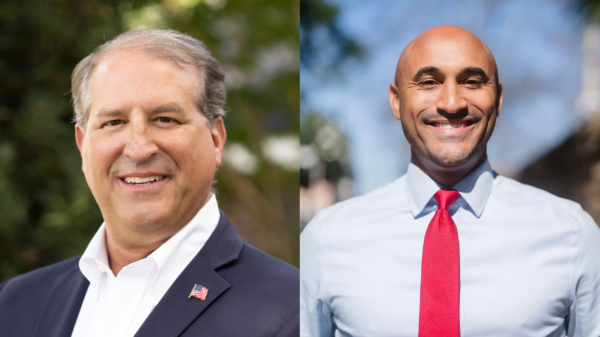










The dismissal of the residency lawsuit against Republican lieutenant governor nominee John Wahl ended the case without a judicial determination of whether he met the constitutional residency requirement. It also brought Alabama’s process for resolving eligibility disputes back into focus.
A candidate should not have to campaign indefinitely against an allegation that has never been established. Voters should not have to decide a constitutional qualification question that the legal system has left unanswered.
Alabama needs a process that serves both interests.
On October 13, Montgomery County Circuit Judge Monet Gaines granted the plaintiffs’ stipulation of dismissal with prejudice.
Her order was brief:
“Before the Court is Plaintiff’s Stipulation of Dismissal with Prejudice. GRANTED. Case DISMISSED WITH PREJUDICE.”
For Wahl, that was a consequential victory. The lawsuit Jarrod Wayne Schulte, Amanda Beth Schulte and Valtoria Jackson brought against him and Secretary of State Wes Allen was over.
The order’s scope was equally clear. Gaines made no findings concerning Wahl’s residency and did not address the arguments in his motion to dismiss. She granted the dismissal the plaintiffs requested.
The order does not explain their reasons. Neither their motives nor the judge’s unexpressed reasoning should invite speculation.
The plaintiffs’ allegations did not become established facts simply because they appeared in a complaint. Nor does the dismissal establish that the judge examined the residency evidence and found Wahl qualified.
Wahl is entitled to celebrate the end of the lawsuit. The public is entitled to understand precisely what the court decided.
In his September 21 motion, Wahl’s attorney, Bryan Taylor, advanced two principal arguments. The first challenged the court’s authority to hear the case. The second challenged the sufficiency of the allegations concerning Wahl’s residency.
Wahl argued that the plaintiffs were attempting to undo the Republican primary runoff outside the statutory process for contesting a nomination. He invoked Alabama Code Section 17-16-44, which restricts judicial intervention in elections without specific statutory authorization.
He also argued that quo warranto—a proceeding used to challenge someone’s authority to hold public office—could not reach a nominee who had not assumed the office being sought.
The Alabama Supreme Court’s October 9 ruling in the Tuberville residency case substantially strengthened that defense. The justices affirmed the dismissal on jurisdictional grounds and held that a party nominee does not hold public office for purposes of quo warranto. They expressly left Tommy Tuberville’s compliance with the residency requirement undecided.
That ruling provides important context for Wahl’s case. Gaines’ order, however, does not identify the Tuberville decision as the basis for dismissal.
Wahl had substantial grounds for questioning whether this lawsuit could proceed. Courts must respect the limits on their authority, and candidates are entitled to invoke those limits.
His alternative defense addressed the underlying allegations.
Article V, Section 117 of Alabama’s Constitution requires the governor and lieutenant governor to have been resident citizens of Alabama for at least seven years immediately preceding their election.
Wahl’s motion argued that a Tennessee driver’s license and voter registration did not establish that he abandoned his Alabama domicile. It pointed to an Alabama vehicle registration and an Athens address appearing in the plaintiffs’ own exhibits.
The defense rests on an important protection: The law presumes an established domicile continues until a person acquires another. Maintaining another residence or spending time outside Alabama does not automatically change it.
In Horwitz v. Kirby, the Alabama Supreme Court explained that residence in connection with political rights means domicile. The inquiry concerns physical presence and intent, and the person asserting a change bears the burden of establishing it.
A person may maintain several residences while having only one domicile. Official records can bear on that determination, but their meaning depends on the circumstances. Neither an out-of-state record nor an Alabama address necessarily answers the question alone.
Those principles require care before declaring someone constitutionally ineligible. They also explain why a factual inquiry can be necessary when a substantial dispute arises.
Gaines’ order did not resolve that dispute. It does not establish a finding either for or against Wahl on the residency question.
The larger problem is the process Alabama provides for obtaining an answer.
In the Tuberville decision, the Supreme Court described statutory primary election contests as generally the exclusive authorized method for challenging a party nominee’s qualifications before the general election. Party tribunals hear statewide contests, and there is no statutory right to appeal their decisions to the courts.
Political parties have a legitimate interest in choosing their nominees. Constitutional qualifications concern the whole electorate.
A voter should not need to belong to a candidate’s party to have confidence that a substantial qualification question received a fair examination. A candidate should not have to rely on campaign statements to answer an accusation that an independent process could resolve.
The Legislature should establish an early, orderly process for constitutional eligibility challenges, with rules known before candidates enter a race.
A challenge should identify the particular qualification at issue and specific facts supporting the allegation. A meaningful threshold should prevent speculation from becoming a prolonged proceeding. The person bringing the challenge should bear the appropriate burden of proof.
Candidates should receive notice, access to the evidence and a fair opportunity to respond. Challenges that meet the threshold should receive an expedited hearing before an independent tribunal, followed by a written decision explaining the facts and law.
The filing deadline and any review should align with candidate qualification, ballot preparation and the election itself. The law should specify who may bring a challenge and how to evaluate qualifications measured as of Election Day.
Lawmakers should adopt these rules prospectively and apply them consistently, regardless of party, prominence or political advantage.
An early process would protect the election from disruption. An independent process would give its conclusions credibility. A written decision would give candidates and voters something firmer than competing claims.
It would also help protect a qualified candidate from having to answer an accusation throughout a campaign after a fair examination found it unsupported.
Fairness does not require accepting every challenge as substantial. It requires a reliable way to distinguish a substantial challenge from an unsupported one.
Wahl’s case illustrates why that distinction matters. The plaintiffs made allegations. Wahl presented defenses. Gaines granted the plaintiffs’ requested dismissal.
An accurate account must preserve those differences. A better system would provide a timely path to resolving the underlying question when the evidence warrants it.
Candidates deserve protection from unsupported accusations. Voters deserve confidence that constitutional qualifications have been met.
The Legislature should give Alabama a process that delivers both before ballots are cast.