





















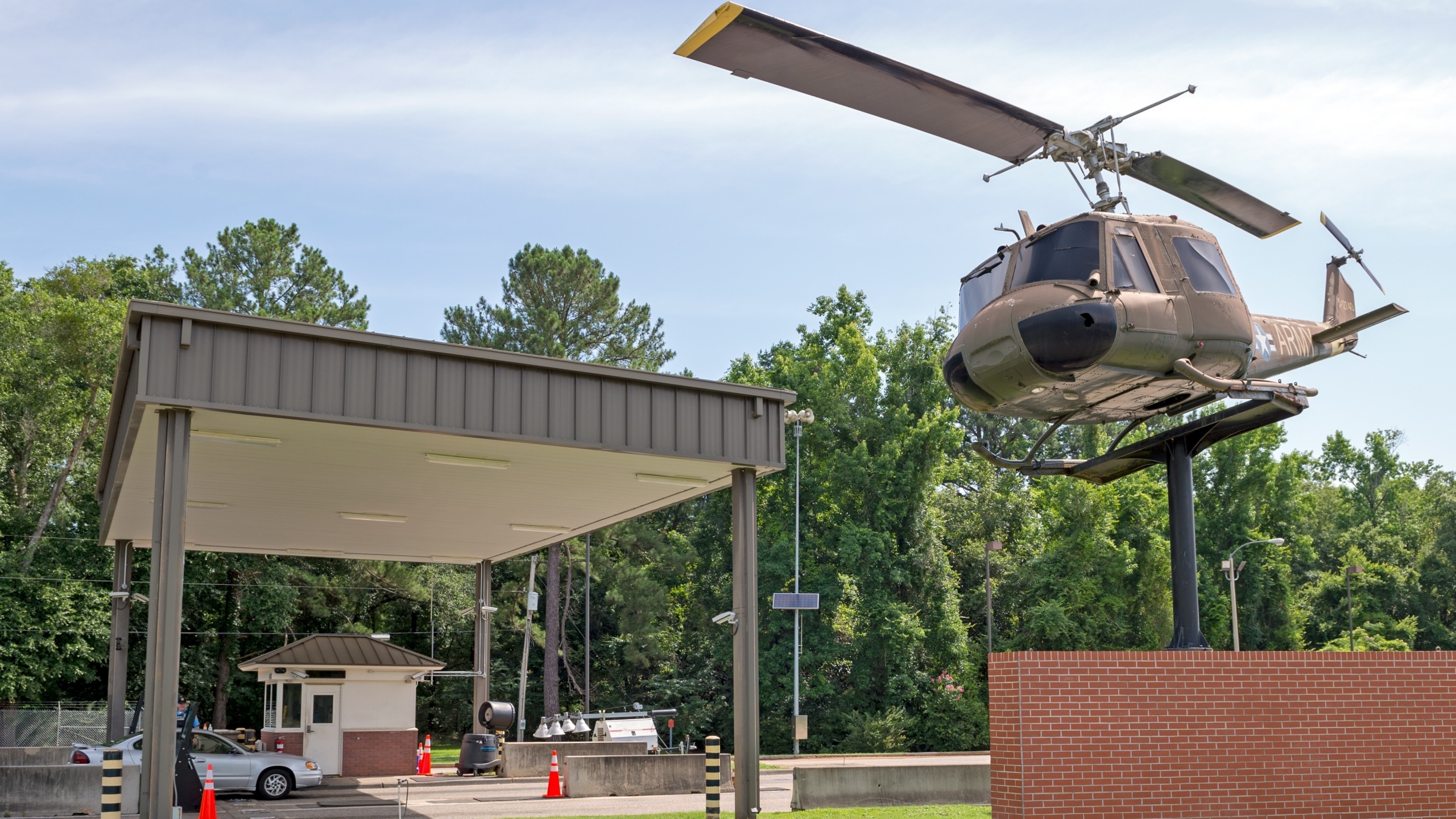
Army officials announced Tuesday that Alabama’s Fort Rucker was selected to lead the U.S. Army’s efforts to develop, test and integrate unmanned aircraft systems.
The military installation was designated the Army’s Unmanned Aircraft Systems and Autonomy Center of Excellence.
According to Army Vice Chief of Staff and acting Chief of Staff Gen. Christopher LaNeve, Fort Rucker was selected because of its access to commercial technology and combat experts.
“Fort Rucker is unique in that we can bring together warfighting experts and cutting-edge commercial capabilities to test technology the way we intend to fight it,” LaNeve said. “To ensure that we move swiftly to achieve the Army’s autonomy goals, as of today Fort Rucker will serve as our UAS Autonomy Center of Excellence.”
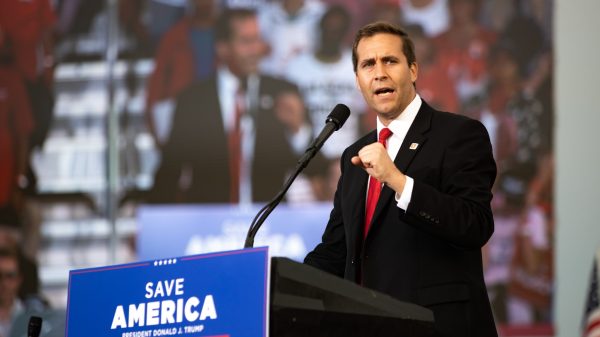
The designation drew support from U.S. Senator Tommy Tuberville, R-Alabama, and Wiregrass federal lawmakers U.S. Senator Katie Britt, R-Alabama, and U.S. Representative Barry Moore, R-Alabama.
“Alabama continues to be a LEADER in national security,” Tuberville said in a written statement Tuesday. “This is a huge step towards unleashing next-generation technology for our armed forces. There is no better home for this pioneering facility than Fort Rucker.”
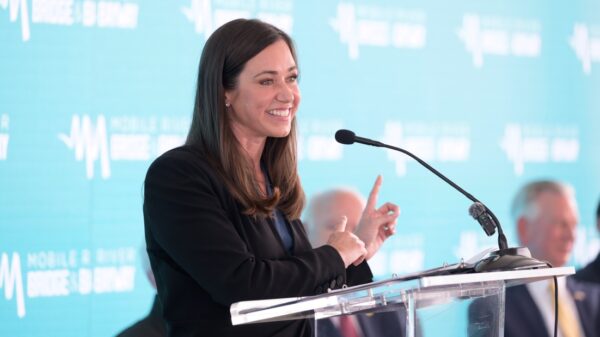
Britt thanked LaNeve, President Donald Trump and acting Secretary of the Army Adam Telle for selecting Fort Rucker for the UAS Autonomy Center of Excellence, saying the officials “recognize how valuable Alabama is to our nation’s defense and how much we have to offer.”
“Today’s announcement makes clear that Fort Rucker, which has long been the beating heart of Army Aviation, will lead the Army into the next era of warfare,” Britt said.
Britt and Moore both said they have been advocating “for years” to bring the UAS Center of Excellence to Fort Rucker.
“Today’s announcement that Fort Rucker will be its home is a major win for Alabama and our national defense,” Moore said.
“I’m grateful to Senator Britt and Coach Tuberville for their partnership in this effort and shared commitment to Alabama’s military mission,” Moore added. “Fort Rucker is uniquely positioned to help shape the future of Army aviation, and I look forward to working together to build on this progress.”
Moore went on to thank LaNeve, Trump, Telle and Secretary of War Pete Hegseth for Fort Rucker’s selection.
Under the new designation, the Army’s Futures and Autonomous Systems Command, formerly the Futures and Concepts Command, will work to test autonomous weapons systems at the base. FASCOM is a new four-star military command for unmanned and autonomous warfare that Hegseth established in an October 1 memo.
As the new seat of Army unmanned aircraft system development, Fort Rucker will build on existing experiments conducted at the base, including tests exploring methods of pairing crewed and uncrewed rotary-wing aircraft.
According to the Army, the experiment, initially conceptualized at Fort Rucker, “gives attack aviation pilots direct control of UAS sensors to enable over-the-horizon targeting and synchronize manned-unmanned fires.”
“We’ve got to change our approach from bolting on technology to rethinking how we fight,” LaNeve said. “Acting Secretary Telle and I see things the same way. Technology doesn’t fight; Soldiers do. Our job is to get them the best kit; theirs is to make it lethal. It’s that magic between industry, leadership, and Soldiers that keeps our Army ahead of anyone looking to do America harm.”
The Army did not indicate whether it will direct additional staff or funding to the base because of the designation or describe the timeline for fully implementing UAS Center of Excellence services at the base.