























Pickens County sits in west Alabama, about 18,000 people on farmland that runs to the Mississippi line. Its hospital closed in 2020. Since then there has been no emergency room and no urgent care. The nearest one is an ambulance ride and the better part of an hour away, in Northport or across the state line.
For a stretch the county could not count on the ambulance either. By 2024 it was down to a single truck. One foggy night a man called because he could not breathe. The crew was 40 minutes out, the fog had grounded the helicopters, and no other unit was free. He died before help reached him. He was not the only one. An ambulance worker there has said she watched people die waiting.
The service that ran there for years lost about a third of its money when the hospital closed. It went into debt, lost staff and pulled out. For months Pickens leaned on crews from Lamar County next door.
How does a county lose something as basic as an ambulance? Not for lack of will. The state had already called EMS essential in its own statutes. Not for lack of money alone. This spring Alabama started paying ambulance crews in a way it never had. Pickens lost its service anyway, and the reason it did is the reason the next county will. It is harder to see than a line in a budget.
So the county fixed it itself. Its mayors, its commission, its hospital board and its legislators pieced a service back together from a state grant, an ambulance donated by the fire college, a draw from the closed hospital’s old sales-tax money and a standing deal to share management with Lamar, the same neighbor that had been covering its calls. Last month the residents voted, 71 percent of them, to add ten dollars to their own car tags to keep a second around-the-clock ambulance on the road.
Even that vote needed Montgomery’s permission. Alabama is a states’ rights state by conviction and a Dillon’s Rule state by law, which means a county can do only what the Legislature has expressly allowed. Pickens could not tax its own car tags until lawmakers passed a local act letting it hold the vote. The county did the work and paid the bill, and it still had to ask.
A county of 18,000 taxed itself to guarantee something most people assume the state already provides. It does not. The state decided to pay for the ride. It has never decided whose job the road is.
I wrote recently about the state’s new hospital law. It let rural hospitals join forces in ways competition law normally forbids, on the condition that the state supervise the result. Then the state barely supervised. Emergency care is the same problem from the other side. With the hospitals, the state handed out a power and looked away. With ambulances, it named a duty and gave it to no one.
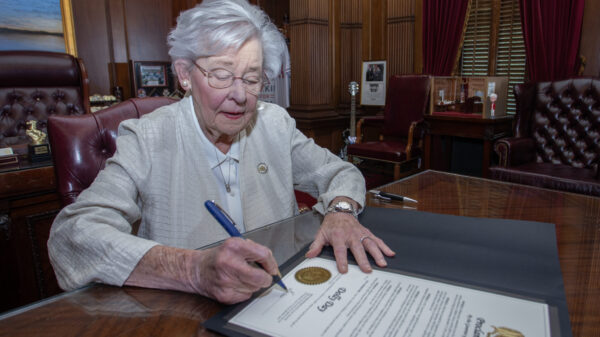
This spring the Governor signed a treat-in-place reimbursement law. Until now an Alabama crew got paid for the drive, not the care. A medic could stabilize someone at the kitchen table, decide they did not need an emergency room an hour away, and the service would collect nothing. In a county where the hospital at the end of that drive is gone, the rule made no sense.
The new law pays a crew for treating a patient on the scene, at twice the Medicare rate, and stops the practice of billing the patient for the difference. It will keep some struggling services from going under. Paying for the care is the easier part. Making sure there is a crew to pay is the hard one.
None of this is free, and the people who fought the bill were not wrong about that. Insurers and the farm federation warned it would raise premiums, including for families already stretched to afford coverage. That is a fair worry. It is also why the next question matters. If Alabamians are going to pay more, they are owed more than a system that bills correctly. They are owed one that shows up.
The law itself shows which half it chose. Payment for transport starts this October. Payment for treating a patient without the drive, the part built for places like Pickens, waits until January, and only if the crew is in the patient’s insurance network. Out of network, the likely case in a rural county, treating in place pays nothing.
It pays unevenly in another way. The rate binds commercial insurers and leaves Medicaid out, so the help is smallest where the need is greatest. The counties with the fewest ambulances have the fewest commercially insured calls to bill and the most patients on Medicaid, Medicare or no coverage at all. The House member who carried the companion bill said about a third of ambulance calls end without taking anyone to a hospital, and in a county with no hospital to drive to, that is most of the work. The law steadies a service that already exists. It does not put a crew in a county that has none.
The state already promised that crew, on paper. In 2022, it declared emergency medical service an essential public service, joining more than 20 states that have said the same. The next line is the catch. Nothing in the law, it reads, requires a county to fund or provide the service the state just called essential. The duty got a name and no owner.
You can see why. Calling EMS essential costs a legislator nothing. Funding it, or naming who must provide it, costs money and takes the blame when it falls short. The cheaper vote is the one that gets cast.
Leaving the job to the counties is an answer of a sort, but a county is the wrong size for an emergency. It can run a service. It cannot, by itself, run one big enough for everything that comes through the door. And an emergency does not stop at the county line. When Pickens had no ambulance of its own, Lamar took the calls, because help comes from wherever it can. But a rescue from the next county over is a chain of handoffs, and the chain snaps where one county’s duty ends and the next county’s has not begun.
The reasons coverage fails are all bigger than a county. Crews are short. The distances are long and the population sparse. The hospitals that anchored the system are closing. Medicaid pays little. None of that changes while no one sits at a level large enough to act on it, and under Alabama’s own rules that level is the state.
Until then, the policy is whatever the medic on the county road can do with what the county gave her. She has been making that call for years, alone on the shoulder, weighing what the rules would pay for against what the person in front of her needed. The new law is the first time insurers pay for that work at all.
The reimbursement law is not the only thing moving. The state’s new rural health program funds a treat-in-place effort of its own, the equipment, the training, the cellular link a medic needs to reach a doctor from the roadside. But the program buys capability for whoever wins the contract, for as long as the money holds. When it runs out, the county is back where it started, still with no one required to see that it lasts.
So money was never going to be enough on its own. Pickens had a grant, a hospital fund, and a tax its own people voted for, and it still came close to going without. What was never there is an owner.
Someone must be answerable for whether a county has coverage, not only for licensing whoever steps up to provide it. An owner does not make paramedics appear or the distances shrink. What broke rural EMS runs deeper than that: what Medicaid pays, what insurers pay, where the workers went. Naming an owner fixes none of it. But each of those problems survives partly because no one answers for what they add up to.
A reimbursement rate stays a line item until it becomes someone’s job. Give the gap an owner and those problems become work somebody must do. Leave it empty and they stay everyone’s complaint and no one’s task. That is not a promise to put a truck on every road. It is a duty to know where the gaps are and to own the decision about them.
There is more than one way to name that owner, and the safe ones do not grow the state. Pickens and Lamar already run a shared service across the county line. That is the thing itself in miniature, cooperation that works, missing only permanence and someone accountable for it. The state could let counties form regional EMS authorities and give those bodies the standing to last, the way it already lets them form other districts. Or, failing that, the Department of Public Health, which runs six regional EMS offices and licenses every crew and rig in the state, could be asked to look at the map, find the county with no service tonight, and answer for it. Either path takes a decision, not a new agency and not a new line of spending. It takes naming who the gap belongs to.
That decision is not simple. Pooling services across a region means a county gives up some say over how its own runs. A county with a steady service might end up covering a neighbor that has none. Someone must decide whose call gets the truck when two come in at once. Local officials guard what they built, and they have every right to. But difficulty is a reason to settle who is responsible, not a reason to leave the question lying in the road, where it falls one bad night at a time on whoever happened to need an ambulance.
Give the law its due. It makes ambulance services and insurers report to the Department of Public Health, calls for a study of how it is working by the end of 2028, and expires in mid-2029 unless the Legislature renews it. Not many laws set their own date to come back and check the work. That much the state got right.
But look at who gets to judge it. The financial data the law collects is sealed from the public. The study meant to say whether the law worked does not go to the department that runs the field, or to anyone without a stake in the answer. It goes to the ambulance industry’s own trade association, which hires the researcher, and the bill is sent to the largest insurers. The law even asks that study to recommend how to ensure adequate access to emergency care. Then it assigns that access to no one.
Alabama did two hard things in one spring. It built a legal lock around its hospitals, and it set a price for its ambulances. Two different problems, market power and geography, with the same hole in the middle. Something was handed out, and no one was made to answer for the result. It is the same hole money falls into whenever it comes down from above for the state to pass along, and never reaches the last house on the road.
The treat-in-place law was the right thing to do, and it will steady the crews it reaches. But steadying the crews that exist is not the same as making sure a county has one. Pickens rebuilt its service on a borrowed truck, a neighbor’s goodwill, and a tax its own people voted onto themselves, because no one above the county would answer for whether it had an ambulance at all. They did it well. No county should have to.
By the end of 2028 the state’s own study will put access on the table, and the 2029 deadline is when the choice can no longer be put off. Alabama decided to pay for the ride. It has not decided whose job the road is. That decision, not the reimbursement, is what settles how far help must come and whether it comes at all.