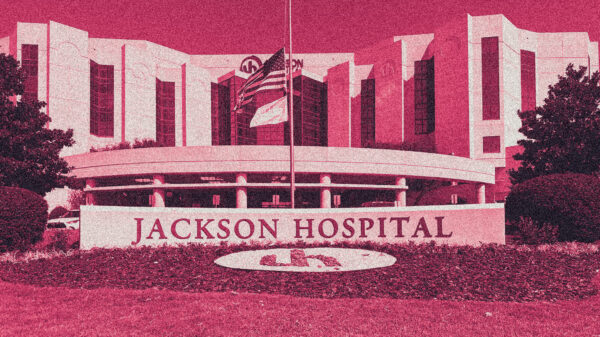

































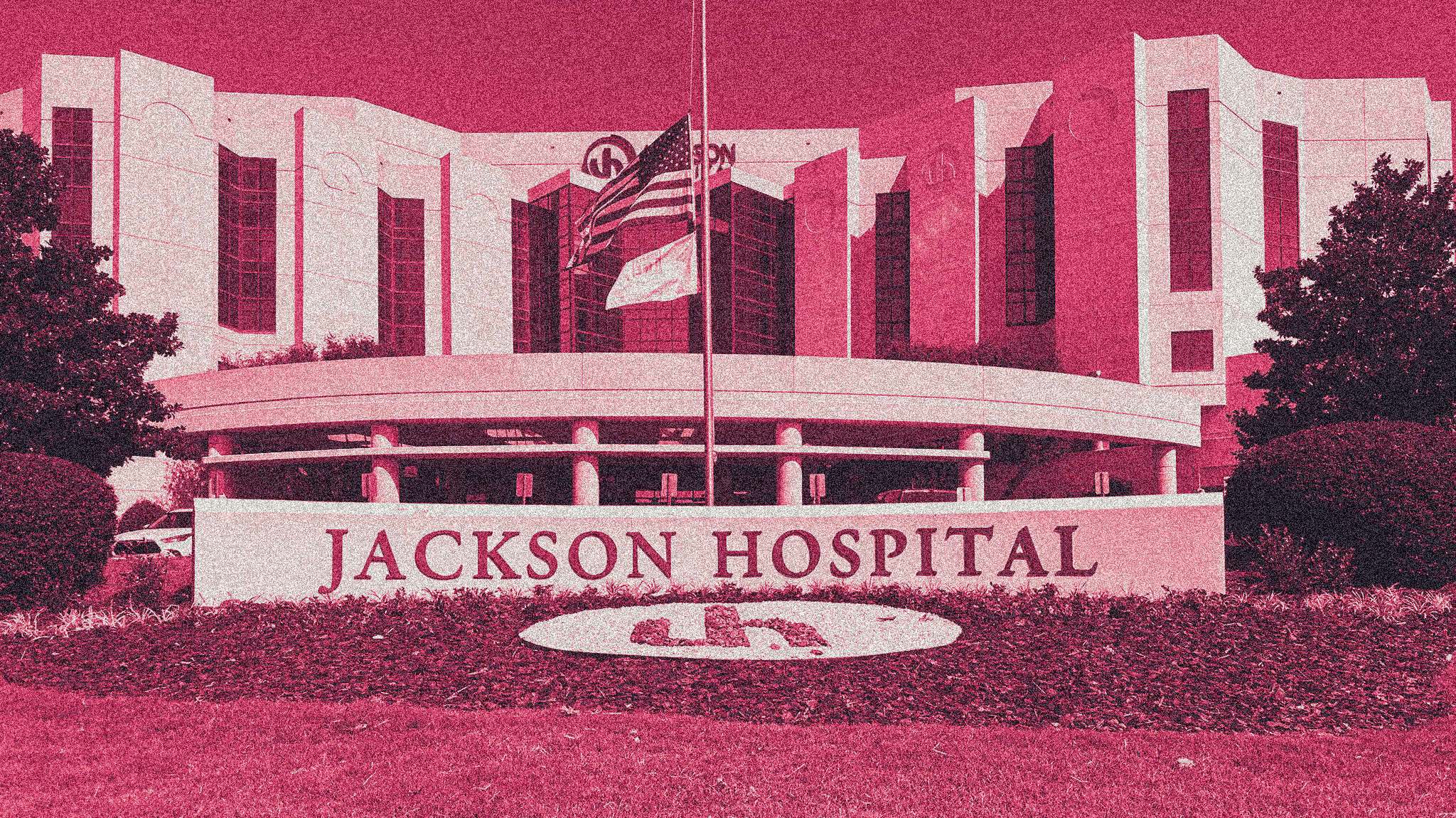
Jackson Hospital executives have done the impossible—made an insurance company the good guy of a story.
Late Wednesday evening, a federal bankruptcy court judge dropped an order which essentially annihilated claims that Jackson Hospital executives have been making for weeks concerning their dire financial predicament and the causes behind it. The judge flatly said that Jackson Hospital officials have been “disingenuous” and that the current predicament is the result of “self-harm.”
The order undercuts weeks of claims that Blue Cross Blue Shield Alabama and its allegedly unfair reimbursement rates were at the root of all of Jackson’s problems.
They weren’t. Not even close.
Those claims always seemed a bit suspicious, given that BCBS reimbursements made up less than 20 percent of Jackson’s income and the insurance company had agreed to up its rates in order to help out the hospital. Judge Christopher Hawkins, though, left absolutely no doubt about it. He knocked down the underlying argument, expressed skepticism over the hospital’s self-imposed deadline of June 25, and he was critical of the fact that Jackson officials wouldn’t take the more than $80 million lifeline that had been extended by state and local government entities.
For an order in a bankruptcy proceeding, it was astonishingly pointed.
As it should have been.
The hospital’s insistence that BCBS payouts were behind this mess was always doomed to blow up when the rhetoric was set aside and an honest review was undertaken. Because BCBS payouts aren’t exactly arbitrary.
I mean, they might be nonsensical—and Lord, how I hate defending a health insurance company over rates—but they are grounded in some common calculations. As Judge Hawkins noted, when BCBS explained its rates and why some differed between Jackson Hospital and nearby Baptist South Hospital, those explanations made sense.
Because of course they did.
Jackson Hospital’s finances and operations have been a mess for years, as evidenced by the fact that it managed to increase revenue by 80 percent over the last 12 years but still had losses in half the years and had operating margins of less than 2 percent in profitable years.
The reasons for that are not exactly surprises—outsized pay for top executives, poor management, curious decisions and existing in a Republican state that refused Medicaid expansion.
Jackson operates in a poor state and in a city with a high number of impoverished citizens who lack healthcare coverage. These are realities. As a nonprofit, it was required to treat all patients, regardless of their ability to pay.
This is not a situation unique to Jackson Hospital. Other nonprofit hospitals in similarly impoverished areas accomplish this and manage to stay operational. But it often requires salary cuts and creative management.
I’m not going to get into the weeds of what Jackson did and didn’t do, as far as compensation for certain executives and continuing to fund certain programs and failing to accept certain patients, because it doesn’t much matter at this point, and Judge Hawkins made it clear already who is at fault.
But I will take this opportunity to point out that we are witnessing the failing of a community hospital at the hands of the things that make the American healthcare system the absolute worst in the industrialized world. Jackson was hamstrung by top-heavy greed and doomed by being unable to accommodate the one thing that should keep it afloat—sick patients.
Because they weren’t just sick patients. They were sick, POOR patients.
Patients that lacked insurance in most cases. Patients that had allowed minor illnesses to become catastrophic ailments because they lacked the means to pay for treatment. Patients who were forced to choose between keeping the lights on and going to the doctor.
Those sick people piled into a hospital operated by a CEO consistently earning around three-quarters of a million dollars annually. With several other six-figure executives on payroll. With doctors earning great pay.
Because the American healthcare system isn’t about health. It’s about money.
It’s the reason I’m consistently amazed by people who have determined that there’s one bad guy in this play—usually the insurance company or the pharmaceutical company. There was a story going around on social media just the other day of a kid who was battling cancer and in need of a specialized treatment, but the evil insurance company had declined to cover it. People were outraged at the insurance company, and rightly so.
But what about the hospital and doctors? They could have provided the care for free. What about the drug company? It didn’t provide the drug for free.
The fact is Jackson Hospital isn’t going bankrupt because of BCBS rates. It’s going bankrupt because it didn’t change normal operations even when survival was at stake. And so, this story ends like it always does.
The people at the top get paid. They move on to fleece other hospitals. The community gets screwed. The sick, poor people get crammed into more crowded, more hopeless ERs. More people die. More people get rich. More people get angry.
But don’t dare bring that socialism to fix it.