

























I’ve watched several older family members waste away. It’s hard to watch, but Father Time, as they say, is undefeated. It always shocks me how quickly someone can lose the ability to walk unassisted in just a few weeks. Our muscles are meant to be used, to be exercised. When they stay at rest too long they atrophy. What disappears in just a few weeks can take months to come back, if ever.
We all know that our brains also need constant stimulation. Our body is a system, after all. So, what happens when we invent a machine whose great promise is that we won’t have to do things ourselves? Will our brains atrophy in the name of convenience?
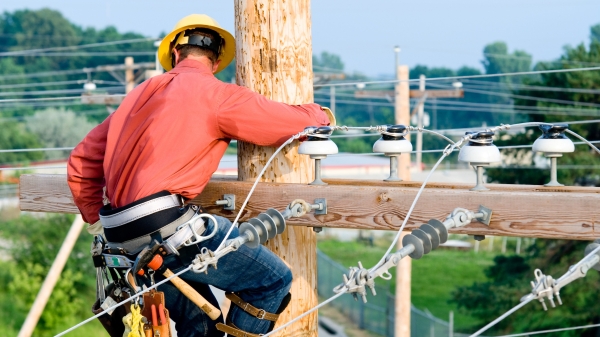
Once we started using machines we got more efficient. Machines increased what humans could accomplish while reducing how much of ourselves we had to employ to accomplish it. Consider the farmer. He once worked his fields with an ox and a plow. Hard work, to be sure.
But once the tractor was invented everything changed. He became much more productive. He need only drive the tractor. But did he lose some agency in the transition?
“Agency” generally means the capacity to act intentionally—to make choices and take actions that affect outcomes, rather than just reacting passively to circumstances.
Over the last ten years we’ve all watched the transition to GPS and now Waze for navigation. If Waze tells me to get off at the next exit, I do not question why. I just do it. I often find myself following Waze on all sorts of side streets, alleys, and once even a dirt road. But it never disappoints. I haven’t been lost since the Obama administration.
Can you even imagine a new driver having to pull out a wrinkled and poorly folded Rand-McNally map from the glovebox to navigate? We’d have to put out one of those highway alerts that notifies other drivers that someone has gone missing.
So, what’s the point in all of this? We often trade effort for productivity. And in most cases, it’s a fair trade. In nearly every instance, the arrival of machines and technology increased convenience. It’s nearly impossible to believe that we won’t move from convenience to dependence with these new AI technologies.
See, Brother Convenience, like Father Time, is undefeated. But convenience often removes friction in our lives. Can you imagine learning to drive without ever getting lost?
But what happens when we create a machine whose promise is that we won’t have to think for ourselves ever again? See, I think the naysayers have it all wrong. The farmer didn’t give up agency to the tractor. His productivity was severely constrained by what his body and his ox could accomplish in a day. He could plow only so many acres. His ambitions were limited by his physical capacity.
Yes, his physical exertion decreased, but his agency actually increased. With the tractor he could expand to more fields, plant more crops, and feed more people. He had more time to research new seeds and fertilizers and learn different farming practices.
The question isn’t whether a machine makes the farmer more efficient or productive. It does. The question is whether the machine expands or contracts the range of meaningful choices available to the human using it.
People once spent hours hauling water, heating it, scrubbing clothes, wringing, rinsing, hanging, and ironing. Today we toss clothes in a washing machine. Does anyone think the modern washing machine took something magical from us? Of course not. I used to spend hours editing and re-editing my work. Today I upload a draft to AI and ask for an editorial review. I use the extra time to read, write, and research more. And, yes, I see the irony of writing an essay questioning whether AI will diminish human agency while using AI to help refine the essay.
The question is which human capacities we can safely stop exercising and which ones deteriorate when we stop exercising them. Ironically, we spent generations inventing machines to remove physical exertion. Tractors eliminated hand plowing. Cars eliminated walking. Machines eliminated heavy lifting.
Today I pay good money to belong to a gym where I go to, you guessed it, lift heavy stuff and walk on a treadmill. We became so successful at eliminating physical exertion that we now pay to put it back into our lives. Because, like friction, we also need resistance.
Friction and resistance means occasionally getting lost. Struggling with a sentence. Trying to remember something. Working through a difficult book. Doing arithmetic in your head. Making a decision without an algorithm telling you which restaurant, movie, route, product, or answer is “best.” Sitting with a problem because the answer isn’t immediately available.
Artificial intelligence will give us tools and technology we can’t even imagine. Many will reduce labor and increase efficiency and productivity. But how much of our mental exertion can we afford to give them too?
Technology has repeatedly liberated us from necessary labor. The danger comes when we mistake “no longer necessary to accomplish the task” for “no longer necessary for the human being.”
Resistance and friction have value even if technology removes the need for them.
I’m just a regular guy sitting at the Waffle House drinking coffee and pecking on my laptop. Ask me anything at [email protected].