
























An election cannot be administered as a live experiment.
Once ballots are printed, voting systems are operating and election officials have begun mailing ballots, the rules cannot be rewritten without placing voters at risk.
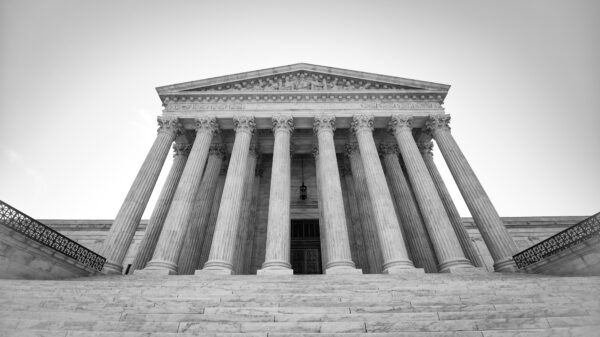
That is the practical meaning of the U.S. Supreme Court’s decision Monday refusing to allow the Trump administration to impose new nationwide requirements on absentee and mail-in ballots during the 2026 midterm elections.
The ruling is a significant defeat for President Donald Trump’s effort to expand federal control over ballot mail. But it is not the final constitutional judgment that some headlines suggest.
The court did not decide that the U.S. Postal Service can never regulate the handling of election mail. It did not finally resolve whether Congress has given the Postal Service enough authority to impose the administration’s requirements.
The court refused to let the government impose this particular system now—after voting had already begun and while essential parts of that system remained unfinished.
For voters, the immediate result is straightforward. States may continue using the absentee and mail-ballot procedures already in place. Ballot packets will not be withheld from voters because state officials failed to satisfy federal requirements announced only weeks before the election.
That matters in Alabama, where absentee ballots began going out September 9.
The dispute began with a March 31 executive order directing the Postal Service to create new standards for mail-in and absentee ballots used in federal elections.
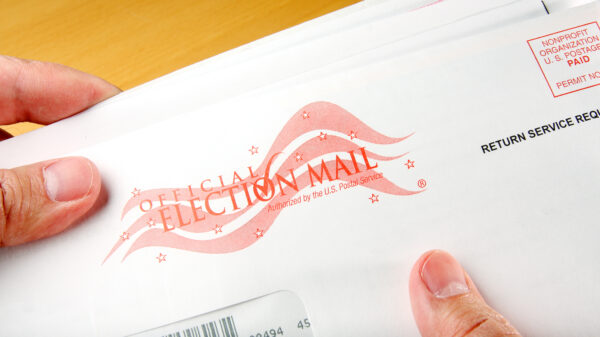
The Postal Service later adopted a final rule requiring ballot envelopes to carry an official election-mail logo, satisfy specifications for high-speed processing and include a unique barcode connected to each voter.
State and local election officials would have been required to redesign their envelopes, submit the new designs to the Postal Service for review and upload information about ballot recipients to a federal portal.
The Postal Service would then compare outgoing ballot mail with information provided by election officials. Outbound ballot mail that did not comply could be refused and returned to state or local election officials for correction.
The rejection procedure did not apply to completed ballots that voters were mailing back to election offices.
The administration described the requirements as postal regulations intended to improve tracking, processing and election security.
Postmaster General David Steiner argued that standardized envelopes and unique barcodes were not new concepts. The Postal Service had recommended similar practices for years, he said, and ballot-tracking proposals had previously received bipartisan support in Congress. The agency maintained that it was acting within its existing authority to regulate the mail.
But the rule did more than determine how an envelope moved through the postal system.
It gave a federal agency the power to decide whether ballot packets authorized under state law would enter the mail and reach voters at all.
That transformed a postal regulation into an election regulation—and raised the constitutional question at the heart of the case.
Who has the power?
The Constitution does not grant the president general authority to write the rules for federal elections.
Article I’s Elections Clause says the times, places and manner of congressional elections shall be prescribed by state legislatures. Congress may make or alter those regulations.
The constitutional division is principally between the states and Congress—not between the states and the president.
There is no serious dispute that the Postal Service has broad authority to regulate the collection, handling, transportation and delivery of mail. The harder question is whether Congress’ general grant of postal authority also permits the agency to regulate the decisions of state election officials and determine which outbound ballot mail it will accept.
The 1st U.S. Circuit Court of Appeals concluded that the administration had not shown that Congress granted that power.
Congress has ordinarily spoken clearly when it chooses to override state election procedures, the court observed. A general law authorizing the Postal Service to operate the nation’s mail system was a “wafer-thin reed” on which to rest a nationwide regulation of elections. The appellate court therefore refused to suspend the lower court’s injunction.
The Supreme Court then reached the same immediate result.
In its brief order, the court said the government was “unlikely to succeed on the merits” of its challenge to the preliminary injunction. It also concluded that the equitable considerations did not favor allowing the rule to take effect.
Only Justices Samuel Alito and Clarence Thomas publicly dissented.
Alito began from a different premise: “The Postal Service has broad authority to regulate the mail.”
He questioned whether some of the organizations challenging the rule had legal standing and whether the states had a valid legal path for bringing their claims. Because of the Postal Service’s broad statutory powers, Alito believed the administration had made the showing necessary to obtain a stay.
Justice Brett Kavanaugh agreed that the rule could not govern the 2026 elections, but his separate opinion makes the decision more limited—and more interesting—than a simple rejection of presidential power.
Kavanaugh wrote that there was “at least a fair prospect” that the rule fell within the Postal Service’s statutory authority.
His objection was timing.
State and local election officials had not been given sufficient time to implement the requirements. Applying them during the 2026 election would therefore be arbitrary and capricious under federal administrative law.
Kavanaugh did not necessarily reject what the administration wanted to do. He rejected its attempt to do it in the middle of an election already underway.
A system that was not ready
The practical record left the administration with a difficult argument.
The final rule arrived in late August, only weeks before states were scheduled to begin mailing ballots for the November 3 election.
Election officials said compliance would require them to replace envelopes already purchased and printed, develop voter-specific barcodes, obtain federal review of redesigned materials and transmit voter information through a Postal Service portal that was not yet operational.
Some states could not have reprinted their materials in time.
The Postal Service would also have been responsible for scanning tens of millions of outbound ballot envelopes and matching them against information contained in the unfinished federal system.
These were not merely speculative concerns raised by opponents of the president.
The 1st Circuit found that the administration had produced no record evidence contradicting the lower court’s findings about the operational problems. It also found no record evidence of past fraud or a likelihood of impending fraud related to the November 3 election.
The appellate court concluded that allowing the rule to take effect could disenfranchise millions of voters while producing “minimal—if any—gains” in preventing fraud.
The administration was asking the courts to permit a new nationwide ballot-mail system to take effect before it had been fully built, tested or reconciled with existing state procedures.
The right to vote should not depend on whether an unfinished federal portal recognizes a barcode.
Alabama’s revealing position
Alabama was not standing on the sidelines.
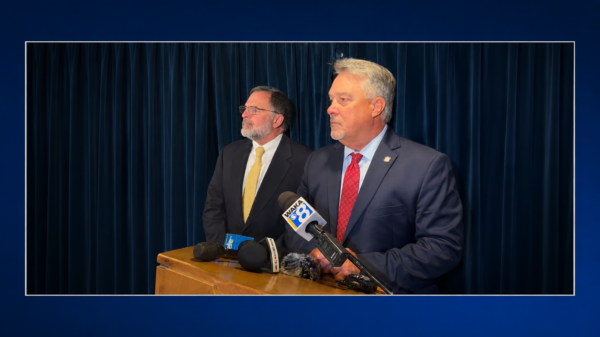
Attorney General Steve Marshall led a coalition of 13 states supporting the Postal Service proposal. Marshall argued that standardized envelopes and voter-specific barcodes would strengthen the chain of custody and provide states with better auditing tools.
“States are the leaders in regulating elections,” Marshall said in July, while describing the Postal Service rule as federal assistance that would strengthen rather than displace state authority. Alabama’s comment supported the proposal in full.
That position exposes the tension within the case.
Alabama maintains that states possess primary authority over elections. Yet it supported a federal rule giving the Postal Service the power to refuse outbound ballot mail from states that did not satisfy federal requirements.
It is possible to support better ballot tracking, more secure chains of custody and standardized practices without ignoring that contradiction.
The question is not whether election security matters. It does.
The question is who possesses the authority to write the rules—and whether those rules can be imposed without jeopardizing the lawful votes they are supposed to protect.
What the Court did—and did not—decide
For the 2026 election, the immediate issue is effectively settled. The new requirements will not govern November’s ballot mail.
The larger legal dispute remains alive.
The lower courts may still determine whether the Postal Service exceeded its statutory authority, violated the Elections Clause or adopted its rule unlawfully. The case could eventually return to the Supreme Court after a final judgment.
Kavanaugh’s concurrence suggests that the administration could receive a more receptive hearing if it attempts to impose similar requirements for a future election after giving states adequate time to prepare.
But adequate preparation would answer only the practical objection.
It would not necessarily answer the constitutional one.
Under the Elections Clause, Congress may alter state rules governing congressional elections. The states retain the authority the Constitution assigns to them. The president may direct executive agencies, but he cannot supply authority that Congress never gave them.
That is not a judgment about whether a particular president’s objectives are wise. It is a judgment about how power is assigned.
The constitutional structure matters most when the proposed policy sounds reasonable to those who hold power. Principles tested only against policies we oppose are not principles. They are political conveniences.
Monday’s decision preserved the existing voting process without finally determining where the Postal Service’s authority ends.
The court may have to answer that question later.
For now, it answered the question that could not wait: whether millions of voters should enter an election governed by a federal ballot-mail system that was still being assembled around them.
The answer was no.