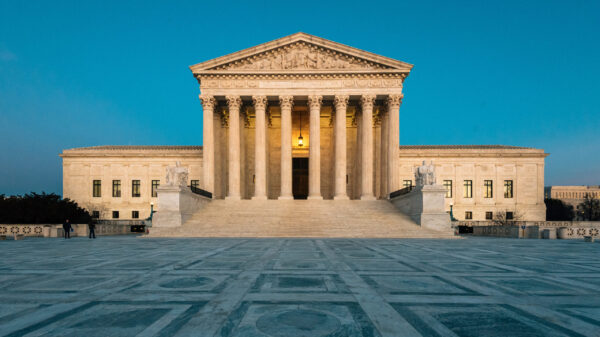

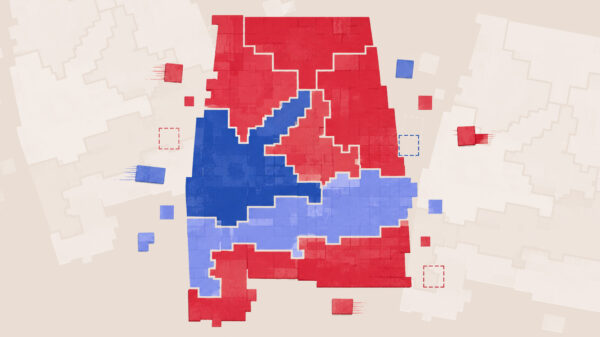


















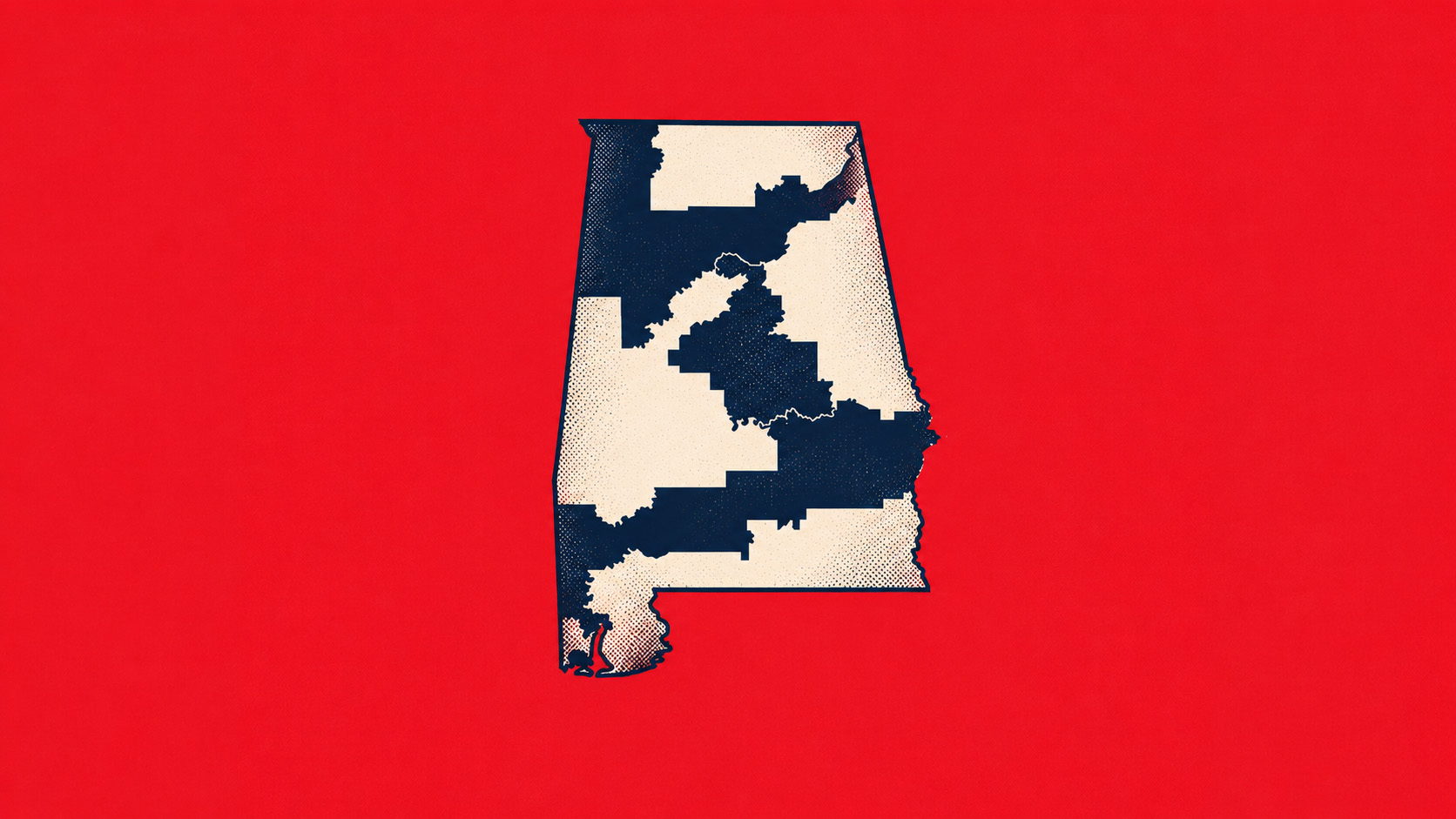
The plaintiffs who sued and blocked Alabama from using a 2023 congressional map that courts found discriminatory filed a response Monday giving the U.S. Supreme Court three reasons not to stay the injunction.
The response thoroughly supports blocking the map on the merits of how it was drawn, arguing that nothing has changed the evidence that the map is intentionally discriminatory against Black voters and therefore still violates Section 2 of the Voting Rights Act.
But before getting to the merits, plaintiffs say there also is no time to administer an election under the 2023 map.
The Singleton plaintiffs noted the state’s closure Monday to honor Confederate President Jefferson Davis would mean even an immediate stay from the Supreme Court would not give enough time.
“Assuming Applicants have respected and followed the district court’s order to administer all remaining events since May 26 according to the Special Master Plan, the voter reassignment effort that was ‘perhaps logistically impossible’ on May 26, is impossible now as of June 1,” the Singleton plaintiffs wrote in their response. “If absentee ballots are issued the morning of June 2, then all changes must be completed by today, June 1. And state and county administrative offices are closed today, June 1, to celebrate the birthday of Jefferson Davis. This leaves a few hours on an Alabama holiday to complete voter reassignment for the 2023 Plan.”
The Supreme Court did not move to stay the injunction overnight, so the window has grown even smaller—if not shut entirely—and in the best scenario would have just hours remaining.
“Alabama’s quixotic attempt to condense a monthslong process into a few hours is not harmless,” the Singleton plaintiffs continued. “If county registrars complete only part of their work on June 1 or June 2, the voter registration database will lock in a plan that is not the 2023 Plan and not the Special Master’s remedial plan, but some hybrid of the two that no statute or court authorizes Alabama to use, and one that could violate the ‘one person, one vote’ principle …”
The state filed a brief response Monday evening that does little to assuage the concerns plaintiffs raised about timing.
“As for Plaintiffs’ many arguments that there is no time left, it is true that time is tight because the district court entered its injunction the day before voter reassignment to the 2023 Plan was set to begin on May 27,” the state wrote. “But that is all the more reason to grant the stay, not deny it. While the district court considered itself an election czar that could save the State overtime through its last-minute injunction … that mistakes Purcell as a sword to be used against the State rather than as a shield counseling against federal intrusion in State elections.”
The remaining arguments restate much of what was laid out before the three-judge federal panel in Birmingham just over a week ago, with the state arguing that the Supreme Court’s decision in Louisiana v. Callais essentially means that the federal court erred in enjoining the state’s preferred map.
Plaintiffs argue that the ruling in Callais has no impact on the court’s finding that the state’s map is intentionally discriminatory against Black voters and that the state cannot show the district court likely erred in reconsidering the evidence in light of Callais and finding once again that the plaintiffs are likely to succeed on the merits of their claims.
Both sides now await a response from the Supreme Court.