



























Alabama can win in court and still lose in history.
That is where the state finds itself again after the U.S. Supreme Court allowed Alabama to use its 2023 congressional map for the 2026 elections. The map reduces Black voters’ opportunity districts from two to one after a lower court found the plan intentionally discriminated against Black voters. The Supreme Court’s six conservative justices granted Alabama’s request. The three liberal justices dissented.
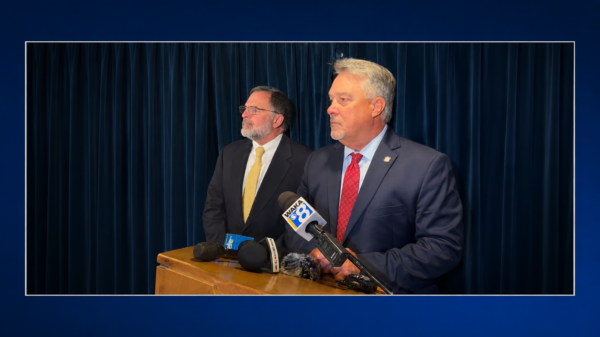
Alabama officials treated the decision as a triumph. Attorney General Steve Marshall called it a “major redistricting victory” after the Supreme Court’s 6-3 decision allowing Alabama to use the map.
But the trouble with Alabama’s long history on voting rights is the state has often confused winning a legal argument with proving a moral point.
Legal permission does not provide moral innocence.
A court may allow a map to be used. That ruling does not make the map just. A state may prevail under a legal standard while still failing the demands of justice. Power may find shelter in procedure, precedent and timing while still acting without conscience.
The legal fight is complicated. The moral question is clear.
A state with Alabama’s history should ask what justice requires, not how little Black political power it can recognize while surviving judicial review.
The Supreme Court may have given Alabama room. What Alabama chooses to do with that room belongs to Alabama—not to the justices, legal doctrine or clever arguments about process, neutrality or legislative discretion.
Alabama owns the choice. That is why this moment matters.
The moral test of a state comes when courts give it permission.
Alabama has been given permission. It has not been given absolution.
The 15th Amendment still stands. Its language remains one of the great promises born from the nation’s second founding after the Civil War: The right to vote shall not be denied or abridged on account of race. But in our time, that promise has been worn down, narrowed and proceduralized until too often only a veneer of protection remains.
The words endure, but the force behind them has weakened.
The nation has changed. The old order no longer appears in the same clothes. The signs have come down. The crude machinery of exclusion has been outlawed. The language of racial domination has been replaced by the language of neutrality, process, sovereignty and legislative discretion.
Moral evasion often survives by changing its vocabulary.
Outside the marble walls of the Supreme Court, the question is whether Alabama has changed enough to be trusted with the tools it once used to exclude, dilute and dominate.
Alabama keeps answering that question badly.
Again and again, the state returns to the same posture: draw the line, dare someone to challenge it, litigate for years, then declare victory if the courts eventually permit what conscience should have restrained from the start.
That is self-government stripped of self-examination.
A democracy is judged by whether it allows people to vote and whether it allows the people to govern.
That means political voice, representation and the right to participate in the common life of the state as something more than a tolerated minority whose influence can be fragmented, weakened or contained.
Maps are power.
They decide whether communities speak together or are broken apart. They decide whether citizens have a meaningful chance to elect representatives of their choice or whether their votes are scattered into districts where they can never quite matter enough.
The old question was whether Black citizens could vote. The modern question is whether their votes can be made politically harmless.
That is the moral issue Alabama keeps trying to bury beneath legal language.
A state with Alabama’s history should recognize the moral weight of equal citizenship without waiting for a court order, federal judges, litigation, injunctions or appeals.
When Alabama’s first instinct is to ask how little political power Black citizens may be given under the law, the problem becomes moral.
There are moments when a state should stop arguing and start listening.
Listen to the echoes of the enslaved in the fields.
Listen to the prayers whispered in cabins and churches, the cries of those who were told freedom had come but power would still be withheld.
Listen to the children of Birmingham, walking into fire hoses and police dogs with more courage than the men who governed them.
Listen to the footsteps on the Edmund Pettus Bridge, where citizens were beaten for demanding a ballot the Constitution had already promised.
Then look at this map. Look at Alabama’s history. Look into the soul of this state and ask whether justice has been done.
That question is what the law should ask when power draws the boundaries of democracy.
The state’s defense is always wrapped in noble language: sovereignty, self-governance, constitutional order and legislative authority. Those words matter. They belong to the people as much as those in power.
Sovereignty cannot mean the government may do whatever it can get away with. Self-governance cannot mean politicians draw districts to protect themselves and then call the result democracy. Constitutional order cannot mean honoring the forms of law while hollowing out the promise of equal citizenship.
The Constitution is a shield against state abuse.
That was the moral meaning of Reconstruction. That was the purpose of the 15th Amendment. That was the reason for the Voting Rights Act. These were responses to democracy being denied.
Alabama officials may dislike that history, but they cannot escape it.
A state cannot claim to honor the Constitution while treating the amendments born from emancipation as obstacles to be narrowed, managed or explained away. A state cannot claim fidelity to the text while ignoring the moral catastrophe that made that text necessary. A state cannot claim neutrality when neutrality becomes the instrument by which old inequalities are preserved under new rules.
The deeper danger is that the law itself is being reshaped to make less and less of this conduct legally visible.
That is how moral failure often enters public life. It arrives through standards, presumptions, burdens of proof, procedural timing and judicial deference. It arrives through the quiet conversion of constitutional promises into technical obstacles too difficult for ordinary citizens to enforce.
Rights can be hollowed out while still being praised. Promises can be diminished while still being quoted. A state can say the 15th Amendment still stands while working within a legal system that leaves its protection too thin to bear the weight of actual injustice.
That is where Alabama stands now.
Moral responsibility grows when legal accountability retreats.
Law has a purpose higher than protecting the cleverness of those in power. At its best, law restrains power. It protects the vulnerable from being managed, minimized or erased by those who have the numbers, the offices and the machinery of government.
When law forgets that purpose, it may still speak in the language of standards, precedent and deference. It may still come wrapped in court orders and constitutional phrases.
But law without conscience becomes something smaller.
It becomes permission for domination.
Alabama should know better. This state has lived too much history to pretend it does not understand what is at stake. It has seen what happens when law protects power instead of restraining it. It has seen how injustice can dress itself in procedure.
It has seen discrimination disguise itself as order.
That is why this moment cannot be treated as another legal victory, another map or another election cycle. It is a test of conscience.
The danger now is that Alabama has learned how to achieve old purposes through modern means.
No one has to say Black citizens should matter less. The map can do the speaking.
No one has to announce that representation should be weakened. The lines can make it happen.
No one has to deny the 15th Amendment. The courts can narrow it until the promise remains visible but less enforceable.
That is how rights are diminished in a democracy. Sometimes the damage comes through permission.
Alabama won something at the Supreme Court. No honest person should pretend otherwise.
But the moral question remains unsettled. What kind of state celebrates a victory that leaves so many of its citizens wondering whether their political power has once again been diminished by design? What kind of democracy measures success by how efficiently it can reduce representation and still survive review?
Alabama can call this self-governance.
History may call it something else.
The state may have won the map fight.
But it has not won the moral argument.
The Supreme Court may have given Alabama permission.
History has not given it absolution.