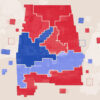
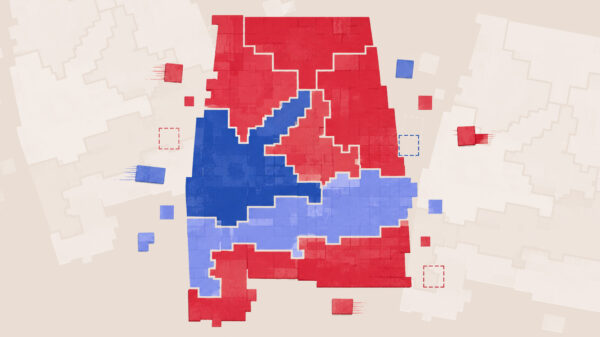















The U.S. Supreme Court on Tuesday evening cleared the way for Alabama to hold a special election using its 2023 map, which is expected to flip a seat for Republicans.
The court’s six conservative justices voted to stay a lower court’s injunction. The court’s three liberal justices issued a scathing dissent.
“As to intentional vote dilution, the District Court did not heed the presumption of legislative good faith … because it interpreted the State’s legal disagreement with the court’s earlier remedial order as proof of discriminatory animus,” the court wrote in its order staying the injunction. “And, as to both claims, the District Court’s analysis departed from Callais. Under Callais, the District Court was required to deny relief unless the plaintiffs’ alternative map performed ‘just as well’ with respect to all of the State’s constitutionally permissible districting criteria. … Yet, the District Court found a violation even though the plaintiffs’ alternative map would not perform just as well as to the State’s constitutionally permissible criteria of keeping together the Gulf Coast community of interest and avoiding the pairing of incumbents. The District Court also failed to follow our instruction in Callais that the mere fact that voters of different races vote for different parties is not relevant to proving racially polarized voting patterns.”
The ruling lends credence to arguments the state has made for the past three years in defense of the map, which a three-judge federal panel repeatedly found intentionally diluted the power of Black voters.
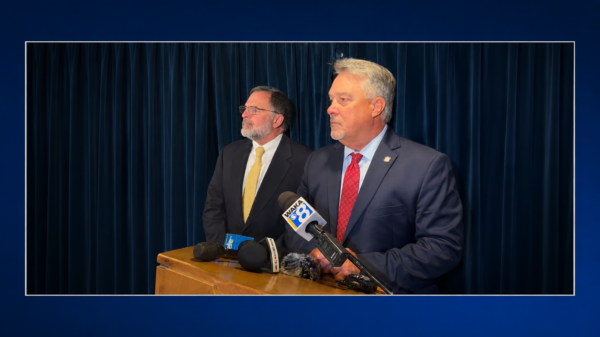
“By returning our elections to the Congressional maps approved by the Legislature instead of the map drawn by unelected bureaucrats, this unprecedented wrong has been made right,” Secretary of State Wes Allen said in a statement Tuesday night.
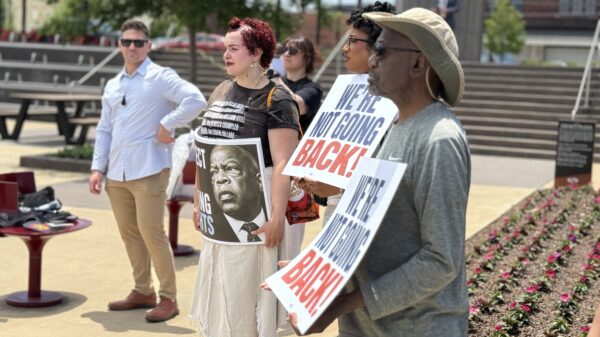
The dissenting justices, the plaintiffs and others who cover the court painted the ruling as an unprecedented wrong.
“The Supreme Court’s decision gives cover to Alabama and others to deliberately and openly discriminate against Black voters without fear of any consequence,” said Deuel Ross, director of litigation at the Legal Defense Fund. “The Court’s shameless decision to reinstate a racially discriminatory map defies any thoughtful or consistent application of the law. We will continue to throw all of our resources into the fight to ensure that Alabama voters have the fair representation that they deserve in Congress.”
Justice Sonia Sotomayor, writing for the dissenting justices, wrote that the court’s ruling authorizes “a chaotic election, held under a never-before-used congressional map that intentionally discriminates against Black Alabamians, that Alabama adopted in unashamed defiance of a prior court order directly affirmed by this Court, and that will require officials to change the voter registrations of hundreds of thousands of voters in just days at best, a task that Alabama previously represented would take months.”
As of Wednesday morning, it remained unclear how long, if at all, the state has to reassign voters. Director of Elections Jeff Elrod testified before the federal court that the cutoff is June 2, when voter records become locked down for the upcoming runoff. He did not specify a time, but the ruling came just hours before the deadline he testified to.
APR asked Allen directly what the ruling meant for reassigning voters, but he did not respond beyond pointing to his brief statement supporting the ruling.
U.S. Representative Shomari Figures won election under the remedial map, which the Supreme Court once affirmed, but he will now face an uphill battle under the 2023 map, which reduces the percentage of Black voters in a second district.
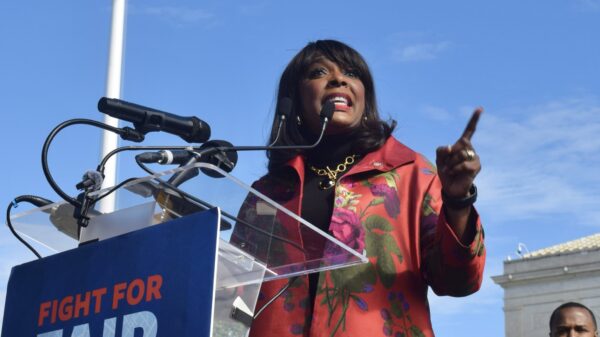
“The Supreme Court has now confirmed that there is no longer a Voting Rights Act in America, and states are essentially free to discriminate against minority voters with no consequences,” Figures said in a statement. “This is a dangerous ruling that sets the state and this nation back decades.”
The special election is set for August 11 despite the lack of clarity around reassignment. The candidates will be those who qualified before the federal court’s injunction.