
































On Wednesday, the House of Representatives passed a war powers resolution which would limit President Trump’s ability to intervene in Iran in a 215-208 vote. It had been almost 100 days since the United States and Israel launched a series of air strikes against Iran and killed the nation’s supreme leader.
Under the 1973 War Powers Act, the president is required to receive authorization for military force within 60 days of the use of force and remove U.S. troops if directed by a joint resolution of both chambers of Congress. Members of the Trump administration, including Secretary of State Marco Rubio, have maintained that the law is unconstitutional, but it has not yet faced a direct legal challenge.
All five Republican members of the House of Representatives from Alabama voted against the resolution. Democratic Representatives Terri Sewell and Shomari Figures voted in favor. Both have been vocal critics of the war in Iran.
“Finally! A bipartisan majority in the House just voted to rein in Trump’s reckless war of choice in Iran,” Sewell posted on social media. “Trump started this war with no authorization, no strategy, and no consideration of the cost to American families. I proudly voted to end this war and urge my Senate colleagues to do the same!”
Four Republican members of Congress voted in favor of the resolution: Tom Barrett, R-Michigan; Warren Davidson, R-Ohio; Brian Fitzpatrick, R-Pennsylvania; and Thomas Massie, R-Kentucky. The remaining 211 votes in favor of the resolution were cast by Democratic members of Congress.
Massie, who had been one of the most vocal supporters of ending the conflict within the Republican caucus, was successfully primaried last month by Ed Gallrein. Gallrein was endorsed by President Trump, who has repeatedly criticized Massie over the past year for his anti-administration stances on Iran and the Epstein investigation.
Now that the House has passed the resolution, it will be sent to the Senate. The Senate already advanced a similar resolution earlier this year, but only because several senators did not cast votes, including Alabama Senator Tommy Tuberville.
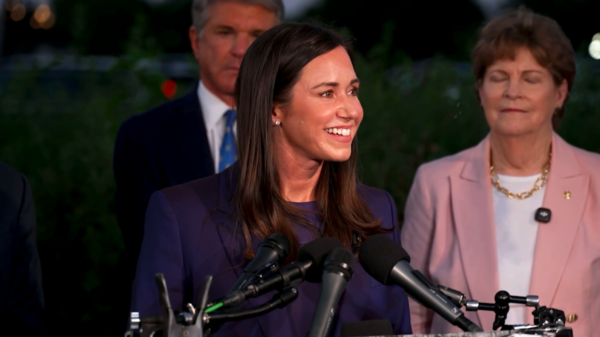
Alabama’s junior senator, Katie Britt, voted against advancing the resolution in the Senate and has generally been a proponent of the administration’s actions in Iran.
Even if the resolution does pass the Senate, Supreme Court precedent suggests that for it to be enforceable, the resolution would have to be signed by President Trump or be passed by two-thirds of both chambers of Congress following a veto. Both paths to passage appear improbable at present.