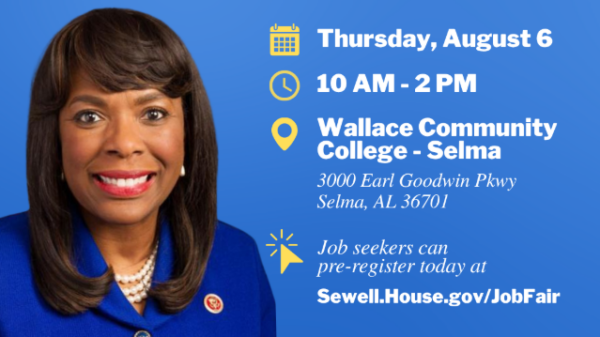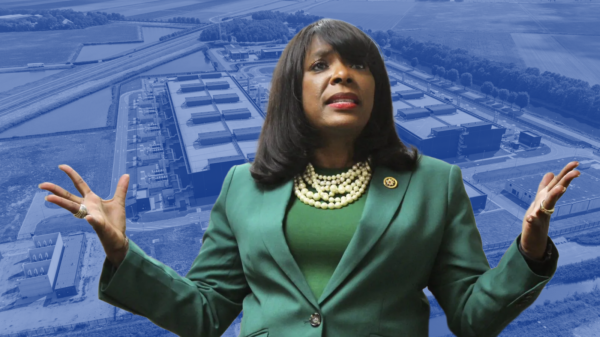

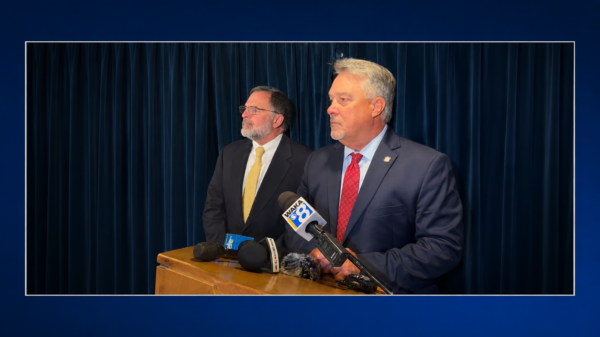
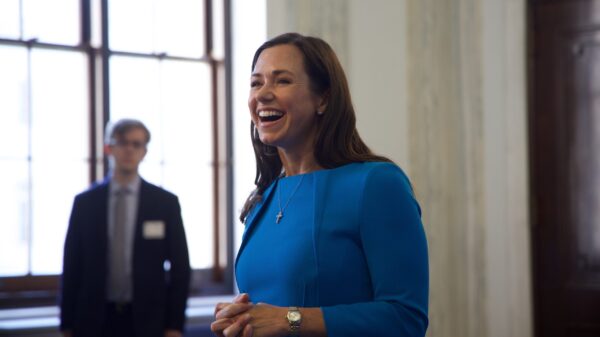


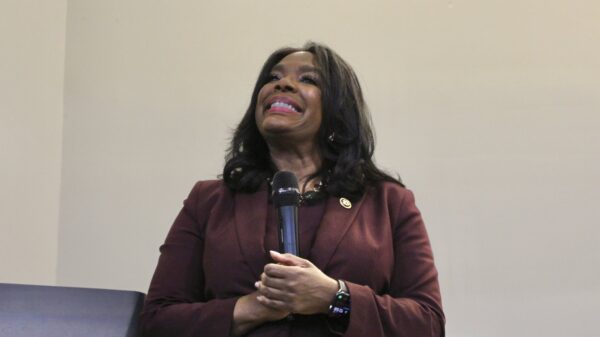





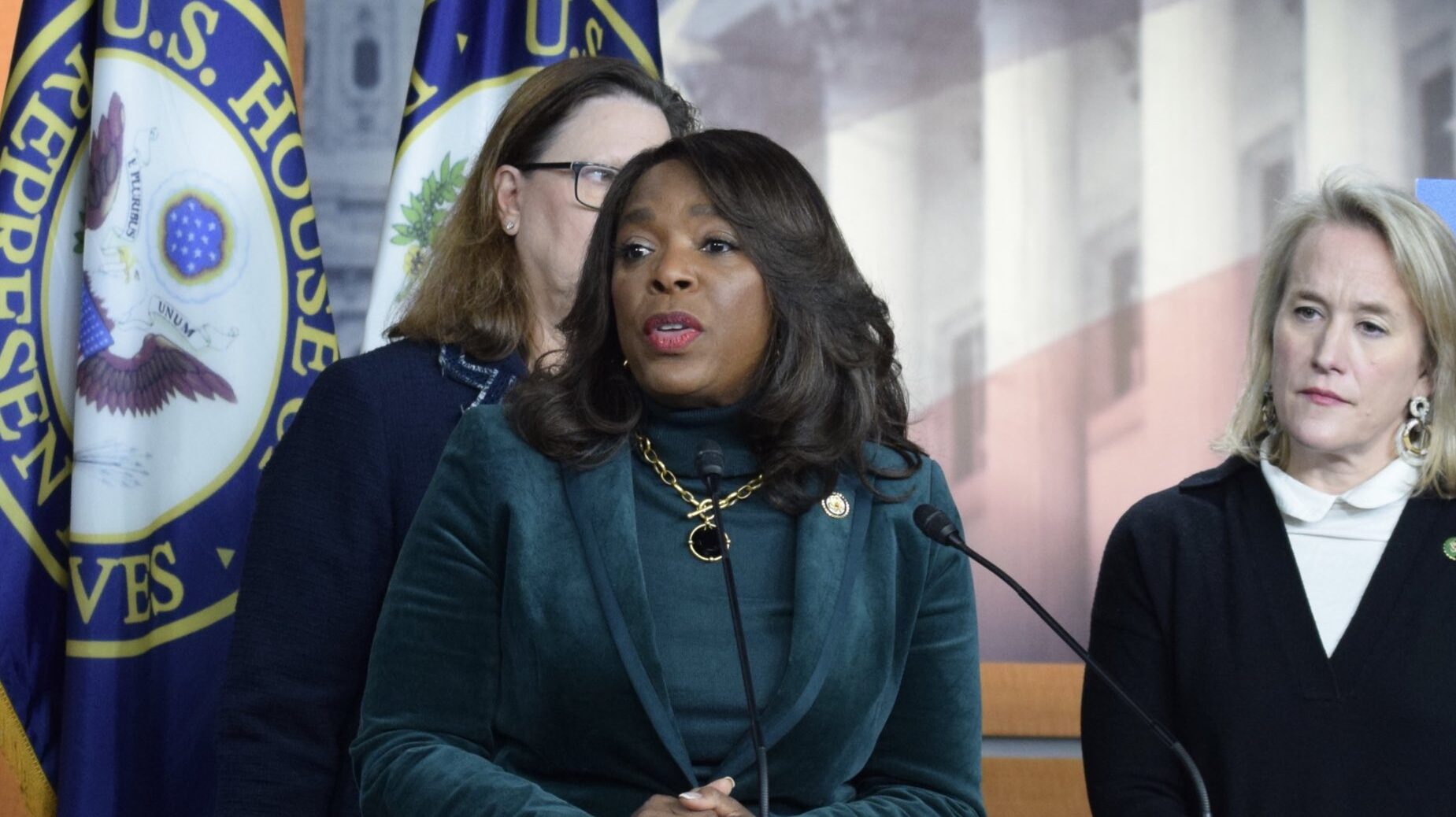
“The Department of Justice, which should be protecting the right to vote for every eligible American, is instead attacking voting rights and civil rights organizations,” U.S. Representative Terri Sewell charged at the start of an unofficial shadow hearing on Monday.
The Democratic representative from Alabama’s 7th District, Sewell is the ranking member of the House Administration Subcommittee on Elections. She used the shadow hearing to defend the legacy of the Voting Rights Act of 1965 and to criticize some of the Trump administration’s recent actions.
“I want to say that I stand with Southern Poverty Law Center,” Sewell said at the beginning. “For decades you have done tremendous work on countering hate and extremism and fighting for civil rights.”
Last week, a federal grand jury indicted the SPLC on charges of wire fraud, making false statements to a federally insured bank, and conspiracy to conceal money laundering. Acting U.S. Attorney General Todd Blanche said the organization is “manufacturing racism to justify its existence.”
Other organizations and many politicians have condemned the investigation as political persecution. The SPLC describes many organizations and individuals who support the Trump administration as hate groups and extremists.
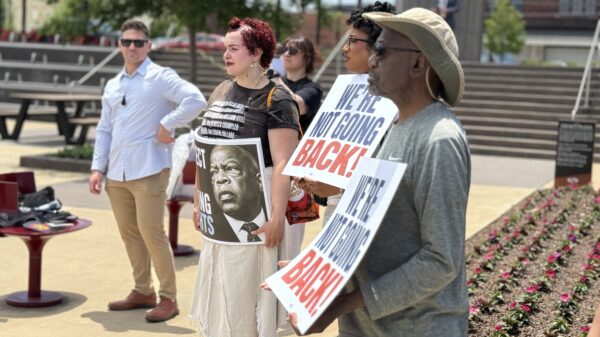
During the introduction to the hearing, Sewell also harkened back to the Selma to Montgomery March and the original passage of the Voting Rights Act, as well as its more recent history.
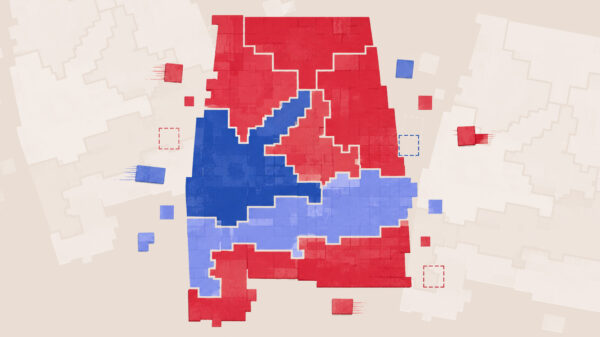
“In 2013, I think all of us know, the Supreme Court struck down some of the VRA’s most essential and crucial protections,” the Congresswoman said in reference to Shelby County v. Holder. “And the pending Louisiana v. Callais case further threatens long celebrated, vital safeguards. Congress must act to update the Voting Rights Act.”
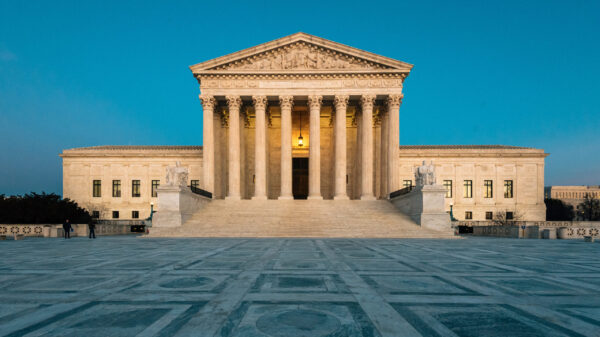
The Supreme Court is currently considering the case Louisiana v. Callais after sending it for reargument in 2025, and their decision could dramatically reshape American voting rights law.
Brought by “non-African-American voters,” the suit alleges that redrawing Louisiana’s Congressional maps to create two Black majority districts was unconstitutional racial gerrymandering. A decision is expected any week.
Todd Cox, associate director-counsel of the NAACP Legal Defense Fund, spoke during the shadow hearing on recent changes to voting rights.
“As we move toward the 2026 midterm elections, we are not simply approaching another election cycle,” Cox declared. “We are approaching a reckoning with the health of our democracy, and whether we are truly living up to the promise of equal participation for all.”
“At the federal level, this moment demands renewed commitment to strengthening the Voting Rights Act, including, as [Sewell] mentioned, the passage of the John R. Lewis Voting Rights Advancement Act, to restore preclearance restrictions and ensure discriminatory laws cannot take effect unchecked,” he said.
Rebekah Caruthers, the president of Fair Elections Center, specifically criticized policy changes she described as likely to disenfranchise young voters including removing student IDs from lists of acceptable documents for voting.
Like Cox, Caruthers also called for legislation to protect and expand voting rights. “We must defeat legislation like the SAVE Act, we must pass a youth voting rights act, we must set a minimum federal standard to allow voter registration up to and including election day, known as same-day registration,” she said. “We must pass the John Lewis Voting Rights Advancement Act.”
Arthur Ago, director of strategic litigation and advocacy for the Southern Poverty Law Center, used Alabama’s 2024 “ballot harvesting” law as an example of anti-voting legislation during the shadow hearing.
“In 2024, Alabama passed a law that severely restricts the ability of civic engagement groups to help voters apply for absentee ballots,” Ago stated. “This echoed laws in Florida and Georgia that criminalized other forms of voter assistance, like supporting voters in long lines with food and water.”
Action at the federal level on voting rights appears unlikely at present, given the president’s consistent history of criticizing policies meant to make it easier to vote such as mail-in ballots. However, Cox suggested on Monday that there may be “opportunities for states to pass their own voting rights acts,” if the Supreme Court’s decision in Louisiana v. Callais further weakens the VRA.