




























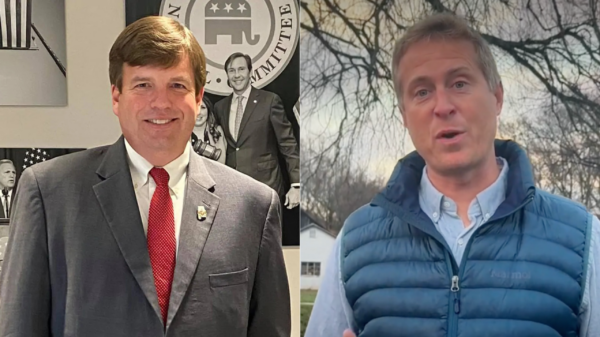


U.S. Senator Tommy Tuberville’s response to the legal challenge over his eligibility for governor gives the Alabama Supreme Court several ways to end the case without deciding where he was legally domiciled during the seven years before the election.
Montgomery County Circuit Judge Brooke Reid dismissed the case without discovery, a trial or a ruling on the residency evidence. The immediate question is whether Alabama law provides a judicial procedure through which that evidence may be heard.
Filed Thursday, August 27, Tuberville’s 62-page response contends that quo warranto applies only to someone who has assumed public office; that Alabama law placed the eligibility dispute within the Republican Party’s primary-contest process; that courts are generally barred from interfering with election results; and that the challengers dismissed the election official whose actions they originally sought to restrain.
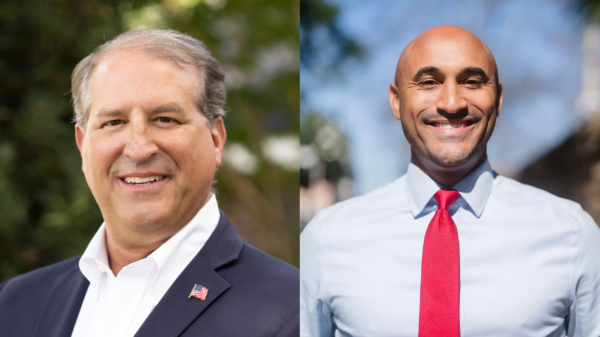
Under the court’s expedited briefing schedule, Dorgan and LeBlanc have seven days—until Thursday, September 3—to file a reply addressing those arguments.
Based on the briefs now before the court, Tuberville has presented a legally defensible path to affirm Reid. The briefs leave unresolved whether he meets the seven-year “resident citizen” requirement in Section 117 of the Alabama Constitution.
That distinction is the center of the case.
A forceful opening and a serious argument
Tuberville’s brief begins by calling the appeal “preposterous.” It argues that one circuit judge and 12 jurors from one county should not have the implied power to overrule the choice of hundreds of thousands of Republican primary voters.
The rhetoric is sharper than necessary. Jurisdiction comes from the Constitution and statutes, rather than the number of voters affected by a case. The legal argument beneath it is more serious.
Tuberville relies on Alabama Code Section 17-16-44, which generally denies courts jurisdiction over proceedings that ascertain, question or affect an election unless judicial authority has been “specially and specifically” provided by statute.
Dorgan and LeBlanc say their challenge concerns Tuberville’s eligibility for the general-election ballot rather than his primary victory. Their claim is that a political party cannot place a constitutionally ineligible nominee on the general-election ballot.
Tuberville answers that removing the primary winner would necessarily affect that election, regardless of how the plaintiffs describe the lawsuit. The statutory language is broad enough to make that a credible argument.
The analysis goes further.
In Bostwick v. Harris, the Alabama Supreme Court held that compliance with statutes governing nominations presented a judicial question and ordered a candidate’s name removed from the general-election ballot.
Tuberville distinguishes Bostwick because it involved an undisputed failure to meet a statutory filing deadline. This case involves a disputed constitutional qualification and a primary contest the Republican Party agreed to hear.
That distinction may be enough for the court. But Bostwick establishes that courts can intervene in at least some nomination disputes affecting an election.
The quo warranto obstacle
Tuberville’s clearest argument concerns the wording of the quo warranto statute.
Section 6-6-591 authorizes an action when someone “usurps, intrudes into or unlawfully holds or exercises” a public office. Tuberville is the Republican nominee, while the office of governor remains separate from his current status.
The challengers argue that a certified nominee is a “quasi-officer” who holds a state-recognized certificate of nomination and a legally protected right to appear on the ballot.
They rely on Johnson v. Roberson, a 1996 decision describing the “safe practice” for a pre-election nomination challenge: combine quo warranto against the nominee with a petition against the election officials responsible for the ballot.
That language helps the challengers, though it arose under different circumstances. The discussion appeared in a footnote, the issue was not presented adversarially and Johnson involved a minor-party nomination for which the ordinary primary-contest process apparently was unavailable.
Tuberville also challenges the appellants’ reliance on language covering a “license, certificate, or other legal authorization.” In context, that phrase appears to refer to a profession requiring such authorization. The language provides no clear indication that a certificate of nomination qualifies as a public office.
The challengers have a reasonable analogy. Tuberville has a strong textual objection. Alabama appellate courts have yet to squarely resolve the conflict.
A second statutory barrier
Tuberville also relies on Section 6-6-598, which says the validity of an election that may be contested under Alabama law cannot be tried through quo warranto.
Alabama law allows a party member who participated in a primary to contest a nomination on the ground that the nominee “was not eligible to the office sought.” Tuberville’s eligibility was challenged through that process, and the Alabama Republican Party rejected the contest.
Tuberville argues that Section 6-6-598 therefore blocks this lawsuit. The question, he says, is whether eligibility could have been raised in a primary contest, regardless of how Dorgan and LeBlanc characterize their lawsuit.
That may be the strongest new argument in the response.
The challengers still have an answer. They are asking whether Tuberville satisfies a constitutional qualification governing who may be elected governor, rather than asking a court to decide who won the primary or whether the party correctly counted the votes.
The Supreme Court must decide whether that distinction matters. Section 6-6-598 refers to the “validity of an election.” Its language leaves open how a separate constitutional challenge to the eligibility of the person who won it should be treated.
Tuberville has presented a serious statutory defense. The answer remains unsettled.
The party before the election, the Legislature afterward
Tuberville’s broader position is that Alabama law assigns the residency question to different institutions at different stages.
Before the general election, he says, eligibility disputes belong to the political party through the primary-contest statutes. After the election, Section 115 assigns a contested election for governor to both houses of the Legislature.
The Constitution expressly gives the Legislature authority over a contested gubernatorial election. Its text leaves the treatment of pre-election eligibility disputes less explicit.
Tuberville acknowledges that a court might have some role if a proper post-election contest were filed and the Legislature refused to act. That leaves the institutional concern identified by the challengers: The candidate’s party decides before the election, the Legislature decides afterward, and a neutral court may never hear the evidence.
That concern alone cannot create jurisdiction. Courts derive remedies from constitutional and statutory authority.
At the same time, a mandatory constitutional qualification carries legal force beyond an internal party rule. Republican voters may choose their nominee, while Section 117 establishes the qualifications for election as governor.
The Supreme Court must reconcile those principles.
The missing defendant
The challengers’ own procedural decision may make that reconciliation unnecessary in this case.
Their original complaint named Secretary of State Wes Allen and sought an order preventing him from directing that Tuberville’s name be printed on the ballot. After Allen moved to dismiss, the plaintiffs voluntarily dismissed him.
Tuberville is now the only defendant.
That matters because Johnson contemplated an action against both the nominee and the election officials responsible for the ballot. A judgment also generally binds only officials or organizations that are parties to the case.
Reid described quo warranto as the lawsuit’s “sole claim.” If that description controls, the plaintiffs may have eliminated the declaratory and injunctive claims that could have reached election officials.
Even if the Supreme Court holds that quo warranto may be used against a certified nominee, it must determine what effective relief could be ordered against Tuberville alone.
This is a genuine weakness in the challengers’ case.
The brief’s residency argument
Although the appeal concerns procedure, Tuberville’s brief also advances an interpretation of Section 117 that would make the underlying residency requirement easier to satisfy.
It argues that the Constitution uses “resident citizen” rather than “domiciliary”; that a person may maintain more than one residence; and that Section 117 contains no express requirement that Alabama be the candidate’s “primary residence.”
The brief also invokes Section 31, which provides that a temporary absence from Alabama does not cause a forfeiture of “residence once obtained.”
Working in Washington, traveling for business or spending time at a second home does not automatically cause someone to lose an established Alabama domicile.
Section 31, however, addresses residence “once obtained.” The disputed question is when Tuberville established that domicile—specifically, whether he abandoned his former Florida domicile and established Alabama as his permanent legal home by Nov. 3, 2019.
Alabama case law also complicates Tuberville’s broader interpretation.
In Osborn v. O’Barr, the Alabama Supreme Court said terms such as “legally resides,” “inhabitant” and “resident,” when connected to political rights, are synonymous with domicile. The court relied on Mitchell v. Kinney, which defined domicile as residence combined with an intent to remain permanently or indefinitely.
Those cases addressed provisions other than Section 117, giving the Supreme Court room to distinguish them. They also make the absence of the word “domicile” less decisive than Tuberville’s argument suggests.
A person may own or occupy several residences. Alabama law generally recognizes only one domicile for political purposes.
What the evidence shows
Tuberville’s brief recounts the Republican Party committee’s findings that he bought an Auburn house in 2018, filed an Alabama tax return reflecting split residency that year, obtained an Alabama driver’s license and registered to vote in March 2019, and filed subsequent Alabama tax returns that did not indicate residency elsewhere.
That evidence is significant. If accepted after a full evidentiary proceeding, it could support a finding that Tuberville established Alabama domicile before the constitutional deadline.
The challengers allege competing facts involving his Florida voter registration, Florida driver’s license, use and ownership of the two properties, travel patterns and documents identifying the Florida property as his primary residence.
Those allegations leave the question of Tuberville’s domicile after Nov. 3, 2019, disputed. The party’s findings similarly fall short of a judicial determination of Alabama domicile.
The circuit court held a limited hearing on jurisdiction. It conducted no discovery, received no complete evidentiary record and issued no ruling on the merits.
Affirming the dismissal would leave the party’s determination undisturbed. The decision would remain distinct from a judicial finding that Tuberville meets Section 117.
Has the election clock overtaken the case?
Tuberville finally argues that the appeal is likely moot because ballot printing and distribution have begun and the officials who administer that process are no longer parties.
The timing problem is real. But the principal case Tuberville cites, Bell v. Eagerton, involved an election that had already occurred and a winning candidate who had been certified and installed. The 2026 general election remains ahead.
The court could still decide that no effective relief remains available in this lawsuit. Ballot preparation alone provides a different factual setting from Bell.
A substantial defense, but not a residency ruling
Tuberville has presented a substantial case for affirmance.
The quo warranto statute expressly addresses people who hold or exercise public office, creating a significant question about its application to a party nominee. Section 6-6-598 may displace that remedy because eligibility was available as a ground for a party contest. Section 17-16-44 requires judicial caution in election disputes. And the challengers weakened their case by dismissing the secretary of state.
The court can rely on any of those grounds without deciding where Tuberville was domiciled in 2019.
The brief is less persuasive in arguing that Section 117’s use of “resident citizen” carries no domiciliary requirement. Alabama’s political-rights cases point in the other direction, and Section 31 protects residence only after it has been established.
The fairest reading is therefore narrower than either side’s rhetoric.
Tuberville has a strong argument that this lawsuit used the wrong procedure or now lacks the parties necessary for effective relief. The challengers still have a serious argument that a constitutional qualification should receive scrutiny beyond a candidate’s party before the election.
Their reply may sharpen those competing arguments. The court still must address jurisdiction and the available remedy before it can reach the evidence of residency.
Its decision may determine who is permitted to ask the residency question and when.
The underlying constitutional question could remain unresolved: whether Tuberville had established an Alabama domicile by Nov. 3, 2019.