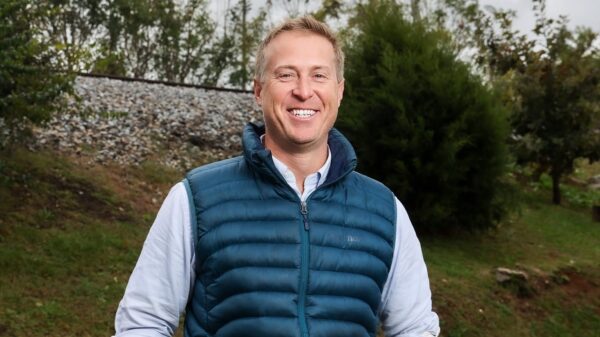

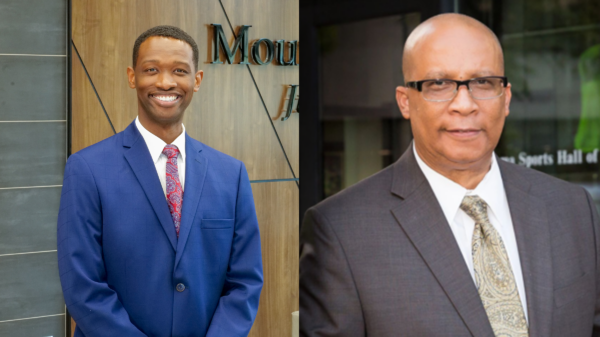

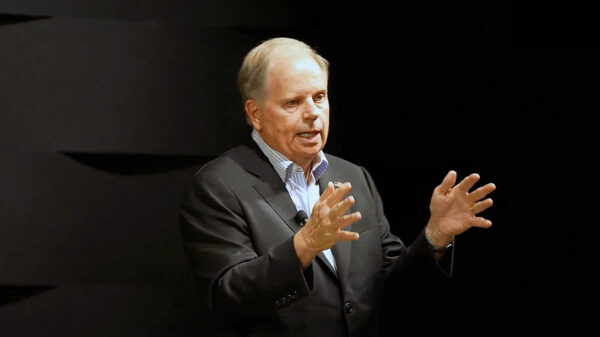


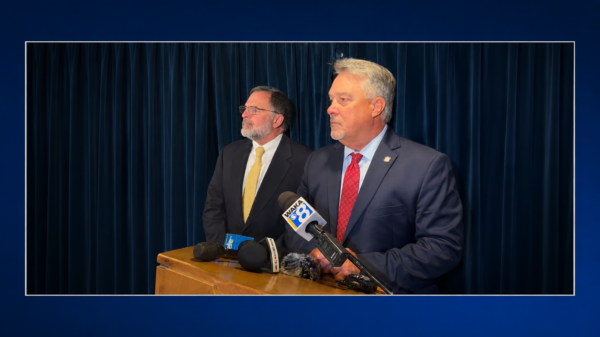
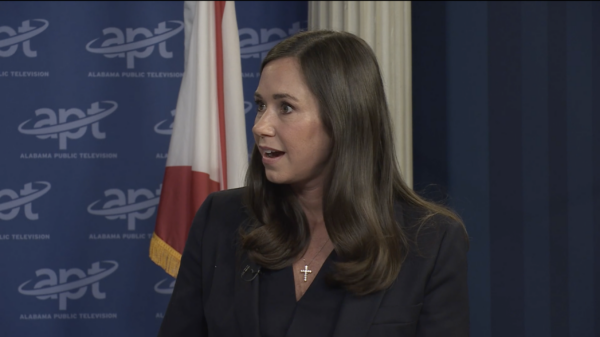

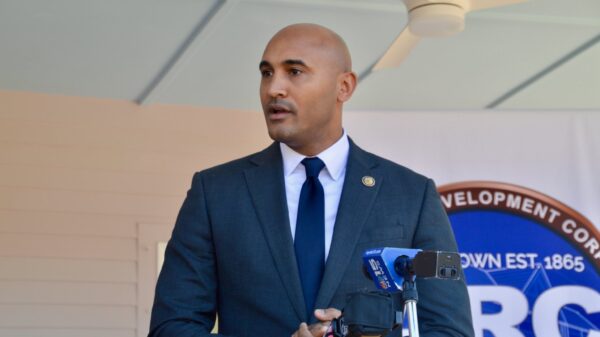
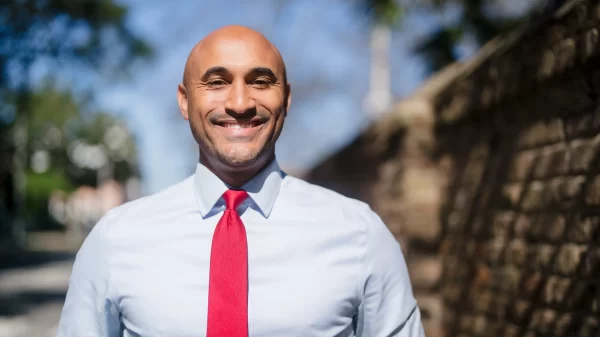





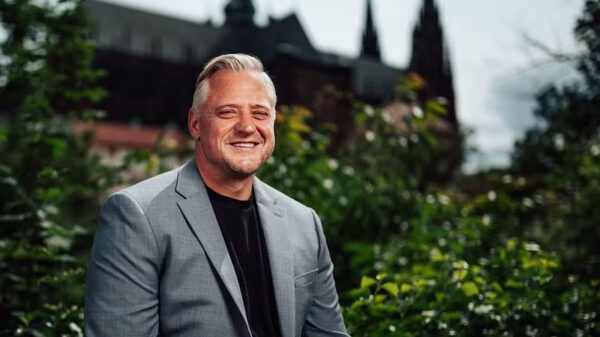



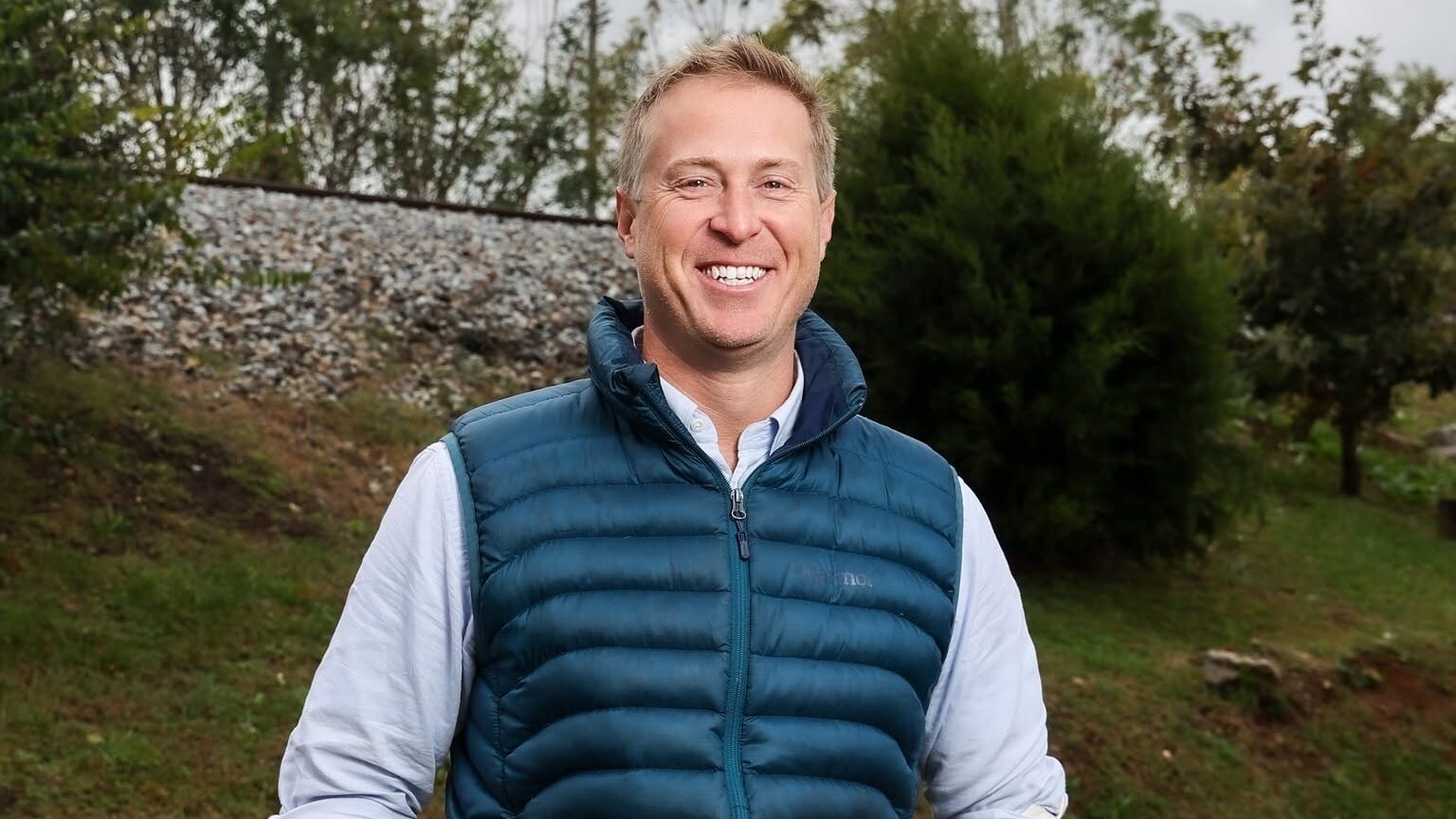
Huntsville businessman Andrew Sneed won the Democratic nomination for Alabama’s 5th Congressional District in a primary runoff earlier this month.
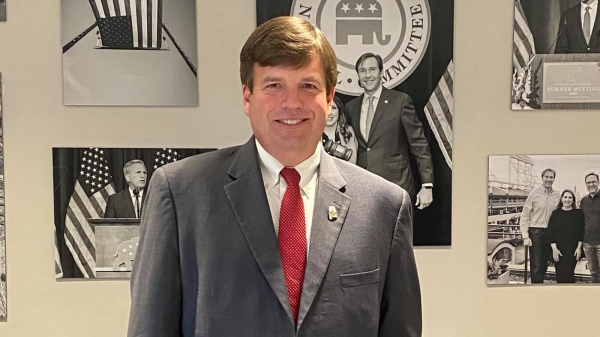
This November, Sneed will face Congressman Dale Strong, R-Alabama, in the general election. Strong’s bid for reelection in 2024 was unopposed and in 2022 he received over two-thirds of the vote in the heavily Republican district.
On Thursday, APR spoke with Sneed about why he chose to run for Congress, what he will prioritize if elected, and his reaction to Alabama’s recent redistricting following the Supreme Court’s ruling in Louisiana v. Callais.
This interview has been edited for length and clarity.
Can you describe your reaction to winning the runoff earlier this month?
We’re thrilled with the results, and we are clear-eyed and locked in. This is what we’ve been working to get to, and it’s good to be past the primary season and onto the challenge at hand, which is bringing positive change for the 5th Congressional District, which we are ready for.
Was there any specific moment, story or piece of legislation that made you decide to run for Congress this cycle?
In the wake of President Trump’s reelection, while there was a sliver of hope that things might go better than they have, the chaos and division started immediately. And it was so extreme so quickly, we quickly came to the realization there’s no one coming to save us. No one else.
We, us, in our family, and in our household, and we in this district have to be the heroes of this story. If we want a different future than the one we’re headed on, it’s up to us to write it. So was there a particular moment? Maybe not one specific piece of legislation. Although, DOGE, the chaos that that brought. The unconstitutional chaos, the ready abandoning of the Constitution and just the rapid dismantling of institutions that make life better for people here in this district and around the country, keeping our kids safe, and the wholesale destruction of those things. Nobody was speaking up. Our representative wasn’t. So we had a choice to make, and the choice we made was to step forward and offer people something different.
You’ve been campaigning for months and are now preparing for the general election. Do any conversations with voters stand out in your memory?
I was in a driveway talking to two guys, and we were talking about all the different things going on and the vision of hope that we have for the district and the idea of people feeling heard and feeling like their vote matters. And one of the gentlemen who’s about my age revealed that he’d spent most of his adult life in prison, and he had lost his right to vote.
He said, “Man, you make me wanna get my vote back. This conversation makes me want my voice back because I realize this stuff really matters.” That really stuck with me, especially in the wake of The Alabama Solution, this documentary and the things that we’d seen and to know the things that that man had been through. And here he was feeling enough hope that he wanted to get involved in our civic discourse again, and that was profound.
I walked across the street, literally, and knocked on a door, and there was an older gentleman that came to the door. This was a predominantly African-American neighborhood, and he looked at me like I was lost. I said, “I’m not trying to sell you something, sir. I’m coming to try to get your vote.”
He said, “You are the first politician that has come here in 40 years to this house.” So when we say hear every voice, we mean it. It’s not a slogan. That’s what representation should be. That should be the bare-bones requirement, a pursuit of listening to people’s voices.
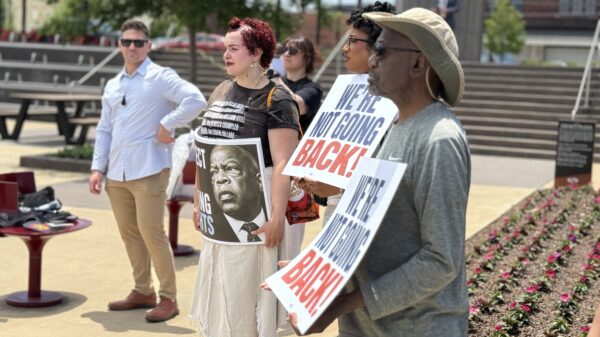
After the Supreme Court’s ruling in Louisiana v. Callais, Republican politicians in Alabama and other states have sought to gain seats in Congress for their party by redrawing “majority-minority” districts. How would you describe recent changes to voting rights law?
The VRA was introduced to redress a harm. And Louisiana v. Callais, the ruling suggests that that harm has now been redressed. I simply don’t believe that that’s true. I don’t believe that the data shows it’s true.
Here in Alabama, we see the best and the worst of civil rights and progress. This isn’t ancient history. This is 15 years before I was born.
It’s not a long time ago. The grief in the people over 60 years old, and the trauma that they’re experiencing right now, I guarantee you that they don’t feel that their voice is being protected, and they don’t feel valued, and they do feel that something is being taken away. And I think that, in reality, that’s what’s happening.
Listen to the folks that have been disenfranchised, whose grandparents couldn’t vote. Listen to them, and see how they feel about this moment. And then come back and look me in the eyes and tell me that what happened is in the interest of justice and the interest of progress for this country. It’s time for ethics for the Supreme Court because I don’t think this was about justice.
If you are elected, what will your major policy priorities be? What legislation needs to get passed in order to help the people of District 5 and other Alabamians?
I think what we have right now is a representative that actively votes against this district. I’m not talking about being a bad person, I’m talking about the judgment that is applied to the votes that have been made.
When a representative of the 5th Congressional District votes in favor of DOGE, which costs 25 percent of the jobs at Marshall Space Flight Center, that’s not voting for the district. And when you vote for cuts that make Gate 3 at Redstone Arsenal not function, that’s not voting for the district. And when you vote for the One Big Beautiful Bill, and that costs 130,000 Alabamians their healthcare, that’s not voting for the district.
I think the fundamental legislative agenda, we’ve got to address affordability. And some of that comes down to having a congressman that’s committed to the Constitution, getting rid of unconstitutional tariffs, and Congress that will be Congress again. Having a congressman look at the disastrous results of the Iran War that should have been voted on by Congress. Cost of living, healthcare, the Constitution and the courage to speak up when things are wrong.
What is the primary thing that the people of District 5 should know about you and your campaign?
First and foremost, I know that folks are hurting. I’m a small business owner. We see what folks are paying at the gas pump to fill up one vehicle. I fill up six work trucks every week. That price has gone up 40 percent. And I know people all over the district are feeling that. My employees are feeling it.
I know that people do not feel heard right now. Like I said, hear every voice is not a catchphrase. It’s a mission statement. And it will be the difference between myself and what we’ve had for the last few years of Congressman Strong.
What I would like folks to know is that it doesn’t have to be like this. We can have a person who listens to everybody, every Republican and Democrat in this district. I’m going to be there to listen to them, and we’re going to set a completely different tone, one that is focused on unity and bringing folks together, and we will never, ever embrace the politics of division.
We believe we’re going to win this race. You look at the Democrat turnout. We thought maybe 25,000 folks were going to vote on the 19th, and it was almost 50,000 people. This district is ready for change; it is not a long shot. I believe we’re ready to elect someone different that is committed to this district and being a voice for everybody here, and that’s what I’m gonna do.