















A federal judge on Tuesday blocked Alabama from proceeding withers planned execution of Jeffery Lee by the use of nitrogen hypoxia, ruling that the execution method violates the Constitution’s prohibition on cruel and unusual punishment.
Lee is set to be executed on Thursday and Alabama officials are appealing the decision to the U.S. Supreme Court, which has allowed nitrogen gas executions to proceed in the past.
U.S. District Judge Emily Marks issued the injunction, despite days earlier ruling that “air hunger” associated with nitrogen hypoxia executions did not meet a threshold for pain to be ruled unconstitutional.
“For Eighth Amendment purposes, the anxiety evoked by air hunger – lasting not significantly more than one to three minutes – is more an ‘inescapable consequence of death,’ than ‘superadded’ pain well beyond what’s needed to effectuate a death sentence,” Marks wrote.
A three-judge panel overturned Marks’ decision though, resulting in the injunction.
“Alabama’s nitrogen hypoxia protocol presents a ‘substantial risk of serious harm’ – severe pain over and above death itself,” the panel wrote. It instructed Marks to consider Lee’s request to be executed by firing squad instead.
Marks ruled that Lee’s execution can move forward by either lethal injection or firing squad and said he had no entitlement to an injunction preventing him being executed by either of those methods.
A jury convicted Lee in the 1998 murders of Jimmy Ellis and Elaine Thompson and sentenced him to life without parole, a sentence overturned by the judge in favor of the death penalty. As of 2017, judges can no longer override a jury to impose the death penalty, but the law does not apply retroactively.
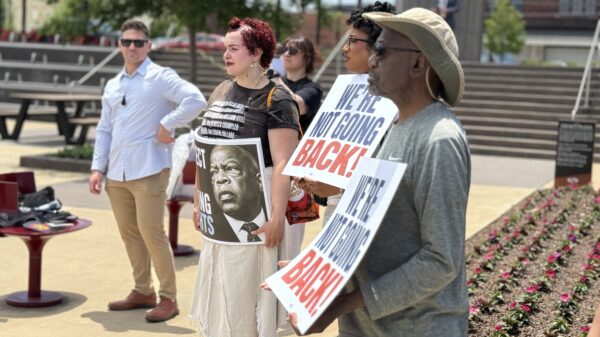
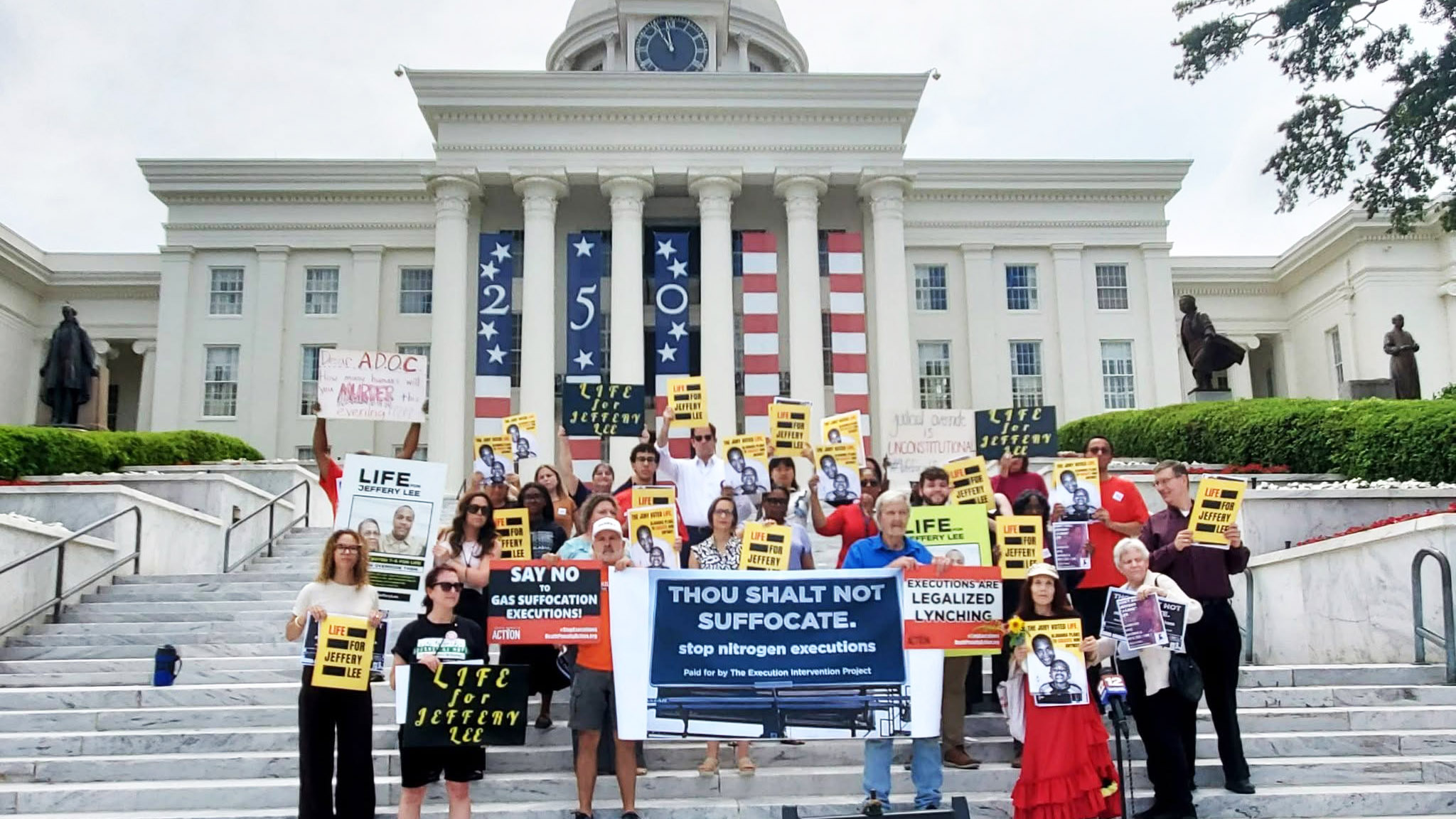
Protestors stood outside the state capitol Monday morning pleading for Lee’s life, placing an emphasis on the fact that the jury sentenced him to life in prison and not death.
Attorney General Steve Marshall opposed any calls for clemency, characterizing them as “the loud voices of a few far-left activists from organizations like the ACLU and AL.com who want to see this sentence set aside and would like nothing more than for dangerous criminals to be released back into our communities.”