





















NuVasc, a startup from the University of Alabama at Birmingham, is looking to change the future of brain arteriovenous malformation treatment.
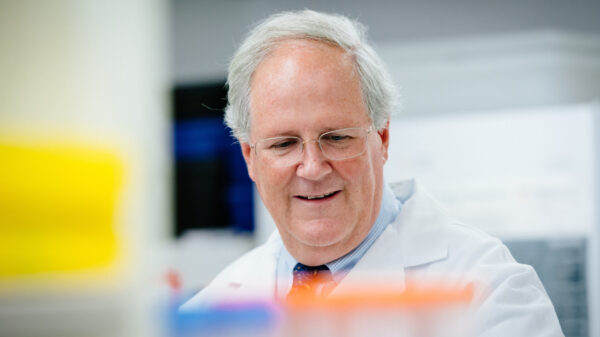
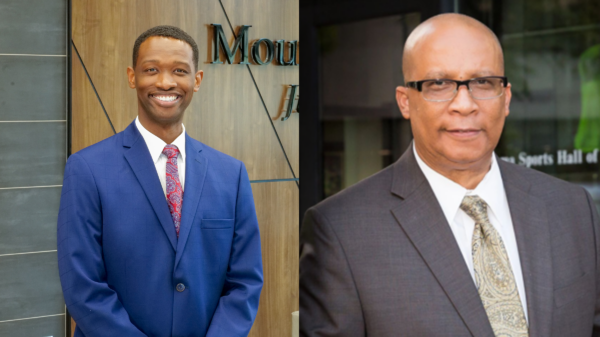
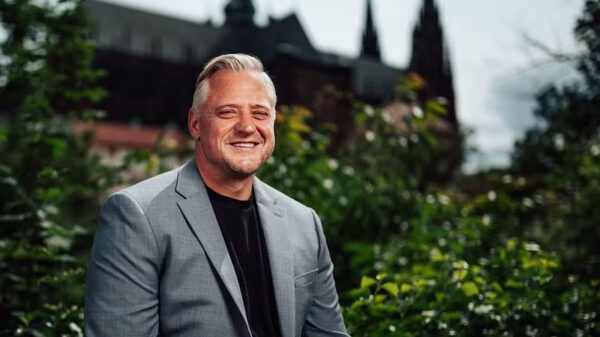
NuVasc was founded by Zac Yezzi, who survived a ruptured brain arteriovenous malformation, or bAVM, and aneurysm in 2021 that required multiple cranial surgeries and a lengthy rehabilitation. The company was built in partnership with Andrew T. Hale, M.D., Ph.D., a resident and scientist in UAB’s Department of Neurosurgery, whose research forms the scientific foundation of NuVasc’s approach.
Brain arteriovenous malformations are abnormal tangles of blood vessels in the brain that can rupture and cause hemorrhagic stroke, yet treatment options remain limited. Depending on the size and location of the malformation, patients may face high-risk surgery, radiation, embolization or watchful waiting, and many lesions cannot be treated safely at all.
At UAB, in collaboration with Kristopher T. Kahle, M.D., Ph.D., of Massachusetts General Hospital, Hale developed a liquid biopsy approach that detects the genetic mutations driving bAVMs by sampling DNA during the same minimally invasive procedures already used to diagnose and potentially treat the lesions. The work resulted in a patent filed by Hale with UAB and Massachusetts General Hospital, which has been exclusively licensed to NuVasc.
Three-quarters of sporadic bAVMs are driven by activating mutations in the KRAS or BRAF genes, genetic alterations that have already become important targets for drug development in cancer.
“A genetic diagnosis is what unlocks targeted treatment, and for brain AVMs, detecting that driver mutation during a routine endovascular procedure has not been possible until now,” Hale said. “This test identifies the mutation driving an individual brain AVM, which opens a path toward therapies that could lower the risk of a catastrophic rupture. For a disease with high unmet need and no targeted options today, that is a fundamental change in what is possible.”
The idea for NuVasc was inspired by Yezzi’s own experience. Following his recovery, he focused on supporting research that could help prevent other patients and families from facing similar experiences. Yezzi serves as an ambassador for the Bee Foundation for Brain Aneurysm Prevention, which provided a research grant to Hale to support work on the novel approach.
As the two collaborated, Yezzi saw the potential to move the technology beyond the laboratory and into clinical use, leading to the creation of NuVasc.
“We’re advancing precision medicine for brain arteriovenous malformations,” Yezzi said. “We’re connecting molecular diagnosis directly to targeted therapy, so treatment can be biologically driven instead of relying on invasive intervention alone. As a brain AVM hemorrhage survivor, this is exactly the innovative solution I wish had been available to me.”
NuVasc is currently in an early translational stage, working alongside its academic partners at UAB and Massachusetts General Hospital to validate the diagnostic and advance it toward clinical use.
Looking ahead, NuVasc said it hopes to bring precision medicine to a field that historically has had few targeted treatment options. By applying advances in molecular diagnostics and genetics to cerebrovascular disease, the company aims to create a future in which treatment is tailored to the biology of each patient’s condition.