






Before the transformation, there was a decision.
For generations, the basic premise of economic development was straightforward: create jobs, and people will follow. Communities built industrial sites, extended roads and utilities, offered incentives and recruited companies. Employers arrived, jobs were created, families moved in, and the tax base grew.
Business recruitment still matters. Montgomery continues to compete aggressively for companies, jobs and investment.
But today, it is no longer enough.
Employers need talent, and talent has choices. Families consider housing, schools, safety and amenities alongside employment opportunities. Young professionals have more choices about where they establish their careers and lives.
Increasingly, jobs can follow people. That shift has profound implications.
People are asking: Can I build a life here? Can I afford to live here? Is downtown alive? Are there restaurants, parks, entertainment, arts and culture? Is there housing I want? Are there things for my family to do?
And perhaps most importantly: Do I want to stay here?
Those are economic development questions now.
Communities that understand this shift recognize that roads, utilities, and industrial sites still matter. But so does housing, parks, entertainment, cultural institutions, vibrant downtowns and public spaces.
Some of America’s most compelling urban transformations show us what can happen when cities make those investments. Today, we see the finished product. We do not see the uncertainty that existed beforehand.
Before the transformation, there was a decision.
QUALITY OF PLACE IS ECONOMIC INFRASTRUCTURE
Oklahoma City’s transformation did not begin with a splashy corporate relocation announcement. It began with an uncomfortable realization: the city itself wasn’t competitive.
In 1993, residents approved a temporary one-cent sales tax to finance the original Metropolitan Area Projects, or MAPS. About $350 million went toward projects including a downtown ballpark, convention center improvements, the Bricktown Canal, improvements along the Oklahoma River, a new library, and cultural and recreational facilities.
It was a significant bet residents made on their city.
Over the decades that followed, voters continued investing in parks, trails, transportation, sports facilities, convention infrastructure and public spaces. Since 1993, Oklahoma City leaders have placed 15 major capital-investment tax initiatives before voters.
Their record: 15-0. Those commitments total nearly $10 billion.
When Mayor David Holt was born in 1979, Oklahoma City was America’s 37th-largest city. Today, it is the 20th-largest.
Oklahoma City didn’t abandon business recruitment. It turned itself into a city that businesses and people wanted to choose.
WHEN QUALITY OF LIFE BECOMES ECONOMIC DEVELOPMENT
Greenville, South Carolina’s success was not inevitable. One of its defining decisions was to remove a functioning four-lane bridge that obscured a 60-foot waterfall in the heart of downtown.
It was a decision few traditional economic development plans would recommend. But the bridge came down, and Falls Park, with its iconic Liberty Bridge, opened in 2004.
The market responded. Research from the Urban Land Institute found that approximately 75 percent of downtown Greenville’s investment occurred after the park opened.
What had been hidden beneath transportation infrastructure became one of the city’s defining public spaces and a centerpiece of its downtown.
Chattanooga’s transformation tells a similar story, but on a different scale.
In the 1980s, Chattanooga struggled with industrial decline, population loss and a downtown disconnected from one of its greatest natural assets: the Tennessee River.
The Tennessee Aquarium opened in 1992 as part of an effort to reconnect the city with its riverfront. More than 1.5 million visitors passed through its doors in its first year.
But the aquarium wasn’t the entire economic development strategy. It became a catalyst. Public spaces followed. The riverfront expanded. The Walnut Street Bridge became a pedestrian destination. Hotels, restaurants, museums, entertainment and residential development grew around a revitalized downtown that increasingly invited people to walk, gather, visit and stay.
By 2012, more than $2 billion had been invested in downtown Chattanooga. Today, the Tennessee Aquarium estimates it generates approximately $187 million in annual regional economic impact, supports more than 1,500 jobs, and helps generate approximately $9 million in local tax revenue.
Neither Greenville’s park nor Chattanooga’s aquarium fits neatly into the traditional economic development playbook. Yet both helped change how residents, visitors and investors viewed those cities.
That is the nature of catalytic investment. The question isn’t simply: “What will this project directly produce?”
Sometimes the more important question is: “What could this investment cause to happen around it?”
FISCAL DISCIPLINE CREATES THE CAPACITY TO INVEST
There is an Alabama example unfolding today.
For years, Mobile wrestled with its aging Civic Center until leaders decided demolition and construction of a new arena was the best path forward.
Mobile is investing approximately $300 million in a new arena not simply to replace its aging Civic Center, but to anchor continued investment in a larger downtown entertainment district on the 22-acre site.
In March 2025, Mobile went to the bond market for $250 million to help finance it. That number gets attention. But another number matters just as much.
Before making this investment, Mobile spent years reducing legacy debt by more than $200 million while building reserves and maintaining strong credit ratings.
Mobile didn’t choose between fiscal responsibility and investment. Fiscal responsibility created the capacity to invest.
That distinction matters.
Will every expectation for Mobile’s investment be realized? Time will tell. That’s precisely the point.
Greenville couldn’t know exactly what Falls Park would become. Chattanooga couldn’t guarantee what would follow the aquarium. Oklahoma City couldn’t know what three decades of MAPS investments would ultimately produce.
Transformational investments are made before transformation makes them look obvious.
Before the transformation, there was a decision.
MONTGOMERY’S DECISION
And that brings the conversation home.
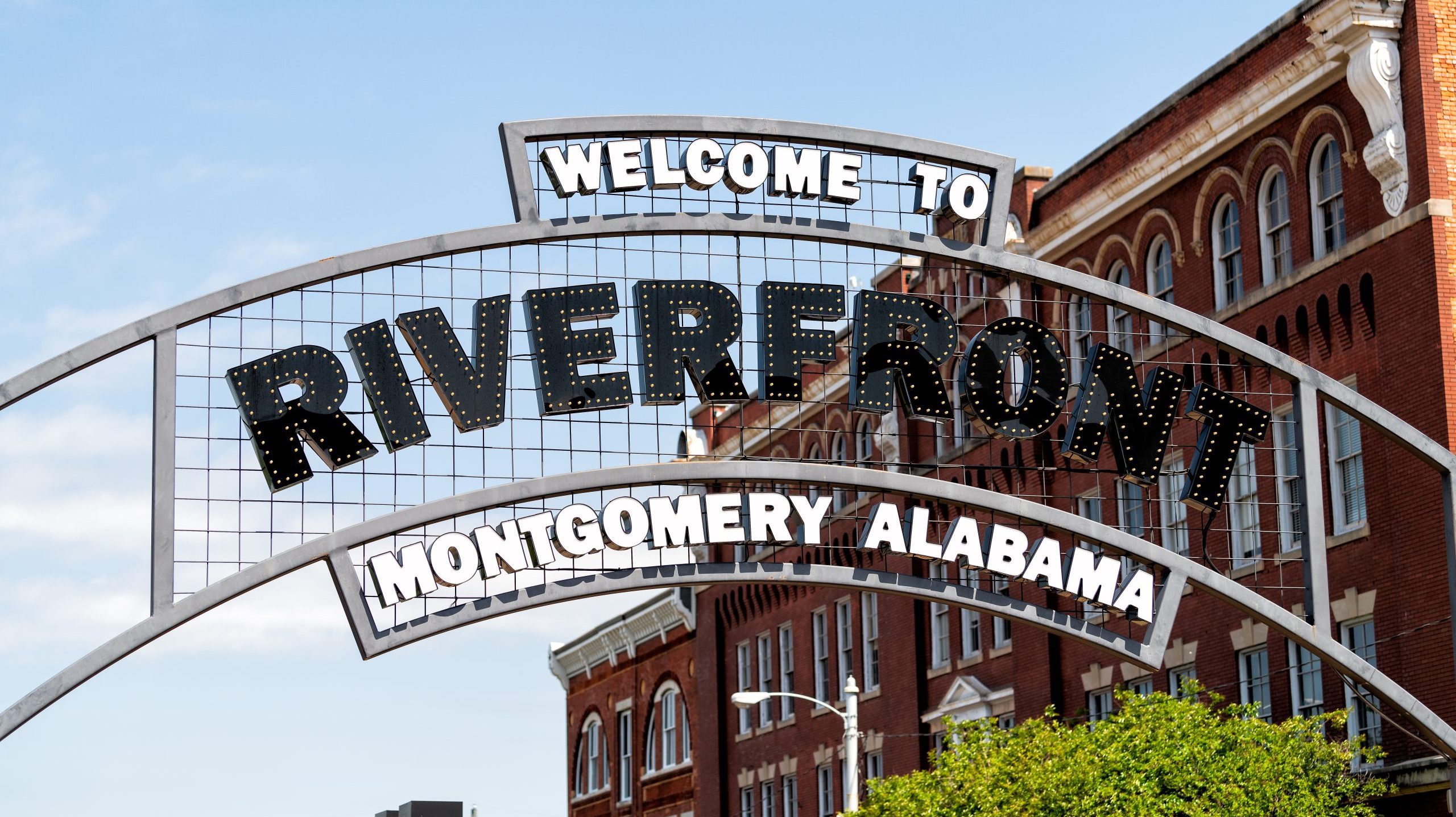
Montgomery has spent decades competing for jobs, companies and investment. We should continue doing that aggressively.
Montgomery’s city and county governments have invested hundreds of millions of dollars over the past two decades helping companies locate and expand here. Those investments created jobs and benefited the entire region.
But while the surrounding counties have grown, Montgomery itself has lost population.
We have invested substantially in recruiting others. Now we must also be willing to invest in ourselves.
We have to ask whether young people raised here can imagine building their futures here. Whether someone stationed at Maxwell Air Force Base wants to stay after completing an assignment. Whether a recent university graduate sees opportunity here. Whether entrepreneurs see a market here. Whether families want to raise their children here.
We must ask whether visitors have enough reasons to stay another night, whether someone choosing between Montgomery and another Southern city chooses us, and whether people who already call Montgomery home can see investment occurring in their neighborhoods and quality of life.
That is the context for Momentum 2040.
The initiative authorizes up to $375 million in bonds, with approximately $350 million dedicated to capital projects. It includes modernization and expansion of the Event Center, city facilities and service enhancements, including upgrades to the public safety complex, sports and amphitheater improvements, neighborhood projects and housing infrastructure and community development.
These investments touch all nine City Council districts through projects such as parks, sidewalks, drainage, corridors, and public safety and community facilities, while also creating economic assets intended to attract visitors, private investment, and new revenue.
There are projected direct economic returns. But as Greenville and Chattanooga teach us, the larger opportunity is what these investments could make possible around them.
And like Mobile, Montgomery has practiced fiscal discipline to reach this moment.
The City eliminated its short-term debt in 2021. Outstanding principal debt declined by approximately $63 million from FY2018 to FY2025. Fund balance grew from approximately $23.6 million to $66 million, while annual debt service declined from 12.1 percent to 6.7 percent of General Fund revenue.
Even after the proposed issuance, debt service is projected to peak at approximately 11.4 percent of General Fund revenue—below the level Montgomery managed in FY2018, when the City had less income.
Momentum 2040 is also not expected to require a tax increase.
Those are not signs of fiscal recklessness. They reflect years of building capacity.
That doesn’t mean every big project is a good project. Economic development requires rigorous analysis, responsible financing, transparency and fiscal discipline. Taxpayers deserve to understand what they are being asked to support.
But analysis cannot substitute for vision.
There are moments in the life of a city when leaders and residents must decide whether their responsibility is simply to manage the community they inherited or to help build the community the next generation will inherit.
Montgomery is at such a moment.
WHAT KIND OF CITY ARE WE BUILDING?
Economic development has always included business recruitment, retention, entrepreneurship, workforce development and innovation.
But another reality is impossible to ignore: Place matters. Quality of life matters.
Oklahoma City understood it. Greenville understood it. Chattanooga understood it. Mobile is making the bet today.
Now Montgomery has an opportunity to decide what kind of city it intends to become.
Cities are places where people choose to build their lives. When people decide to stay, return, invest, start businesses, raise families, and build careers, economic opportunities follow.
So, the defining economic development question of the coming decade cannot simply be: “What companies can we recruit?”
We must also ask: “What kind of community are we building—and will people choose it?”
Before the thriving downtown, there was a decision. Before the riverfront destination, there was a decision. Before billions in private investment, there was a decision.
Successful communities eventually decide that waiting for someone else to invest in them isn’t enough.
They invest in themselves.
Montgomery should do the same.
Because the cities with the courage, discipline and vision to invest in themselves are the cities best positioned to win.