











Alabama officials are emphasizing the state’s commercial trucking enforcement as the federal government launches a multiagency initiative targeting fraudulent licensing and testing, illegal trucking operations and other criminal activity in the industry.
The U.S. departments of Transportation, Homeland Security and Justice announced Monday that they would coordinate efforts to address violations involving commercial driver licensing, training and testing, along with unlawful trucking operations.
The administration also established the Joint Task Force Crossroads of America, a multistate partnership focused on fraudulent commercial driver’s licenses, illegal trucking operations and related crimes.
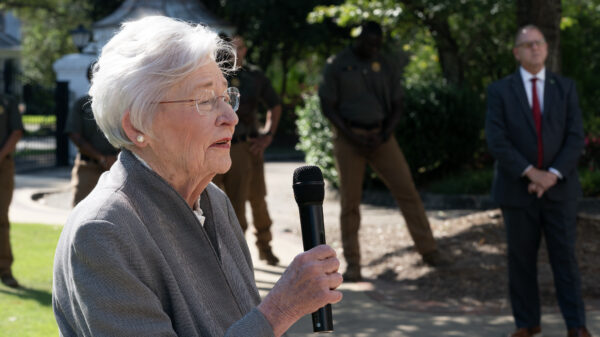
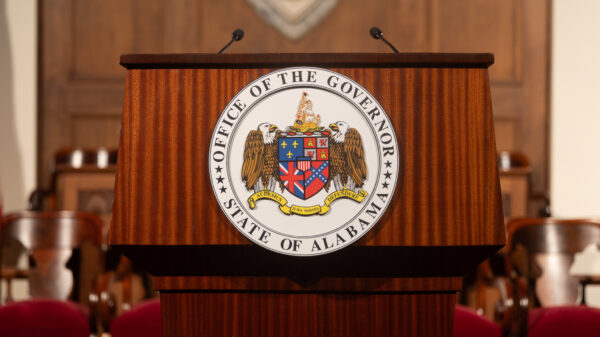
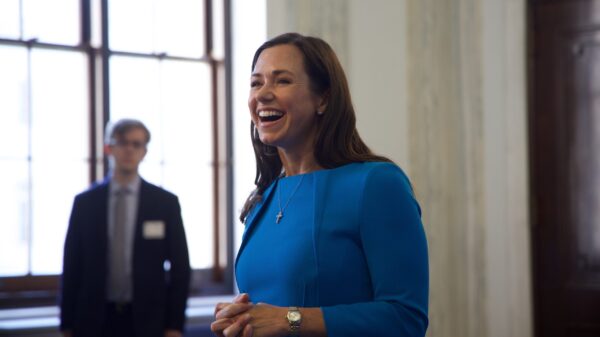
Governor Kay Ivey said Alabama has already pursued many of the same priorities.
“President Trump and Secretary Duffy are taking decisive action to restore law, order and accountability to America’s trucking industry, and we are proud to help lead that effort,” Ivey said.
The Alabama Law Enforcement Agency’s Motor Carrier Safety Unit has partnered with U.S. Immigration and Customs Enforcement as part of the state’s enforcement work. Since October 27, 2025, ICE personnel have joined ALEA commercial vehicle enforcement assignments when available.
ALEA’s Motor Carrier Safety Unit has helped ICE detain 561 people for immigration violations discovered during commercial motor vehicle enforcement activities since the partnership began, according to the governor’s office.
The state also has increased enforcement of English-language proficiency requirements for commercial drivers. ALEA troopers have issued 1,022 English-language proficiency violations since January 1, 2025, according to the governor’s office.
Ivey also has supported changes to Alabama’s commercial driver licensing laws. In March, she signed the Highway Safety and Fairness Act, which takes effect October 1, 2026.
The law requires foreign CDL holders operating in Alabama to have valid U.S. work authorization. It also requires all CDL holders to demonstrate English-language proficiency.
The law makes presenting a fraudulent foreign CDL during an enforcement encounter a criminal offense. It carries a $1,000 fine for the operator and a $2,000 fine for a driver who is not proficient in English and receives another traffic citation. The fines double for subsequent violations.
Ivey said the state’s enforcement work addresses public safety and compliance with licensing requirements.
“Here in Alabama, we have already made it clear that those who are in our country illegally, cannot speak English or are otherwise unqualified have no business operating an 80,000-pound commercial vehicle,” Ivey said. “Through ALEA’s partnership with ICE and the dedicated work of our state troopers, Alabama is helping keep dangerous drivers off our roads and protect law-abiding citizens.”
ALEA also has focused enforcement on high-crash corridors across the state, including areas where commercial vehicle violations are more common.
Alabama recorded 106 fatalities involving commercial motor vehicles in 2025, its lowest annual total since 2021, according to the governor’s office. Commercial motor vehicle fatalities are down 24 percent so far in 2026 compared with the same period last year, the office said.
Alabama Trucking Association President and CEO Mark Colson praised the expanded federal effort. He said the industry has an interest in preventing fraudulent and unlawful operators from gaining an advantage over companies that follow regulations.
“Alabama’s trucking industry is built on the hard work of family-owned businesses, independent owner-operators and professional drivers who play by the rules,” Colson said. “Bad actors who exploit loopholes in our regulatory systems are putting everyone at risk, and this is unacceptable.”
Ivey said Alabama will continue its enforcement work.
“We took action, we strengthened the law and took illegal operators off our highways,” Ivey said. “My message is clear: If you are here illegally, operating unlawfully or putting American lives at risk, you will be held accountable.”