























The NFIB Small Business Optimism Index rose 0.1 points in April to 95.9, below its 52-year average of 98.0 for the second consecutive month. The Uncertainty Index fell 4 points from March to 88, remaining well above its historical average of 68.
“Inflationary pressures continue to be a challenge for Main Street,” said NFIB Chief Economist Bill Dunkelberg. “While small business optimism is currently fragile, the benefits of the Working Families Tax Cut Act should start to feed into the private sector over the next few months.”
NFIB State Director Rosemary Elebash said the national survey reflects what’s happening in Alabama. “Inflation is driving up the cost of owning a small business, and that makes it harder for owners to hold prices in check for their customers,” she said. “It’s hard for Main Street businesses to plan ahead and hire additional workers, and that can’t help but affect the entire community.”
Key findings of the national survey include:
- The Employment Index fell in April, from 101.6 to 100.4. This is the second consecutive month of decline. The current reading is now below the 2025 average of 101.2 but still slightly above the historical average of 100.0.
- In April, reports of both actual and planned price increases rose. The net percent of owners raising average selling prices rose 5 points from March to a net 30 percent (seasonally adjusted), well above its historical average of net 13 percent. Looking forward to the next three months, a net 27 percent (seasonally adjusted) plan to increase prices, up 3 points from March.
- In April, 18 percent of small business owners cited labor quality as their single most important problem, up 3 points from March and ranking as the top problem.
- A seasonally adjusted net negative 8 percent of all owners reported higher nominal sales in the past three months, down 3 points from March. Sales are weakening.
- The net percent of owners expecting higher real sales volumes over the next quarter fell 4 points from March to a net 3 percent (seasonally adjusted), the lowest reading in 12 months.
- The frequency of reports of positive profit trends rose 6 points from March to a net negative 19 percent (seasonally adjusted).
- In April, a net 2 percent of owners reported paying a higher interest rate on their most recent loan, up 5 points from March.
- Twenty-two percent of all owners reported borrowing regularly, down 2 points from March and the lowest level since November 2021.
- The net percent of owners expecting better business conditions fell 7 points from March to a net 4 percent (seasonally adjusted). This was the fourth consecutive monthly decline in expected business conditions and the lowest level since October 2024.
- In April, 7 percent (seasonally adjusted) reported that it is a good time to expand their business, down 4 points from March and the lowest level since October 2024.
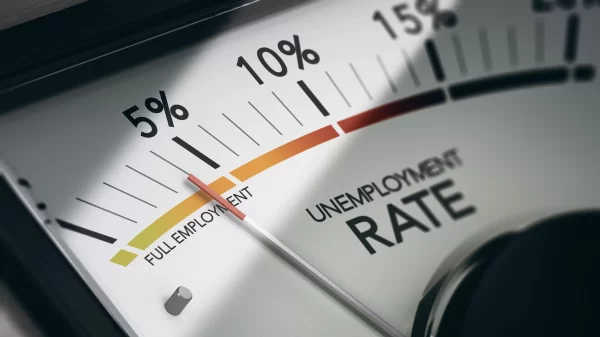
As reported in NFIB’s monthly jobs report, the NFIB Small Business Employment Index fell 1.2 points from March to 100.4. This decline is indicative of weakening in the labor market, though the level still suggests balance.
A seasonally adjusted 34 percent of small business owners reported job openings they could not fill in April, up 2 points from March. Unfilled job openings remain above the historical average of 24 percent. Twenty-nine percent had openings for skilled workers (up 2 points), and 13 percent had openings for unskilled labor (up 1 point).
Looking ahead, a seasonally adjusted net 13 percent of owners plan to create new jobs in the next three months, up 1 point from March and close to the average of a net 11 percent. Overall, 53 percent of owners reported hiring or trying to hire in April, up 1 point from March. Forty-six percent of owners (87 percent of those hiring or trying to hire) reported few or no qualified applicants for the positions they were trying to fill (up 1 point). Twenty-six percent of owners reported few qualified applicants for their open positions (up 4 points), and 20 percent reported none (down 3 points).
In April, 18 percent of small business owners cited labor quality as their single most important problem, up 3 points from March and above the historical average of 12 percent. Nine percent of business owners reported labor costs as their single most important problem, down 1 point from March.
A seasonally adjusted net 30 percent reported raising compensation, down 3 points from March. A seasonally adjusted net 18 percent plan to raise compensation in the next three months, unchanged from March.
Fifty-one percent of owners reported capital outlays in the last six months, unchanged from March. Actual capital expenditure levels have declined by 9 points since the beginning of this year and remain below the historical average. Of those making expenditures, 35 percent reported spending on new equipment, 23 percent acquired vehicles, and 15 percent improved or expanded facilities. Eleven percent spent money on new fixtures and furniture and 6 percent acquired new buildings or land for expansion.
Seventeen percent (seasonally adjusted) of small business owners plan to make capital outlays in the next six months, up 1 point from March’s lowest level since November 2009.
A seasonally adjusted net negative 8 percent of all owners reported higher nominal sales in the past three months, down 3 points from March. The net percent of owners expecting higher real sales volumes over the next quarter fell 4 points from March to a net 3 percent (seasonally adjusted), the lowest reading in 12 months.
The net percent of owners reporting inventory gains rose 1 point to a net negative 5 percent, seasonally adjusted. Not seasonally adjusted, 12 percent reported increases in stocks and 16 percent reported reductions. A net negative 2 percent (seasonally adjusted) of owners viewed current inventory stocks as “too low” in April, up 3 points from March. A net negative 2 percent (seasonally adjusted) of owners plan inventory investment in the coming months, up 3 points from March.
In April, 64 percent of small business owners reported that supply chain disruptions affected their business to some extent, up 2 points from March. Five percent reported a significant impact (up 2 points), 19 percent reported a moderate impact (up 2 points), 40 percent reported a mild impact (down 2 points), and 35 percent reported no impact (down 1 point).
Both actual and planned price increases price increases rose in April, signaling additional inflationary pressure. The net percent of owners raising average selling prices rose 5 points from March to a net 30 percent (seasonally adjusted), well above its historical average. Looking forward to the next three months, a seasonally adjusted net 27 percent plan to increase prices, up 3 points from March.
Sixteen percent of owners reported that inflation was their single most important business problem, up 2 points from March, ranking third among the top issues.
The frequency of reports of positive profit trends rose 6 points from March to a net negative 19 percent (seasonally adjusted). Among owners reporting lower profits, 33 percent blamed weaker sales, 15 percent cited usual seasonal change, and 13 percent cited rising material costs. Nine percent cited price change from their product(s) or service(s), 9 percent cited labor costs, and 6 percent reported other reasons.
Among owners reporting higher profits, 54 percent cited sales volume, 14 percent cited usual seasonal change, and 11 percent cited price change from their product(s) or service(s).
In April, the net percent of owners expecting easier credit conditions rose 1 point to a net negative 4 percent (seasonally adjusted). A net 3 percent reported their last loan was harder to get than in previous attempts, down 2 points from March. A net 2 percent of owners reported paying a higher interest rate on their most recent loan, up 5 points from March. The average interest rate paid on short maturity loans was 8.3 percent in April, up 0.4 points from March. Twenty-two percent of all owners reported borrowing regularly, down 2 points from March and the lowest level since November 2021.
When asked to evaluate the overall health of their business, 12 percent rated it as excellent (down 1 point), 55 percent as good (up 4 points), 29 percent as fair (down 1 point), and 4 percent as poor (unchanged).
The net percent of owners expecting better business conditions fell 7 points from March to a net 4 percent (seasonally adjusted). This was the fourth consecutive monthly decline in expected business conditions and the lowest level since October 2024.
In April, 7 percent (seasonally adjusted) reported that it is a good time to expand their business, down 4 points from March and the lowest level since October 2024.
Eighteen percent of small business owners cited labor quality as their single most important problem, up 3 points from March and ranking as the top problem. Nine percent of business owners reported labor costs as their single most important problem, down 1 point from March.
Outside of labor-related issues, 17 percent of small business owners reported taxes as their single most important problem, down 2 points from March and ranking second. Sixteen percent of owners reported that inflation was their single most important business problem, up 2 points from March. Inflation ranked third among the top issues.
The NFIB Research Center has collected Small Business Economic Trends data with quarterly surveys since the fourth quarter of 1973 and monthly surveys since 1986. Survey respondents are randomly drawn from NFIB’s membership. The report is released on the second Tuesday of each month. This survey was conducted in April 2026.