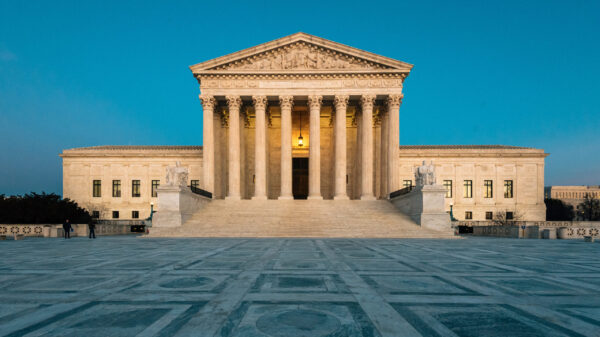

















A bipartisan coalition of election officials and experts warned the U.S. Supreme Court Monday that Alabama’s emergency bid to revive its 2023 congressional map could force local officials to complete months of voter reassignment work in as little as one business day, risking wrong ballots, voter confusion and eligible votes going uncounted.
The warning came in an amicus brief supporting the Milligan plaintiffs, who are urging the Court to deny Alabama’s request for a stay of a federal injunction blocking the 2023 map. But the brief is not merely another argument over redistricting law. It is a warning that Alabama is asking the Court to order an election change the state may no longer be able to administer accurately.
The filing turns Alabama’s emergency application on its head. The state says it needs immediate Supreme Court intervention to use its preferred congressional map. The election experts say immediate intervention could create the very thing courts are supposed to avoid: voter confusion, administrative error and lawful ballots placed at risk.
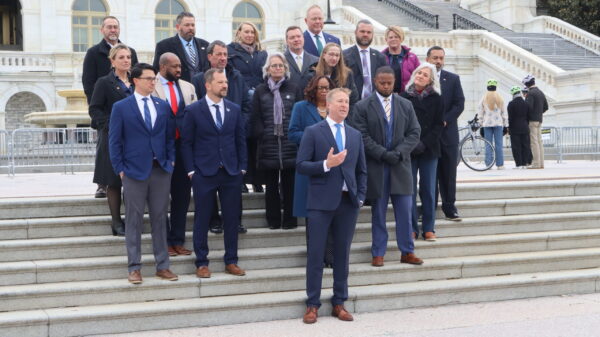
The brief was filed by current and former election administrators and election scholars, including Republicans, Democrats and independents. Their warning is direct: forcing Alabama to abandon the court-ordered map now in place and implement the 2023 map at this stage of the election calendar would create “unprecedented and extraordinary challenges” for state and local election officials.
Those challenges, the brief argues, would almost certainly lead to “widespread confusion, substantial mistakes in voter reassignments, and votes of eligible voters not being counted.”
At the center of the filing is a deadline Alabama’s emergency application largely leaves unexplained.
Alabama asked the Supreme Court to rule by 10 a.m. June 1, but the amici argue the state never fully explained why that deadline mattered. The reason, they say, is that Alabama’s own election calendar creates a June 2 hard stop for voter reassignment.
According to the brief, Alabama Director of Elections Jeff Elrod testified that voter reassignment would have to be completed by Tuesday, June 2, when voter rolls lock again for the June 16 runoff. That means election officials would have, at most, one business day to complete a voter-reassignment process that normally takes three to four months.
“Alabama, in asking for a ruling by June 1 without explaining why that date matters, did not disclose that, per the testimony of the state’s Director of Elections, voter reassignment for the primary runoff must occur by June 2, and did not explain what relief is even viable, never mind what it is seeking, if that window closes before the Court acts,” the brief states.
That is not a minor omission. It goes to the heart of Alabama’s request.
The state is asking for emergency relief, but the brief argues Alabama has not shown that the relief it seeks can actually be carried out. It has not explained how local election officials could reassign voters, verify those assignments, prepare ballots, load poll books and notify voters within the remaining window. Nor has it explained what election officials should do if the Supreme Court grants a stay after the June 2 deadline has already passed.
In other words, Alabama is asking the Court to restore a map without showing that the state can administer the election under that map.
The administrative work described in the brief is not a matter of flipping a switch. Before the 2023 map could be used, election officials would have to receive and load new district files, identify affected voters through GIS data, manually reassign voters in split counties, verify those assignments, prepare ballot styles, load poll books and notify voters of changes.
Each step depends on the accuracy of the step before it. One error at the front end can become a wrong ballot at the back end.
A voter assignment is not a clerical detail. It determines which congressional race appears on a voter’s ballot. If the assignment is wrong, the ballot can be wrong. If the ballot is wrong, a lawful voter may cast a vote that cannot be counted in the race in which that voter is entitled to participate.
The current court-ordered map, by contrast, is already in place. Alabama used it in the 2024 congressional elections and in the recently concluded 2026 primary election. Voters are already assigned under that map. Ballot systems are already built around it. Election officials know how to administer it.
The 2023 map is different.
“No person has ever voted under the 2023 plan,” Elrod testified, according to the brief. The Secretary of State’s office, he also testified, has never conducted an election under that plan.
That fact matters. The brief argues that retaining the current Special Master map requires no voter reassignment. Reviving the 2023 map would force election officials to move voters into different districts and, in some cases, different precinct assignments on an impossibly compressed schedule.
The burden would fall most heavily on county registrars, who are responsible for making changes to voter records. In some counties, where all affected voters move together, a mass change may be possible. But in split counties, the work becomes far more manual and far more vulnerable to error.
The brief specifically identifies Jefferson, Elmore and Covington counties as counties where the 2023 map splits differently from the current map. Those counties would require more granular work, including precinct-by-precinct and street-segment-by-street-segment review.
Elmore and Covington counties each have only three registrars, according to the brief. Some registrars across the state work part time. Many election workers may never have gone through a redistricting reassignment process before.
Nor, the brief argues, can Alabama simply “technology” its way out of the problem.
GIS can identify where voters should be placed. It does not move them. Election Navigator can store the voter record. It does not independently decide whether that record is correct. Human registrars still have to make the changes, and human election officials still have to verify them.
“GIS is not moving any voters,” Elrod testified, according to the brief. “GIS is identifying where those voters would be. The registrars are then making sure that the assignments are made according to the map.”
That distinction is crucial. Software may help identify the problem. It does not perform the legal and administrative work required to fix it.
And when that process is rushed, the consequences are not abstract.
The brief warns that mistakes in voter assignment can lead to voters receiving the wrong ballots, being assigned to the wrong precinct or having votes go uncounted. Elrod testified that wrong-ballot errors have occurred in the past.
“The record is clear that a stay of the injunction would create major risks of large-scale errors, inaccuracies, or voter disenfranchisement: erroneous ballots provided to voters, votes of eligible voters not being counted, and a logistical nightmare for administrators asked to meet a virtually impossible timeline,” the brief states.
That “virtually impossible timeline” is made even more difficult by Alabama’s existing election calendar.
The June 16 runoff includes statewide races. Absentee voting for the August 11 special congressional primaries in Districts 1, 2, 6 and 7 begins June 17. Federal law requires military and overseas absentee ballots to be sent by June 27. The August 11 primary cannot easily be moved without colliding with the November 3 general election.
There is no clean pause button. The machinery of Alabama’s election system is already moving.
That is the practical reality the amici say Alabama’s filing fails to confront. The state argues that it has a sovereign interest in using the Legislature’s enacted map. But the brief argues that the immediate harm to voters and election administration outweighs that interest, particularly when the current map is already in place and requires no new voter reassignment.
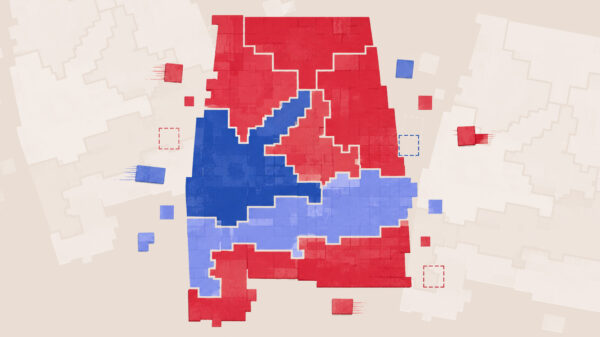
The case has already traveled a long and bitter road. Alabama’s 2021 congressional map was challenged after the 2020 Census. A federal court found plaintiffs substantially likely to prevail under Section 2 of the Voting Rights Act, and the U.S. Supreme Court ultimately affirmed that ruling in 2023. Alabama then enacted the 2023 map, which again contained only one Black-opportunity district. A federal court blocked that map and appointed a Special Master to draw a remedial plan.
That Special Master map governed Alabama’s 2024 congressional elections without incident. It remained the operative map for the 2026 election cycle until Alabama renewed its effort to return to the 2023 map.
The amici argue that, whatever legal arguments Alabama may make, the election calendar has overtaken the state’s request.
The state calls this an emergency request to restore its chosen map. The election experts call it something else: an invitation to inject avoidable error into an election already underway.
Alabama is asking the Supreme Court to restore a map.
Election experts are warning that doing so may break the election.
The amicus brief was submitted by Ambassador Norman Eisen, ret., Stephen Jonas, and Joshua Kolb of Democracy Defenders Fund. The full brief and list of amici can be found here.