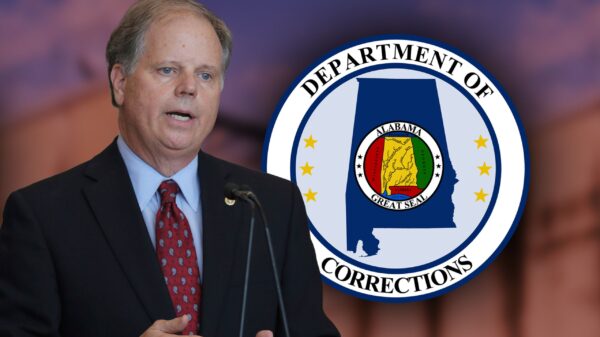



























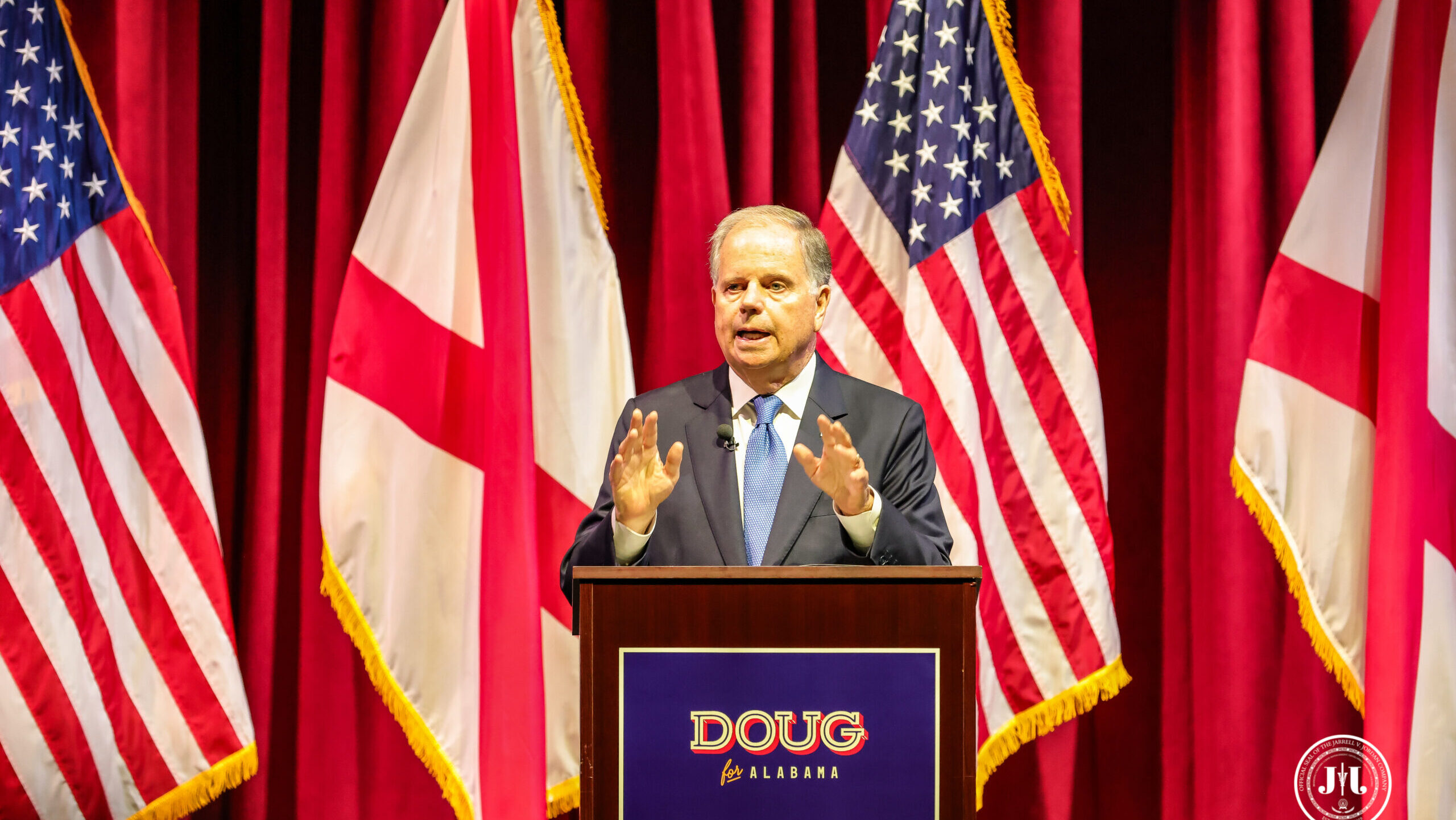
Democratic nominee for governor Doug Jones on Monday laid out a governing agenda centered on health care, economic opportunity and giving Alabamians greater control over state government, while calling for a one-year moratorium on new AI data centers.
In a policy address titled “A Vision for Alabama,” Jones proposed expanding Medicaid, creating citizen-led ballot initiatives, eliminating the remaining grocery tax, raising the minimum wage, strengthening state ethics laws and giving voters a chance to approve a state lottery.
But his sharpest proposal was a temporary halt to new AI data center development while Alabama establishes statewide protections for taxpayers, ratepayers, local communities and natural resources.
“We can have data centers in Alabama but only after we take a year or so to get it right, to put the guardrails in place, and only after local concerns are addressed and communities agree to the details and protections,” Jones said.
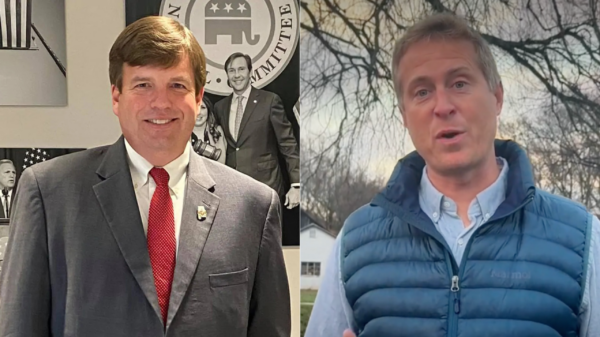
The proposal draws a clear distinction between Jones and Republican nominee U.S. Sen. Tommy Tuberville, who has promoted artificial intelligence and data center development as an important part of Alabama’s economic future.
Jones said he does not oppose the technology or its potential economic benefits. He argued, however, that communities should have a meaningful say before projects that could affect electricity rates, water supplies, farmland and quality of life are approved.
“The people get a voice — first,” Jones said. “You hold the public hearings — first. You protect the water and the power grid and the family budget — first.”
That argument formed the larger theme of Jones’ address: Alabama government, he said, has become too responsive to powerful political and economic interests and too distant from the people it is supposed to serve.
“The real villain in Alabama is not your neighbor,” Jones said. “It’s not the family down the road who prays a little differently, or looks a little different, or came here from a little farther away.”
Instead, Jones blamed “the small circle of people who have grown very rich and very comfortable off a system that keeps you focused on fearing each other.”
Jones organized his governing framework around what he called “Three Real Opportunities”: the opportunity to live a healthy life, to meaningfully participate in government and to achieve economic prosperity.
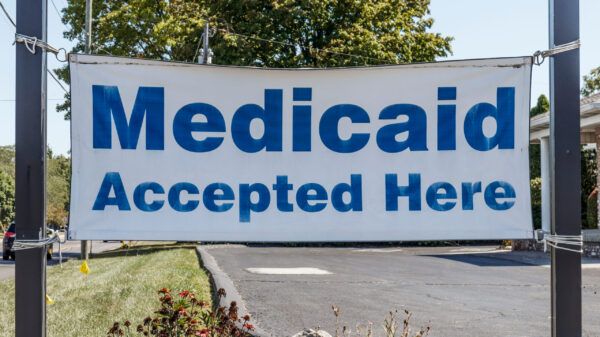
On health care, Jones renewed his commitment to Medicaid expansion, tying the issue to rural hospital stability and health care access for working Alabamians.
“As governor, one way or another, we are going to expand Medicaid in the state of Alabama,” Jones said.
His health care agenda also calls for protecting rural hospitals, expanding mental health services and improving maternal and infant health.
Jones’ second opportunity focuses on giving Alabamians a greater role in their government.
He called for a constitutional amendment creating a citizen-led initiative and referendum process, allowing voters to put issues directly before the electorate rather than depending entirely on the Legislature.
Jones argued that such a process could give voters another way to address issues that have repeatedly stalled in Montgomery, pointing to Medicaid expansion, gambling and data center regulation.
He also proposed expanding the authority of local governments.
“The mayor of Clanton knows more about what Clanton needs on any Wednesday morning than a state bureaucracy learns in a year,” Jones said.
Jones said he would push for a separate constitutional amendment allowing voters to decide whether Alabama should establish a state lottery, with revenue directed primarily toward education and, where possible, health care.
He also supports broader gambling legislation, particularly regulation of online gambling, but said he would pursue a standalone lottery proposal if lawmakers again fail to reach agreement on a comprehensive bill.
Jones called for another constitutional amendment protecting IVF and contraception, along with ethics and transparency reforms that would impose tougher conflict-of-interest reporting requirements and prohibit statewide officeholders from trading stocks or options while in office.
Jones used that proposal to criticize Tuberville’s investment activity while serving in the Senate.
Economic prosperity was the third of the three opportunities Jones outlined.
Jones proposed eliminating the remaining state sales tax on groceries, removing state taxes from tips and overtime pay, making child care more affordable, addressing housing costs and raising Alabama’s minimum wage.
He also called for changing the state’s approach to economic development by directing more incentives and capital toward Alabama-owned businesses and entrepreneurs rather than relying primarily on large incentive packages to recruit companies from outside the state.
“When an Alabama business grows, the benefits stay in Alabama,” Jones said. “The owner lives here. The workers live here. The profits circulate here. That is how you build generational wealth.”
Jones also embraced organized labor and union apprenticeship programs as part of his workforce development strategy, arguing that strong unions and a strong business climate are not incompatible.
Throughout the address, Jones sought to frame the governor’s race as a choice over how state government should work, not simply a contest between Democrats and Republicans.
He accused Tuberville and other Republicans of relying on culture-war fights while problems involving health care, housing, wages and household costs remain unresolved.
“I am not going to spend this campaign fighting the fake fights,” Jones said. “I am going to spend it talking about what a state government is actually supposed to do — which is to help ordinary people build a better life.”
Jones distilled that approach into three words: “Not bigger. Not smaller. Better.”
The address also included direct appeals to rural voters, farmers, veterans, women, Black Alabamians and longtime Republican voters — constituencies Jones would need to make significant gains with in November.
To Republican voters, Jones argued that supporting him would not require abandoning their party or political values.
“You don’t have to change your party,” Jones said. “You don’t have to change your values. You don’t have to agree with me on everything.”
Instead, Jones said voters should ask a simpler question about Alabama government: “Can we do better than this?”
One major policy area was intentionally absent from Monday’s address: public education. Jones said education deserves its own policy speech and that he plans to deliver one later.
The address gave Jones his most detailed governing framework of the campaign and offered a clearer picture of the contrast he intends to draw with Tuberville heading into November.
“The goal is a different kind of state government,” Jones said. “One that actually belongs to the people of Alabama. One that listens before it lectures. One that solves problems instead of staging distractions.”