




























The Southern Environmental Law Center filed a lawsuit on behalf of the Alabama Rivers Alliance, Black Warrior Riverkeeper and a coalition of Southern environmental groups suing the U.S. Army Corps of Engineers over a federal permitting process they say allows major natural gas pipeline projects to avoid detailed environmental reviews and adequate public input.
The lawsuit, filed in the U.S. District Court for the District of Columbia, challenges the Corps’ use of Nationwide Permit 12, a federal authorization used for utility-line construction across waterways.
The SELC filed the suit on behalf of Alabama Rivers Alliance, Black Warrior Riverkeeper, Healthy Gulf, Ogeechee Riverkeeper and Savannah Riverkeeper. The groups argue that NWP 12 violates the Clean Water Act, Endangered Species Act, National Environmental Policy Act and Administrative Procedure Act.
Two proposed natural gas pipeline projects, South System Expansion 4 and Mississippi Crossing, are moving through the federal approval process. The projects would span nearly 500 miles across Mississippi, Alabama and Georgia, crossing about 2,200 waterways and affecting an estimated 11,000 acres of trees and vegetation, according to the groups. In Alabama, the proposed route would run through 10 counties.
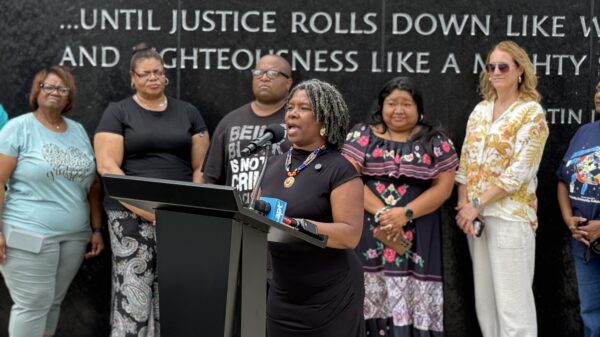
“The hundreds of Alabamians that live in the communities across the 10-county route of this pipeline deserve an opportunity to comment on the permitting of a project that stands to impact their health, their waterways and sensitive ecosystems,” Cindy Lowry, executive director of Alabama Rivers Alliance, said in a statement. “Allowing this pipeline to fall under NWP 12 robs them of that opportunity.”
Nationwide permits are intended to streamline federal approval for activities expected to have minimal environmental impacts. The groups challenging NWP 12 argue the permit is being used for projects that are far larger, allowing pipeline construction to stretch across hundreds of miles and affecting thousands of individual waterways under a single nationwide authorization.
The environmental groups also contend the permitting process gives the pipeline developers too much responsibility for determining whether construction could affect threatened or endangered species, rather than requiring federal regulators to conduct a more comprehensive review.
“To make matters worse, the 2026 reissuance of Nationwide Permit 12 is also plainly inconsistent with the Endangered Species Act. At least two courts—including this Court—have told the Corps that it must formally consult under Section 7 of the Endangered Species Act with the U.S. Fish & Wildlife Service and the National Marine Fisheries Service regarding Nationwide Permit 12’s aggregate effects on endangered and threatened species and their critical habitat,” the lawsuits states.
Pipeline construction typically involves clearing vegetation and excavating trenches through waterways and wetlands before the pipe is installed and the area is backfilled. Conservation groups argue that the process can increase sediment in waterways, damage aquatic habitat and disrupt ecosystems.
Nelson Brooke, Black Warrior Riverkeeper, said the potential effects are particularly concerning in areas connected to the Black Warrior River watershed.
“Streams such as French Creek are essential to freshwater flows, wetland habitat, fishing, and hunting in the lower Black Warrior River watershed. Destructively trenching a methane pipeline through creeks and wetlands is shortsighted and unnecessary,” said Brooke.
The pipeline projects face scrutiny over their potential effects on water quality and endangered species habitat throughout the Southeast. South System Expansion 4 and Mississippi Crossing are being developed by companies affiliated with Southern Natural Gas, Kinder Morgan and Southern Company.
The projects’ developers plan to use NWP 12 for construction through waterways, according to the environmental groups. The organizations argue that the Corps should instead require project-specific environmental reviews, allowing regulators and the public to evaluate the impacts of individual pipeline crossings.
“As part of the individual permitting process, members of the public—including Conservation Groups’ members—would be able to submit comments to the Corps regarding aquatic impacts and mitigation measures. In addition, unlike a Nationwide Permit 12 project, the Corps would be required to select the least environmentally damaging practicable alternative at each waterbody crossing—thereby avoiding or mitigating some of the worst harms from pipeline construction.” the lawsuits states.
The legal challenge also seeks to force a closer examination of the Corps’ approach to nationwide permitting for oil and gas pipelines. The groups say the current process can limit public participation by allowing large infrastructure projects to proceed through a permit designed for activities with comparatively minor environmental impacts.
“According to the Corps, it satisfies its environmental review obligations under the Clean Water Act and National Environmental Policy Act when it reissues Nationwide Permit 12 at the national level. Assessing impacts at the national level—before the agency knows where or how frequently the permit will be used—can work for activities with truly minimal individual and cumulative impacts, like the installation of a buoy that affects 0.01 acres of jurisdictional waters. But this process is unworkable for massive pipelines that cumulatively impact thousands of acres of jurisdictional waters,” the lawsuit states.
The environmental groups say pipeline construction could begin as early as this fall, increasing the urgency of their challenge to the Corps’ permitting process.