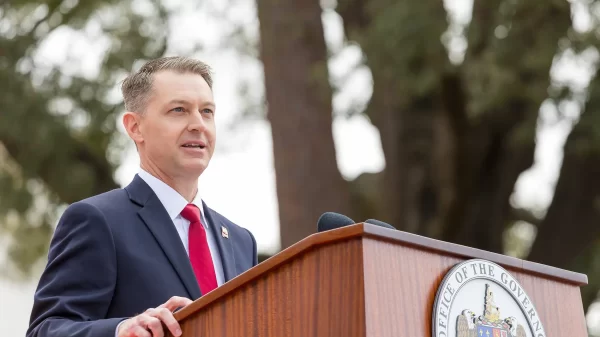









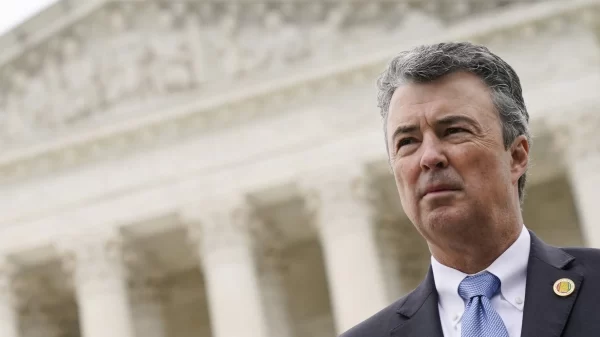







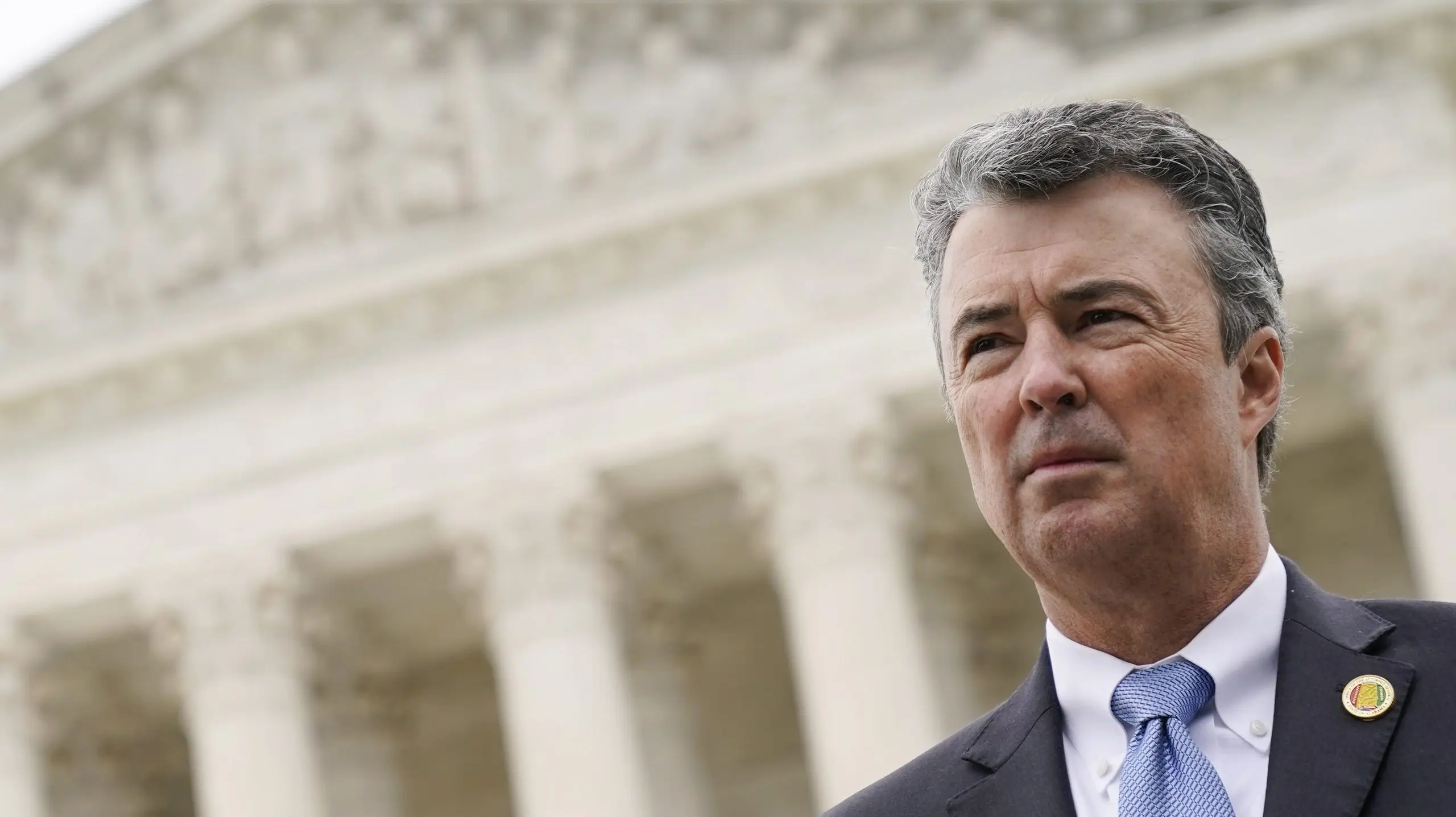
Alabama Attorney General Steve Marshall led a brief to the U.S. Supreme Court on Monday urging the court to allow a struck Arizona law requiring documentary proof of citizenship for voter registration and allowing the state to purge voter rolls within 90 days of elections.
The 26-state brief argues that the National Voter Registration Act of 1993 permits states to use registration forms to require proof of citizenship to register and to remove noncitizens from voter rolls at any time.
The brief was filed in the pending Supreme Court case Republican National Committee (RNC) v. Mi Familia Vota, which concerns whether Arizona may enforce 2022 laws requiring documentary proof of citizenship for voter registration and purge noncitizens from voter rolls within 90 days of an election.
The U.S. Court of Appeals for the Ninth Circuit in February 2025 upheld a lower court decision in favor of plaintiffs challenging the law. The court ruled that the NVRA and a prior consent decree from the case League of United Latin American Citizens et al. v. State Board of Education both prevent Arizona from using documentary proof of citizenship for registration.
The ruling further held that the NVRA’s 90-day quiet period barring voter roll purges within 90 days of elections barred Arizona from systematically purging voter rolls.
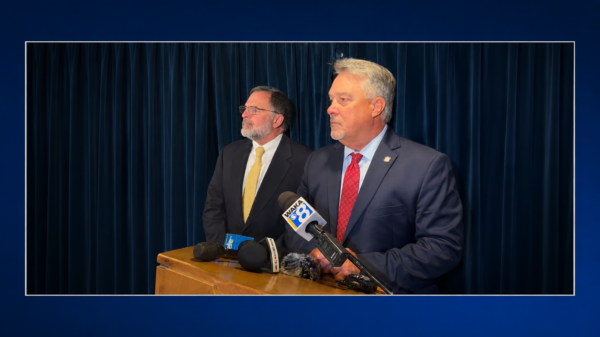
“The United States Constitution is clear that the States set and enforce voter qualifications for all elections, including federal elections,” Marshall stated. “Repeatedly courts have misinterpreted the National Voter Registration Act of 1993, better known as Motor Voter, to stand as a barrier to States exercising this constitutional authority.”
“When noncitizens vote, they dilute the voices of qualified citizens and undermine our democracy. And, because most States use one voter roll for federal and State elections, any federal barrier to keeping noncitizens off the roll impacts State and local elections too,” Marshall added.
Marshall highlighted that the NVRA was cited in a September 2024 lawsuit challenging Alabama Secretary of State Wes Allen’s move to launch “the process to remove noncitizens registered to vote in Alabama” only 84 days before Election Day.
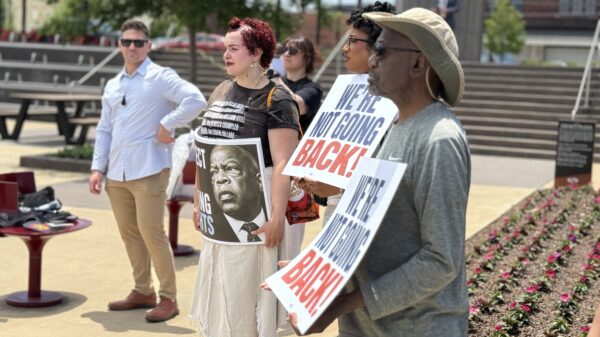
Individual plaintiffs affected by the voter purge, as well as the Alabama Coalition for Immigrant Justice, the League of Women Voters of Alabama and the Alabama Conference of the NAACP, brought the case against Allen. The case was consolidated with a U.S. Department of Justice suit, resulting in the U.S. Court of Appeals for the Ninth Circuit halting the purge.
During the case, Allen acknowledged that thousands of naturalized U.S. citizens, legally eligible to vote, were among voters included in the purge, alongside a much smaller number of noncitizens.
Marshall described the legal challenge to Allen’s purge as filed “under a misinterpretation of the law at issue.”
“Thus, it is frustrating, but not surprising, to see that this summer a Canadian national and a Mexican national pled guilty in federal court in Alabama to voting in the 2024 General Election,” Marshall said. “The Supreme Court has an opportunity to restore the States’ ability to set and enforce voter qualifications, as an inherent function of their own sovereignty and as a means thoroughly considered by our founders to best ensure that federally elected officials are truly representative of the people.”
The brief, which was co-led by the attorney general of Kansas, was endorsed by the Republican attorneys general of Alaska, Arkansas, Florida, Georgia, Idaho, Indiana, Iowa, Kentucky, Louisiana, Mississippi, Missouri, Montana, Nebraska, New Hampshire, Ohio, Oklahoma, Pennsylvania, South Carolina, South Dakota, Tennessee, Texas, Utah, West Virginia and Wyoming.