















Republics are seldom lost in a single blow.
They are seldom saved in one, either.
Both are shaped by the choices of ordinary citizens who decide, day after day, what they will tolerate and what they will not.
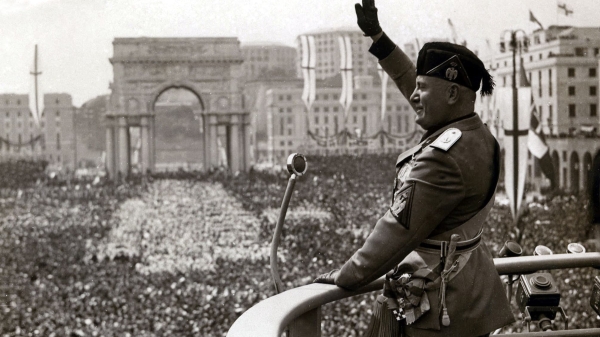
That thought follows me whenever I travel to places that were once the seats of great empires. It is not the grandeur that stays with me. It is how temporary it all was.
On a recent trip to Italy, the thought had company. Susan and I met travelers and working people from many countries. Nearly every one of them, on learning we were Americans, asked some version of the same question: What is happening to your country?
Then, almost in the same breath, they told us why they were asking.
They were not only afraid for us. They were afraid of what it was doing to them.
They described pressures Alabamians know well: the price of gas, the cost of feeding a family, a world that feels less steady every month. They spoke of old alliances fraying and of rash decisions made in Washington that cross oceans and land on their kitchen tables.
America has never been beloved everywhere. Nor has it always lived up to its promises. But for most of our lives, it was seen as an anchor in an unstable world—a country whose promise was that a person with nothing could build something, and that even the powerful must answer to the law.
To many of the people we met, that is now in doubt.
There is no better guide to their question than an Italian who lived the answer.
Niccolò Machiavelli is remembered for “The Prince,” a handbook for rulers who want to seize and keep power. But first he served the Florentine republic. After its fall, he was stripped of office, imprisoned and tortured. He withdrew to his family’s farm outside the city. In the years that followed, he developed his deeper work, “Discourses on Livy,” examining how republics preserve their freedom and how corruption undermines it.
His warning was that free institutions cannot survive a people’s corruption. Citizens must guard their liberty, and a republic must keep open lawful, public means to call the powerful to account. Renewal required a return to its first principles.
“The Prince” asks how a ruler keeps power. The “Discourses” ask how a people keeps its freedom.
That is the question before us now.
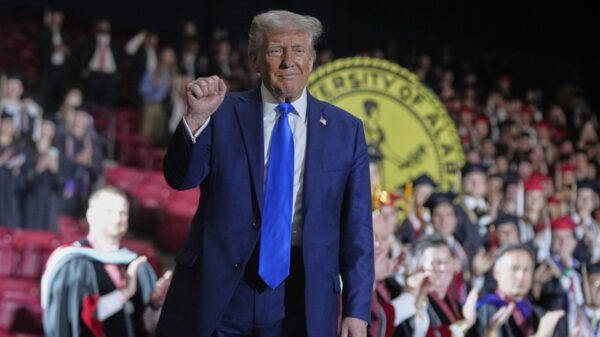
Today, Washington increasingly resembles the courts the founders fled. The president’s own financial disclosure, released this summer and covering 2025, reported more than $635 million in memecoin royalties and nearly $600 million through World Liberty Financial. The Wall Street Journal reported that the family’s crypto venture sold a 49 percent stake to a firm backed by an Abu Dhabi royal. Qatar gave the United States a luxury 747 for presidential use.
The founders wrote a clause into the Constitution to bar those holding offices of profit or trust under the United States from accepting gifts from a king, prince or foreign state without the consent of Congress. They understood that a republic does not need a crown to have a court.
Too much of the country has learned to treat all of this as ordinary.
That acceptance is dangerous. Once citizens stop demanding an explanation, those in power have less reason to give one.
But here is what the worried strangers abroad may not know about us.
America has been here before. And it has found its way back.
Half a century ago, a president who believed he was above the law resigned under threat of impeachment. In the aftermath of Watergate, Congress passed the Ethics in Government Act of 1978, requiring senior public officials to disclose their finances to the people they serve.
That law is why we know the numbers above.
When the pendulum swung back, it left behind the very tool that shows us where it stands now.
Alabama knows this story, too. A speaker of the House was convicted under the ethics law his own Legislature strengthened. A governor resigned amid impeachment proceedings and pleaded guilty to campaign finance offenses.
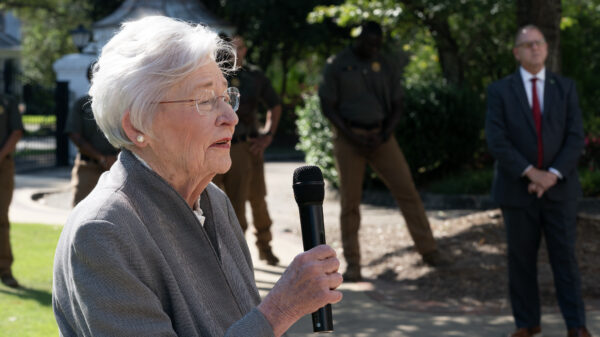
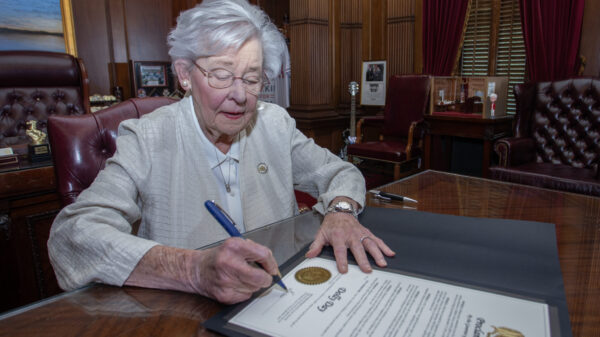
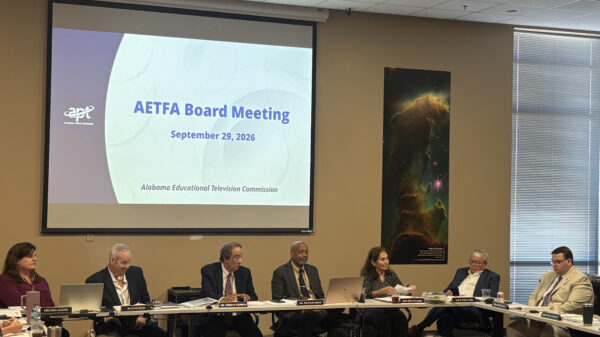
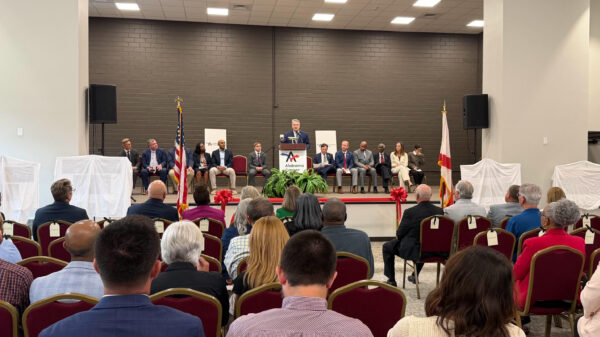
Just last month, when the Alabama Educational Television Foundation Authority voted to spend emergency reserves on a political pollster’s survey, Commissioner Pete Conroy warned publicly that the board was losing the public’s trust. He was not alone. Over the past year, citizens filled commission meetings and flooded Governor Kay Ivey’s office with letters, emails and phone calls. The survey found support for keeping APT’s relationship with PBS by roughly 3-to-1. On October 2, Ivey replaced five of the seven members of the Alabama Educational Television Commission, which oversees APT. Her office said it was time for a fresh start.
Ivey was right to demand a fresh start. Conroy’s public warning deserves recognition, too. The new commissioners must earn the trust the controversy has put at risk.
Corruption has never belonged to one party. Neither has the courage to confront it.
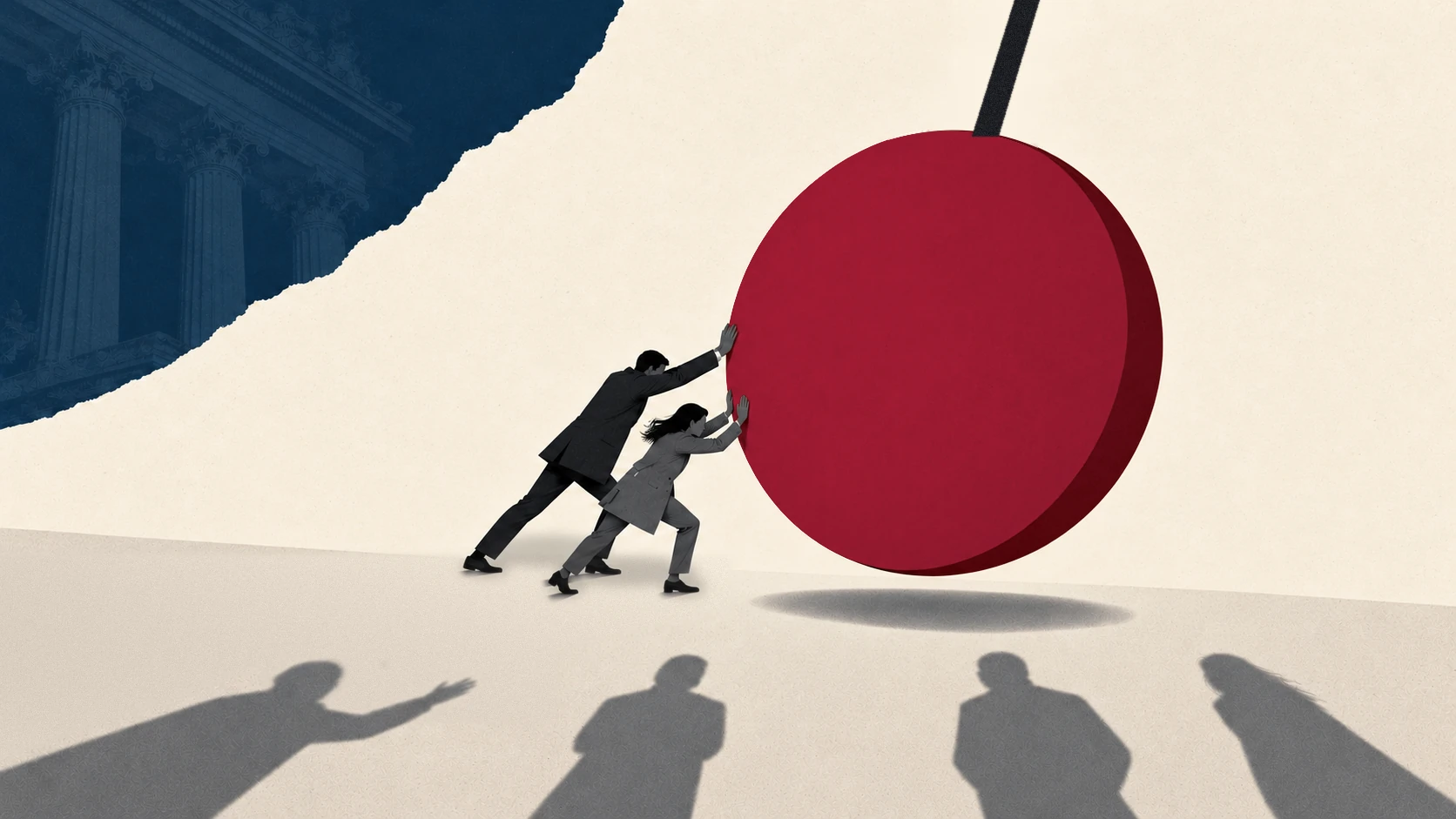
Accountability has never arrived on its own. The pendulum of history does not swing by itself.
It is pushed.
It is pushed by prosecutors and jurors, by lawmakers and reporters, and above all by ordinary citizens who refuse to accept that power excuses anything.
That is why Alabama’s civic habits should worry us more than any single officeholder.
In 2022, just 38.6 percent of Alabama’s registered voters cast a ballot in the general election. This year, voters have choices for governor and other statewide constitutional offices. But across roughly two-thirds of Alabama’s 140 legislative districts, they will have no contest between a Republican and a Democrat. Some of those races include independent candidates; many offer no opposing candidate at all.
Decisions about a family’s schools, its hospital, its utility bill and its taxes will rest with those lawmakers. A legislator without an opponent still owes the people accountability. But voters have no opposing candidate through whom to demand it on Election Day.
That is the kind of erosion Machiavelli warned against. It is quiet. It is gradual. And the harder question is not how it happened, but why we have allowed it to become ordinary.
It is also reversible.
One election will not restore competition where none exists. But citizenship does not end when the polls close. The people who face no opponent must still face questions, public scrutiny and citizens who return after Election Day.
They must face us.
On November 3, Alabamians will choose a governor, a U.S. senator, a lieutenant governor, an attorney general, members of Congress and every seat in the Legislature. The strangers we met abroad feel Washington’s decisions at their kitchen tables. So do we. We feel Montgomery’s there, too, in what we pay, what our schools teach and whether those who govern answer to anyone.
An election gives us a lawful means to demand that answer. We should use it with the seriousness it deserves.
Read the record. Look beyond the slogan. Ask what a candidate has done with the power already entrusted to them. Judge the conduct you can see, including conduct you would condemn in someone from the other party.
Our standards mean little if we abandon them for the people we support.
The ruins of Italy are beautiful. They are also a warning against believing that what endures today will endure forever. A republic has to be sustained by people willing to hold its leaders accountable and accept the responsibilities of self-government.
Some Alabamians are still demanding accountability, at public meetings, in courtrooms and at the polls. More must join them.
History does not ask whether we were worried.
It asks whether we showed up.