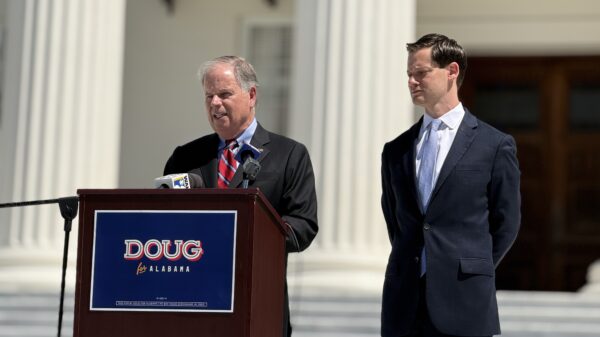


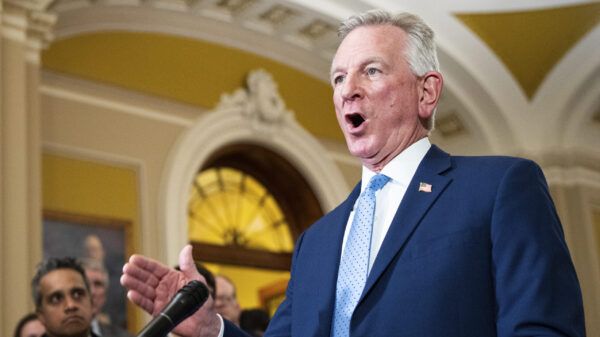






















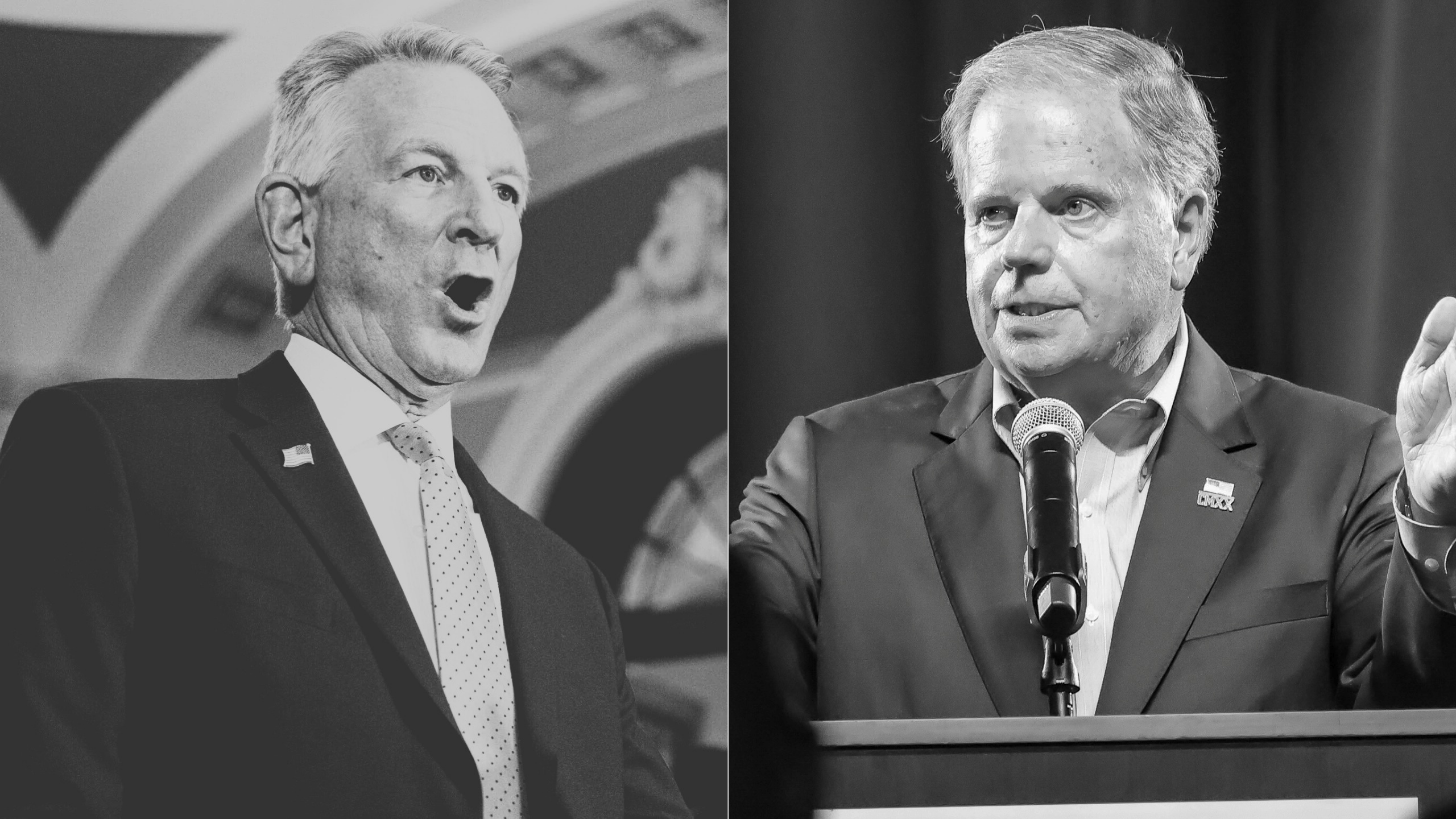
Alabama voters may think they know Tommy Tuberville and Doug Jones.
They probably do not.
Many know the labels: coach and Democrat.
Those labels are powerful, familiar and politically useful. They are also dangerously incomplete.
The point here is not to argue for either candidate, but to argue for taking the governor’s office seriously.
Tuberville is more than “Coach.” Jones is more than “Democrat.” Yet in Alabama politics, those two labels may do more to shape the race than anything either man has done, said, built, prosecuted, opposed, supported or failed to explain.
That should trouble anyone who believes citizenship requires more than reflex.
Labels are useful. They tell voters something. They provide a starting point. They help people sort candidates in a political world crowded with noise, money, advertising, consultants, social media clips and nationalized outrage.
But labels are shortcuts, not conclusions.
“Coach” tells voters something about Tuberville’s past. It does not tell them how he would govern.
“Democrat” tells voters something about Jones’ party. It does not tell them whether he understands the office.
And governor is not a symbolic job.
A governor appoints agency heads, shapes budgets, negotiates with legislative leaders, responds to disasters, manages crises, and sets the tone for the state when the cameras are gone and the consequences remain.
That is why Alabama voters should resist the temptation to reduce this race to the easiest available words.
Tuberville begins with the obvious advantage. He is the Republican nominee in a deeply Republican state. He is a former Auburn football coach with a name many voters have known for decades. He has celebrity, party alignment and the loyalty of a MAGA base that sees him as one of its own.
That is no small thing in Alabama politics.
For many voters, “Coach” is more than a description. It is a feeling. It suggests toughness, familiarity, discipline and belonging. Whether fairly or not, it allows Tuberville to enter the race with an emotional connection most candidates spend years trying to build.
Jones begins with a different burden. He is a Democrat in Alabama, and for many voters, that label alone is enough to end the conversation.
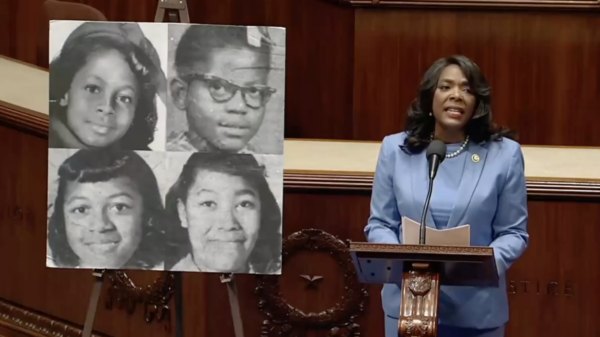
It may not matter that his career includes service as a U.S. attorney, the prosecution of those responsible for one of the darkest crimes in Alabama history, and a term in the U.S. Senate. For some voters, the word “Democrat” will cover all of that like a curtain.
That is the danger of labels.
They can be accurate and still incomplete. Tuberville was a coach. Jones is a Democrat. But labels flatten people. They hide complexity. They encourage voters to stop asking questions at the very moment questions matter most.
Tuberville can stir the Republican base. The harder question is whether he has the temperament, discipline, curiosity, seriousness and governing judgment to lead Alabama.
Jones can appeal to Democrats, independents and some disaffected Republicans. The harder question is whether he can persuade enough Alabamians to look beyond party identity and consider the demands of the office itself.
Those are different questions from the ones that usually dominate Alabama politics.
Too often, our elections are decided before they are examined. The Republican nominee is presumed to be the next officeholder. The Democratic nominee is presumed to be a long shot. Voters are sorted, consultants are paid, ads are run, and the state moves from one political cycle to the next without pausing to ask what kind of leadership the moment actually requires.
In Alabama, politics is shaped by more than voters. It is shaped by party machinery, donor networks, business interests, ideological movements, consultants, lobbyists and private conversations that never appear in a campaign ad.
The public sees unity. Privately, there is often unease.
There are Republicans in Alabama who will vote for Tuberville and still worry about what a Tuberville administration would look like.
There are business leaders who understand the value of predictability and may quietly wonder what a Tuberville administration would look like.
There are traditional Republicans who still value stability, competence and institutional restraint, even as those qualities no longer always carry the greatest reward in modern Republican politics.
That is Alabama politics.
The MAGA base wants a fighter. The business community wants predictability. Traditional Republicans want stability. Democrats want a chance. Independents want some evidence that the next governor can rise above national shouting matches and deal with Alabama’s real needs.
Those wants are not easily reconciled, but they reveal something important: Campaigning and governing require different skills.
Tuberville’s politics are built around instinct, loyalty and identity. Jones’ public career has been built around law, evidence, institutions and consequence.
That does not make one man automatically right and the other automatically wrong.
But it does mean voters are looking at two very different habits of mind.
One approach fits the politics of the moment. The other asks voters to think beyond it.
That may be the central challenge of this race.
Alabama has serious problems.
It is a state with rural hospitals struggling to survive, prisons under federal scrutiny, uneven public education, changing workforce needs and too many communities still waiting for investment others take for granted.
Economic development requires more than slogans. Health care requires more than ideology. Governing requires more than standing in front of a friendly crowd and saying the words that crowd already wants to hear.
The next governor will inherit all of that.
So voters have a right to ask more of both men.
How does each make decisions? Who will each bring into government? Will they listen to experts, agency heads, business leaders, educators, health care professionals, local officials and citizens outside their political comfort zone? Will they govern for the whole state or only for the faction that delivered victory?
Those questions are basic, regardless of party.
Tuberville’s strength is that he does not require much explanation. His appeal is immediate. He is familiar, combative and aligned with the dominant political identity of the state. In a culture that rewards certainty, he offers certainty. In a party that values loyalty to the movement, he offers loyalty.
Jones’ strength is different. His appeal rests on experience, seriousness and institutional understanding—qualities that matter in governing but do not always travel well in modern campaigns.
The easiest thing in politics is to vote for the label that already feels like home.
The harder thing is to ask whether the label tells the whole truth.
Alabama voters do not have to agree with Doug Jones to take him seriously. They do not have to dislike Tommy Tuberville to examine him closely. They do not have to abandon their party to ask whether the person seeking the governor’s office is prepared for the job.
That kind of scrutiny is citizenship.
A healthy political culture does not ask voters to forget their values. It asks them to apply those values honestly.
If character matters, then character should matter for everyone. If competence matters, then competence should matter for everyone. If leadership matters, then leadership should mean something more than partisan victory.
The governor’s office is more than a reward for fame, a consolation prize or a stage for national performance politics. It is an executive office with real consequences for real people.
Alabama has had governors who understood that. It has also had governors who damaged public trust, embarrassed the state or mistook political power for personal entitlement.
The lesson should be clear by now: The character of a governor matters before the crisis comes, not after.
That is why this race deserves a closer look.
The reason is not simply that one candidate carries a Republican label and the other carries a Democratic one, or that one man is known as Coach and the other is known as a Democrat. The reason is that labels, however powerful, are not qualifications. They are not substitutes for judgment or proof of readiness.
Alabama voters may still choose the label. They often do. But they should not pretend the label is the whole man.
A governor is more than a slogan, a jersey, a memory from a football Saturday or a partisan reflex from a ballot line. A governor is the person who will make decisions when the crowd is gone and the consequences remain.
That is why this race deserves more than recognition. It deserves examination.
Party labels cannot do the work that citizenship requires.
Alabama voters may think they know Tommy Tuberville and Doug Jones. This race will test whether they are willing to look closer.