













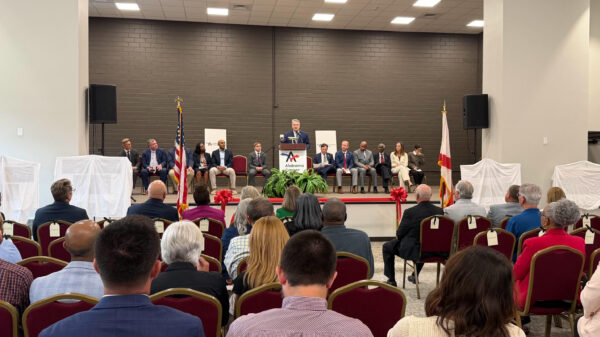


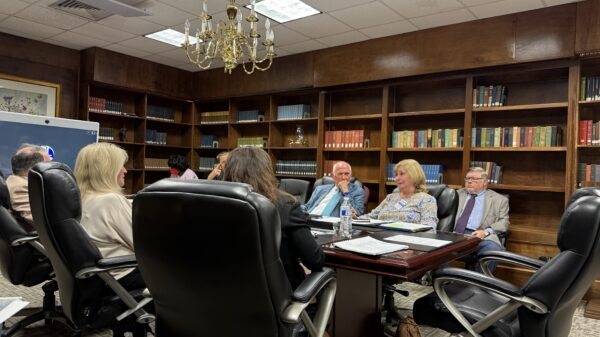




Members of the Joint Interim Study Commission on Expanding Access to High-Quality Out-of-School Education Programs discussed statewide after-school funding, program growth and new research partnerships during a recent meeting focused on Alabama’s expanding out-of-school education efforts.
During the meeting, Jeff Norris of the Office of Extended Learning at the Alabama State Department of Education provided updates on the state’s Alabama Afterschool and Summer Adventures Program, commonly known as ASAP, and detailed efforts to improve oversight and professional development for participating programs.
Norris said the state awarded ASAP grants this year and has maintained regular communication with participating sites. He said the department has assigned retired educators to conduct on-site coaching and support visits to all 192 programs over the coming months.
“We’re going to try to do our 192 in-person visits,” Langham said.
The department also launched virtual professional learning sessions for providers this year. Norris said roughly 95 percent of programs participated in at least one session, while many attended multiple trainings.
Commission members discussed using the statewide network of after-school providers to distribute surveys and collect feedback from parents, educators and community stakeholders. Norris said many programs are already seeking survey tools as part of their grant requirements.
A major portion of the discussion focused on the state’s supplemental $30 million appropriation for summer and after-school programs, which is separate from the state’s $17.2 million ASAP allocation and other literacy and enrichment funding streams.
Norris said the supplemental funding was intentionally designed with flexibility to allow school districts to address local needs.
“The funds were supposed to not just be for K-5 reading and math camps,” Norris said. “This is actually for all out-of-school time programs, K-12.”
He said the department has encouraged districts to use the funding creatively, including partnerships with universities, multilingual learner initiatives, arts programming and student-led instructional efforts.
The department is also working to standardize reporting categories across multiple funding sources, including personnel, professional learning, instructional materials and field trips, in an effort to better track how districts spend after-school funding.
Chairman Terri Collins, R-Decatur, said one goal of the commission is to better understand which programs and spending strategies have been most successful as federal COVID-era relief dollars expire and the state assumes a larger role in sustaining programs.
“It’s kind of why the commission was formed the first time,” Collins said. “We’re trying to understand what was done, where was it successful, so that as we have to fund it locally within the state now, we know which ones would be the most beneficial to continue moving forward.”
Norris also announced a developing partnership between the Alabama State Department of Education and Harvard University through the university’s Leading States Initiative. He said Alabama was selected as one of seven states participating in research projects examining education initiatives nationwide.
The partnership will analyze data from Alabama’s summer reading and math camps to identify effective practices and high-performing programs. Norris said the state hopes the research will help shape future recommendations for both elementary and secondary out-of-school programs.