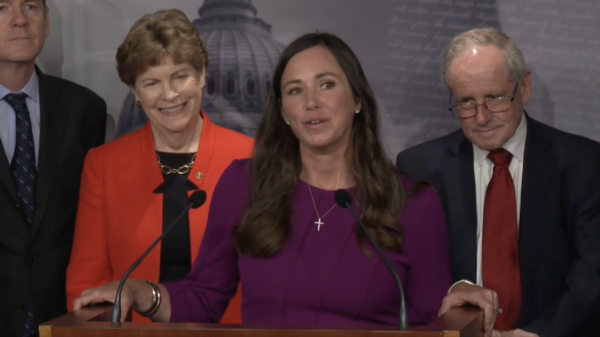






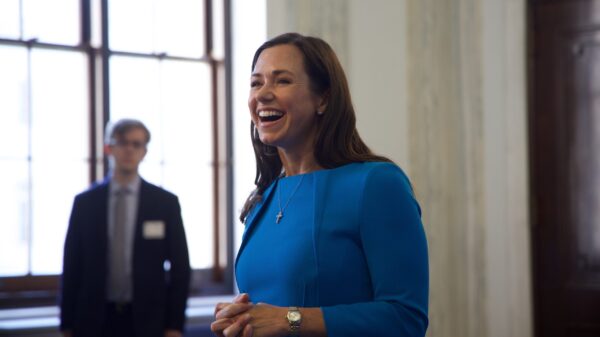


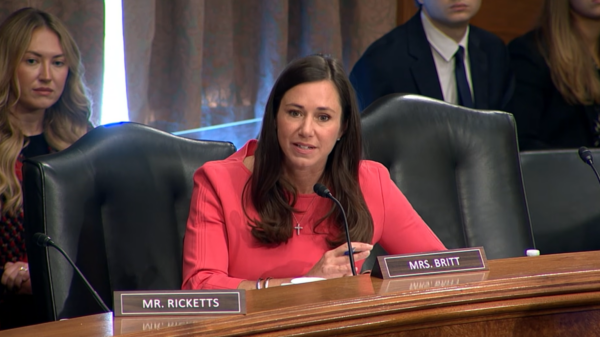







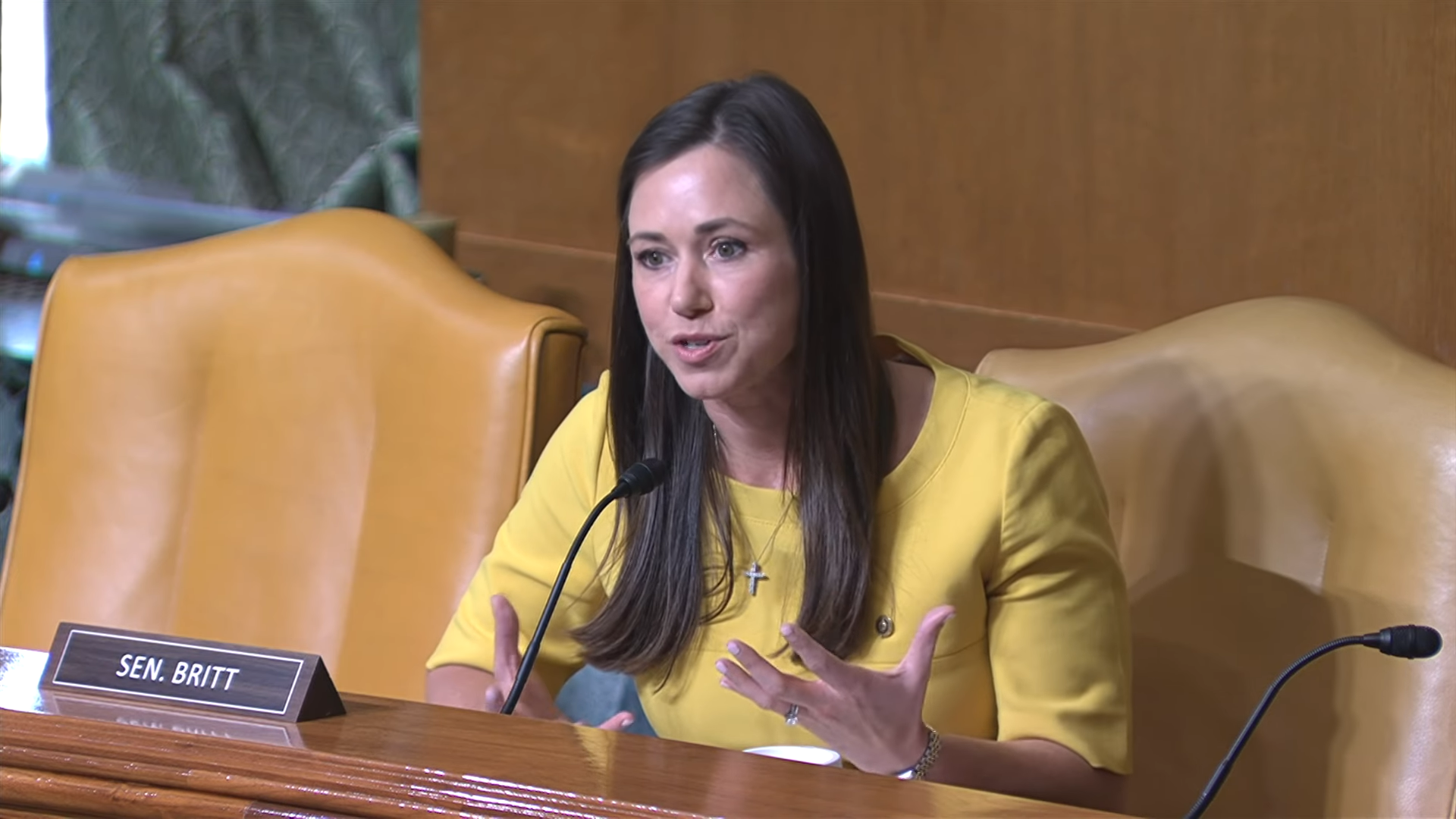
U.S. Senator Katie Britt, R-Alabama, questioned three nominees Tuesday during a Senate Banking Committee nomination hearing.
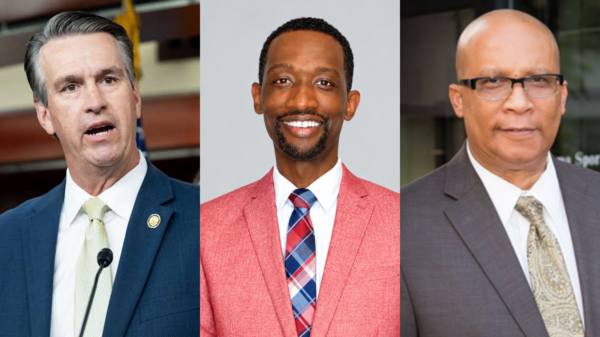
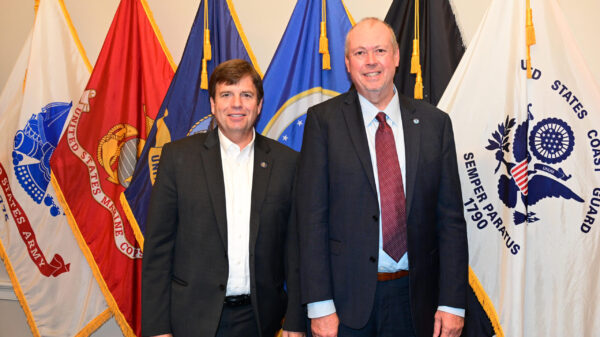
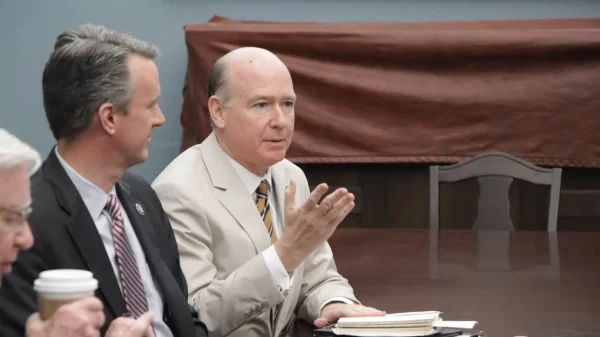
Britt, a member of the committee and chair of the Housing, Transportation and Community Development Subcommittee, questioned John Crews, nominee to the National Credit Union Administration; Christopher Phelan, nominee to chair the Council of Economic Advisers; and Jeffrey Ledbetter, nominee to serve as inspector general of the Department of Housing and Urban Development.
Britt first addressed Crews, asking how the NCUA can help credit unions adapt to new technologies while maintaining safety and soundness.
“As financial services continue to evolve and credit unions are adopting new technologies to make sure that they’re meeting their customers’ needs, expanding their digital offerings and serving increasingly diverse communities in different places, how are you going to make sure that you keep them safe—that you’re giving them the most up-to-date technology that allows them to meet the needs in front of them, but that we’re doing it in a way that it remains safe and sound and well-positioned for the future?” Britt asked.
Crews said credit unions, particularly smaller institutions, often have limited resources and must work together to access new services.
“Consumers expect and need new and innovative financial services products, including new technology,” Crews said. “When it comes to credit unions, many of them are uniquely small and have limited resources. And because of that, they often work together to access some of these services. From my perspective, at NCUA, we need to support their efforts to adapt with technological innovation. But absolutely, that is a risk factor. Cyber risk is a serious threat.”
Britt then questioned Ledbetter on efforts to root out waste, fraud and abuse in taxpayer-funded housing assistance programs.
“HUD administers billions of dollars across housing assistance and community development homelessness programs,” Britt said. “I certainly believe in being able to help people get back on their feet and find their pathway to the American Dream. What we have seen, though, has been a lot of bloat in certain areas with inefficiencies. Look, if you’re confirmed as inspector general, what would your priorities be for ensuring that these taxpayer dollars that people work really hard for are being used wisely and efficiently, that we are rooting out where there is waste, fraud and abuse, so that the people who do need help, we still have the resources to be able to do that?”
Ledbetter said he would begin by meeting with HUD staff and learning more about the department’s programs.
“If confirmed, I would look forward to first meeting with the professional staff at HUD and learning the people and the programs and continuing the good work that they’ve been doing,” Ledbetter said. “And then once I accomplish the first 90 to 180 days, if there’s room for improvement, those are the things we will look at.”
In her final line of questioning, Britt discussed affordability concerns with Phelan.
“Families across Alabama and our country continue to cite affordability as obviously one of the top concerns, whether that’s housing or whether that’s child care or groceries or energy costs,” Britt said. “What are the most important factors driving affordability challenges today, in your opinion, and what policies do you believe can expand economic opportunity for citizens and improve the standard of living for people in the state of Alabama?”
Phelan said the best affordability policy is a strong job market.
“I firmly believe that the best policy for affordability is a good job,” Phelan said. “A good job with good wages and good benefits, and I would advocate for policies or advise policies which make that most likely to happen.”