



















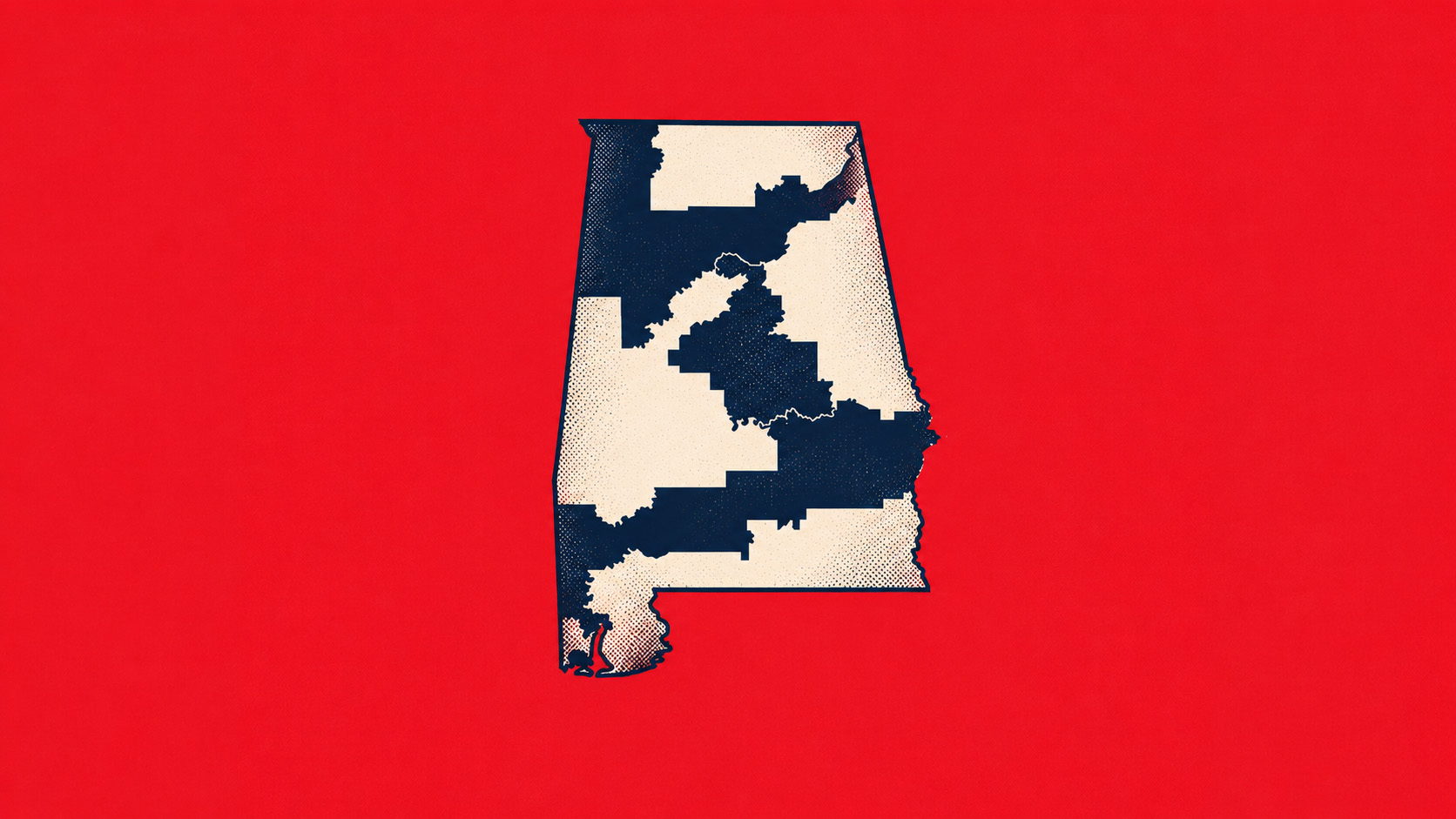
Reactions reverberated across Alabama’s political landscape Tuesday after a federal court once again moved to prevent the state from using a congressional map it has repeatedly found to be intentionally discriminatory.
The state immediately appealed the decision to the U.S. Supreme Court, and top Republicans vowed to fight and ultimately implement their plan that would likely give the GOP a 6-1 advantage in U.S. House seats.
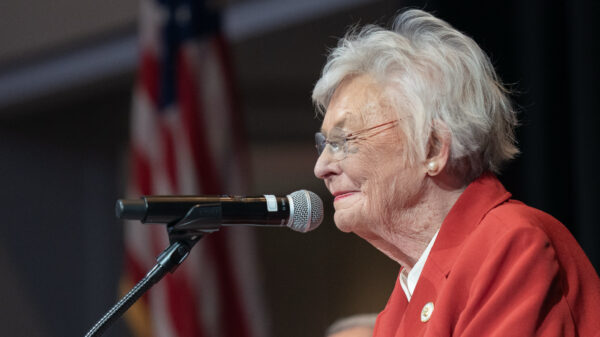
“Alabama’s redistricting battle continues after federal judges temporarily blocked use of our 2023 congressional map,” Governor Kay Ivey said in a statement. “I fully support Attorney General Marshall appealing this unsurprising decision to the U.S. Supreme Court, and I remain hopeful they will allow Alabama to move forward with our August 11 Special Primary Election. I will continue to say: Alabama knows our state, our people and our districts best.”
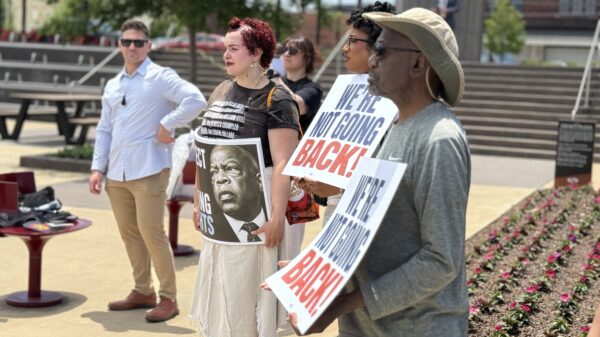
Meanwhile, Democratic leaders and voting rights organizations praised the decision from the federal court and tentatively celebrated the ruling that preserves the court-ordered map that has allowed Black voters an opportunity to elect a second candidate of their choosing.
“We are thankful that the district court has again vindicated the constitutional rights of voters in the Black Belt, and we look forward to voting under a fair map this fall,” the Milligan plaintiffs and counsel said in a joint statement. “The court saw through Alabama’s blatant attempt to reinstate a race-based congressional map that the legislature deliberately enacted to deny Black voters a voice in Congress. As testimony at Friday’s hearing confirmed, state officials do not have enough time to switch maps before the August primary without spawning chaos and potentially serious errors. Rather than accept this reality, state officials have knowingly sown confusion and doubled-down on their attacks on Black voters. The court’s order today to reinstate the Milligan remedial map is a crucial victory for fair representation and brings necessary clarity to the state’s 2026 elections.”
Alabama Speaker of the House Nathaniel Ledbetter, R-Rainsville, painted the federal court as “three activist judges” despite two of the judges being appointed by President Donald Trump, and continued the Alabama GOP narrative that it is the court-ordered map—not the 2023 map—that is racially gerrymandered.
“As disappointing as this decision is, it is ultimately unsurprising given their long track record of siding with liberal plaintiffs and handing Democrats congressional victories in the courtroom,” Ledbetter said in a statement. “… I believe this decision is blatantly in violation of the Supreme Court’s ruling in Callais v. Lousiana and will not stand once it is presented in front of a higher court. This is nothing more than a politically motivated attempt to weaponize the judicial system for partisan gain, and Alabama has every intention of taking this to the Supreme Court and fighting back.”
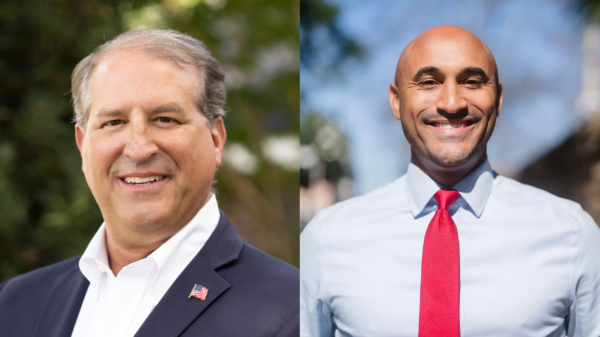
Both of Alabama’s Black members of Congress addressed the ruling Tuesday, including U.S. Representative Shomari Figures, D-Alabama, who would face a much tougher road to reelection if the district lines from 2023 are allowed to move forward.
Figures said he expected the court to block the map “given the overwhelming evidence” and praised the ruling as a “significant step in the right direction,” but he tempered the celebration in light of the state’s appeal.
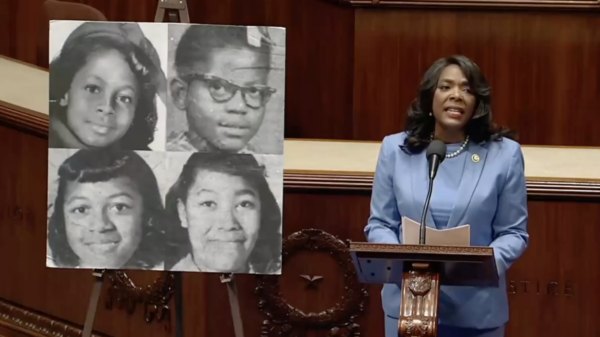
U.S. Representative Terri Sewell, D-Alabama, called the decision a “powerful rebuke of Alabama’s continued efforts to silence Black voters.”
“Once again a federal court confirmed what we have said all along: Alabama’s 2023 congressional map was intentionally designed to discriminate against Black voters and dilute our political power,” Sewell said. “When Alabama Republicans passed the 2023 congressional map, they defied federal court orders, the Constitution and the Voting Rights Act in a desperate attempt to preserve their grip on power. Rather than drawing a fair map, they obstructed, delayed and intentionally discriminated against Black voters. Today, the court made clear that those tactics will not stand.”
As the state awaits word back from the Supreme Court, the legal battle continues to create chaos and confusion for voters. Today begins a ticking clock for registrars in Alabama to reassign voters based on 2023 congressional district lines, but that process will not move forward as long as the injunction stands. Every hour that passes without direction from the Supreme Court will be an hour lost in that process.
The three-judge panel already found in its injunction that the compressed seven-day timeline would require a “Herculean effort” and might already be “logistically impossible.” To make matters worse, two of the seven days fall on a weekend, and one falls on a state holiday honoring Jefferson Davis, president of the Confederacy.
Phillip Ensler, D-Montgomery, a candidate for lieutenant governor, said the confusion caused by Alabama’s attempt to revert to the 2023 maps is arguably the saddest part of the affair, calling it “totally avoidable.”
“Alabama’s elite need to stop playing games with your vote,” Ensler said. “They need to stop discriminating against Black Alabamians. They need to focus on solving problems rather than using your taxpayer dollars to fight legal battles to empower themselves.”
As Alabama’s Republican leadership doubles down on fighting for the 2023 maps, it remains unclear just when reverting to the maps will become impossible at an administrative level. The continued fight from the state also leaves in limbo the status of the August 11 primaries.