






















When Dee McDonald renewed her family’s benefits under the Supplemental Nutrition Assistance Program, SNAP, last fall, she had no reason to think the process would leave her choosing between paying the rent and feeding the three grandsons she is raising.
Months passed without assistance. McDonald told The New York Times she relied on food banks, stretched every grocery dollar and skipped meals while trying to resolve a paperwork problem with Arizona’s SNAP system.
Her family never stopped qualifying for help. The system simply failed to deliver it.
McDonald’s experience was not an isolated bureaucratic mishap. It was one glimpse of a statewide crisis.
Since Congress enacted HR1 last summer, nearly 440,000 Arizonans have lost SNAP assistance, also known as food stamps—roughly half of all participants. More than 180,000 are children.
The decline far exceeds estimates of those directly affected by new eligibility restrictions. This suggests many eligible people are being caught in a system struggling with complicated rules and pressure to reduce errors and future costs. Arizona has issued $600 million less in SNAP benefits since July 2025, even as food bank traffic surges.
Alabama should take notice. Arizona shows what can happen when sweeping federal changes collide with an underfunded, overburdened system.
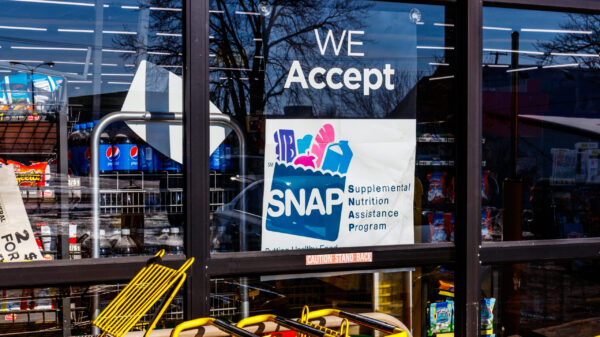
About 1 in 8 Alabamians—roughly 650,000—use SNAP to help keep food on the table. The federal government has fully funded these benefits for decades. But under HR1, the so-called One Big Beautiful Bill Act, most states must pay for 5 percent to 15 percent of SNAP benefits starting in 2028 based on a flawed measure called the payment error rate. The law will require Alabama to cover 10 percent of SNAP benefits, or about $174 million a year.
This enormous cost shift is based on the misinterpretation of what payment error rates actually measure. Error rates do not measure fraud. Instead, they measure underpayments and overpayments that agencies—including Alabama’s Department of Human Resources, DHR—make while administering SNAP.
As in Arizona, SNAP participation is falling in Alabama despite higher food prices and persistently high food insecurity and because of decades of unbending food apartheid. Since July 2025, nearly 82,000 fewer Alabamians, including about 23,000 children, are receiving SNAP benefits to help keep food on the table. That number is almost enough to fill Jordan-Hare Stadium.
Much of this decrease is due to SNAP participants’ struggles to navigate HR 1’s new red-tape barriers, including expanded work reporting and verification rules. These requirements have forced DHR staff to manage more calls, applications and paperwork. Additionally, HR1 now requires states to cover 75 percent of SNAP administrative costs, up from the previous 50 percent.
In short, the federal government has told Alabama to reduce its SNAP error rate while cutting federal funding and making the program more complicated to administer. And if state legislators don’t allocate $174 million for SNAP benefits next year, Alabama could be forced to end its participation in SNAP entirely.
That is how a fiscal cost shift becomes a hunger crisis.
Alabama legislators must provide the funding needed to continue providing SNAP benefits. Otherwise, Alabamians risk losing the stabilizing power that SNAP offers for families, local grocers and retailers, farmers and the broader community.
Alabama has many revenue options to cover new SNAP costs. One would be to increase the state cigarette tax. Another would be to limit or end the state’s federal income tax deduction—a skewed tax loophole that overwhelmingly benefits Alabama’s wealthiest households—and redirect some of that revenue to fund SNAP.
Ultimately, Congress should reverse these harmful new SNAP cost shifts. At minimum, federal lawmakers should give states enough time and resources to implement them without pushing eligible families out.
Over the weekend, U.S. House Agriculture Committee Chairman John Boozman inaccurately claimed his Farm Bill draft would give “additional time to strengthen administration of SNAP benefits and reduce payment error rates.” Alabama would not get additional time to reduce error rates, but our lawmakers would get additional time to address the revenue gap the One Big Beautiful Bill Act created for our state budget.
As the Farm Bill moves toward committee markup on Thursday, Aug. 6, it appears our state administrators still will have to put paperwork over people beginning this year. Ultimately, we would get a payment plan, with less than optimal “payment error” rates.
Lawmakers should continue to delay the SNAP cost shift for Alabama and give states an opportunity to reduce their payment error rate to reduce the cost of the program. Giving states until at least 2029 to prepare would protect families’ access to food while preserving SNAP spending that supports farmers, grocers and local economies.
Arizona’s experience is a cautionary tale. Alabama still has time not to repeat it—but only if state and federal leaders act before the warning becomes another crisis.