
















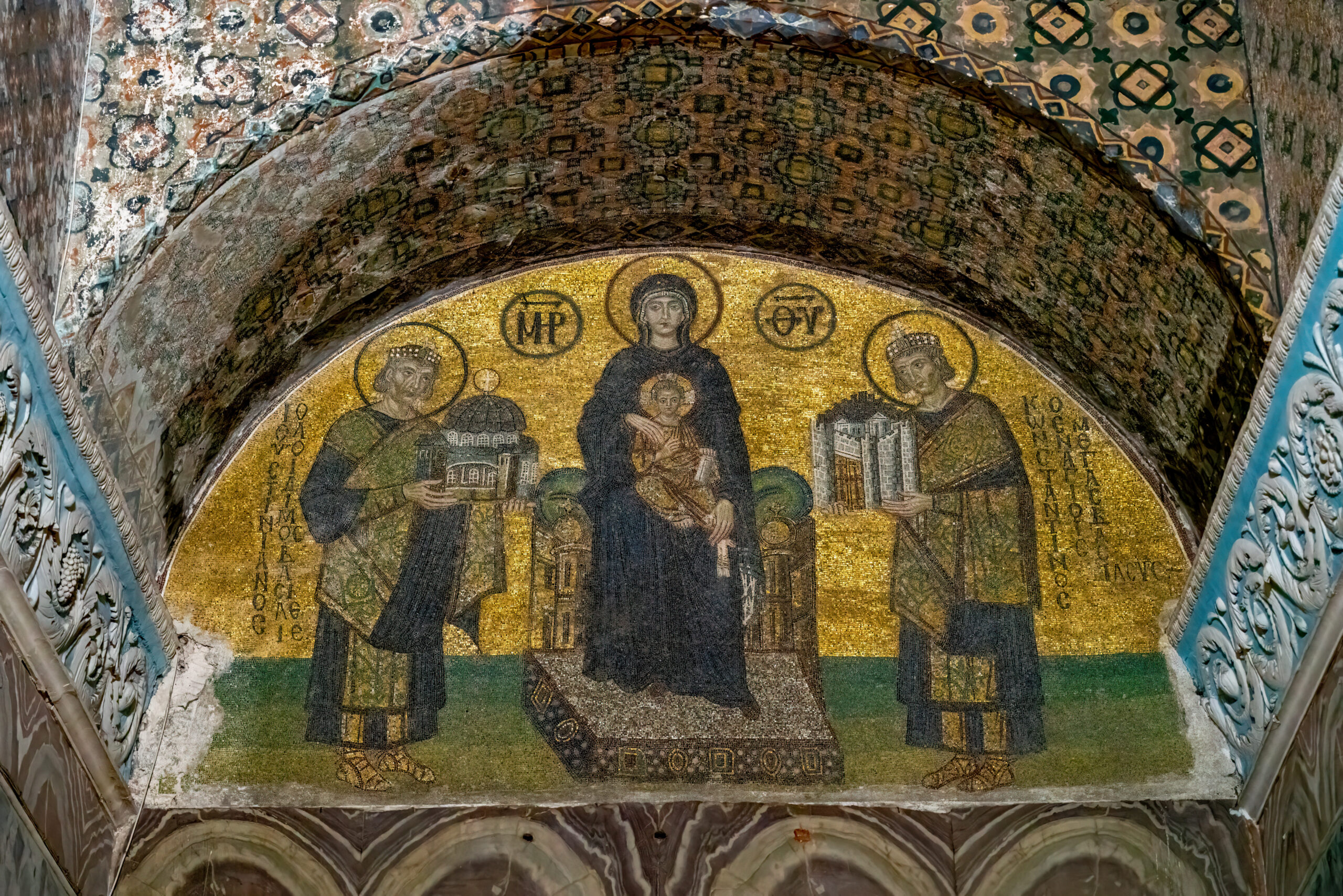
Recently, when I stepped into Hagia Sophia, the air felt almost heavy with history. Light spilled through windows high above, catching on golden mosaics that once reflected the prayers of emperors and sultans alike. It was breathtaking—but also unsettling. This was beauty in the service of power, devotion built to command awe as much as faith.
Built as a Christian basilica under Emperor Justinian, Hagia Sophia was the crown jewel of Byzantine Christendom, a shimmering statement that God favored Constantinople. Centuries later, Sultan Mehmed II conquered the city and claimed Hagia Sophia as a mosque, placing his own mark upon its dome.
When Mustafa Kemal Atatürk transformed it into a museum, it became a symbol of secular modernity and the rebirth of a nation determined to separate religion from the state. Atatürk sought to redefine Turkey not as an empire of faith, but as a republic of reason—a place where identity would rest on citizenship rather than creed.
And in our own time, Turkish President Recep Tayyip Erdoğan has restored it as a mosque once more, signaling a return to religious nationalism. The building remains as stunning as ever, but it also tells a deeper story: the human habit of turning faith into theater, of using God’s name as scaffolding for earthly power.
This pattern is as old as civilization itself. Pharaohs ruled Egypt as divine sons of the gods; Roman emperors were worshiped as gods themselves. Constantine’s conversion to Christianity in the fourth century gave birth to a powerful alliance between altar and throne that has never quite been broken. Churches became fortresses of empire, their grandeur reflecting not only devotion but dominion. To walk through Hagia Sophia, St. Peter’s or Westminster Abbey is to feel both awe and authority pressing in from the same stones.
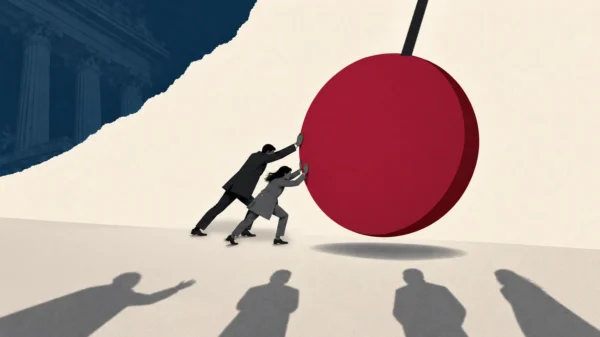
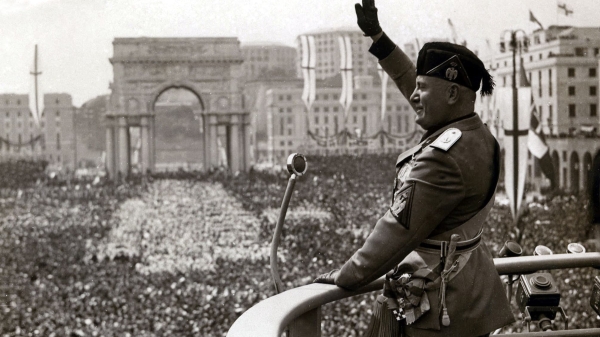
The genius of rulers through the ages has been to fuse the sacred and the political so tightly that questioning one was seen as defying both. Faith became the moral justification for war, conquest and hierarchy. Monarchs ruled “by divine right,” their crowns consecrated by bishops who, in turn, owed their privilege to royal favor. Even today, when theocratic rule has faded in much of the world, the same impulse lingers in softer forms—where political leaders wrap themselves in scripture, not out of reverence, but as a shield against accountability.
Niccolò Machiavelli captured this cynicism with brutal honesty in The Prince. Writing when church and state were knotted together, he warned that a ruler need not truly be virtuous—only seem so. He wrote that a wise leader should appear merciful, faithful, humane, upright, and religious, even when he is not. For Machiavelli, the image of virtue mattered more than virtue itself. Piety wasn’t salvation; it was strategy. And his counsel has echoed ever since, teaching leaders that the language of faith can be more potent than its practice.
It is not religion itself that corrupts; it is the temptation to wield it as an instrument. Faith can elevate a people when it inspires humility, mercy and justice. But once it is weaponized for control, it begins to decay from within. Hagia Sophia’s transformations over the centuries are not merely architectural—they are emblematic of how power reshapes belief to fit its own image. A cathedral becomes a mosque, a mosque becomes a museum, a museum becomes a political symbol. Each conversion carries the fingerprints of those who sought to claim the divine for themselves.
We may imagine such manipulations belong to distant centuries, but they thrive in new forms much closer to home.
In America, this same theater of faith now plays out in subtler but no less consequential ways. Politicians invoke God to divide rather than unite, to draw battle lines in a culture war rather than lift hearts toward understanding. Piety has been reduced to branding, belief to spectacle. Crosses are raised not as calls to compassion but as emblems of grievance. The Sermon on the Mount is seldom quoted by those who claim to defend “Christian values,” because the Beatitudes ask more of the soul than slogans can bear.
There is, of course, nothing new about this. Our own founders understood both the power and peril of religion in public life. Thomas Jefferson, whose Bible literally cut out the miracles to focus on moral teachings, argued for “a wall of separation between church and state” not because he despised faith, but because he revered it too much to see it corrupted by politics. James Madison wrote that religion “flourishes in greater purity without than with the aid of government.” They had seen what happened in Europe when the pulpit became an extension of the throne—and they refused to let the experiment of democracy be consecrated to any one creed.
And yet, even here, we have not escaped the allure of holy politics. From the crusades of prohibition to modern debates over reproductive rights and gender, appeals to divine will often mask the human pursuit of dominance. The irony is that the more leaders insist they act in God’s name, the less godly their actions tend to become. Faith is not strengthened by being legislated; it is cheapened by being exploited.
Perhaps that is the enduring lesson of Hagia Sophia. Beneath its dome, mosaics of Christ and Arabic inscriptions coexist uneasily, reminders of centuries of conquest and conversion. And yet, the building still stands—majestic, enduring and open to all who wish to see it. It belongs to neither emperor or sultan, but to history itself. The stones do not care who claims them; they simply bear witness.
Its name, Hagia Sophia—“Holy Wisdom”—was meant to point toward divine understanding. Yet history shows how easily humanity confuses wisdom with control. The building endures not as a triumph of one faith over another, but as a reminder that true wisdom cannot be conquered.
The great danger of our time is not disbelief, but the arrogance of those who claim a private line to the divine. Faith does not need a flag to prove its worth. The moment faith becomes a flag, it stops being sacred—it becomes strategy. And if the stones of Hagia Sophia could speak, they might remind us that true reverence lies not in possession, but in humility before what we can never own.