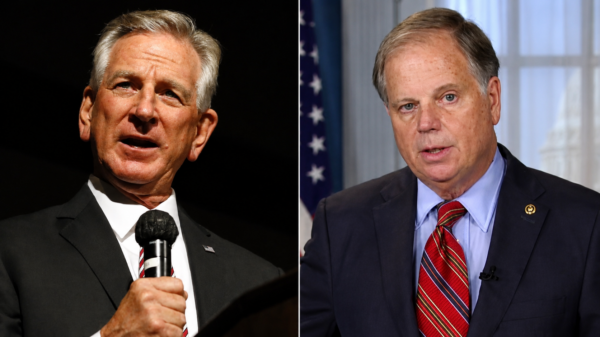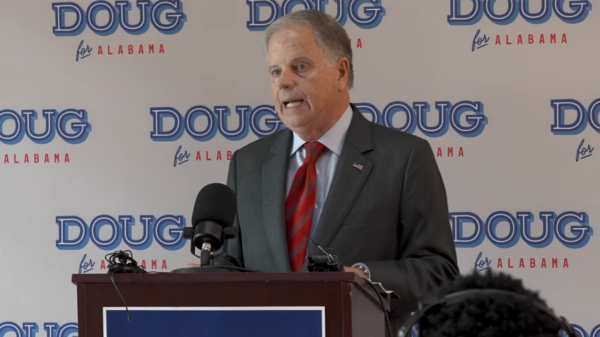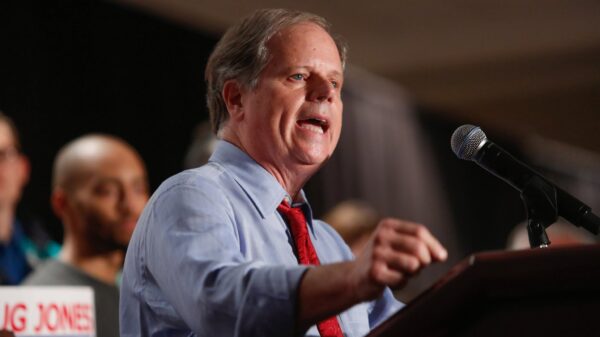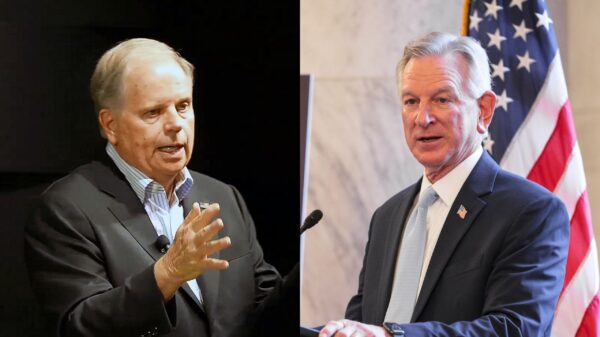



























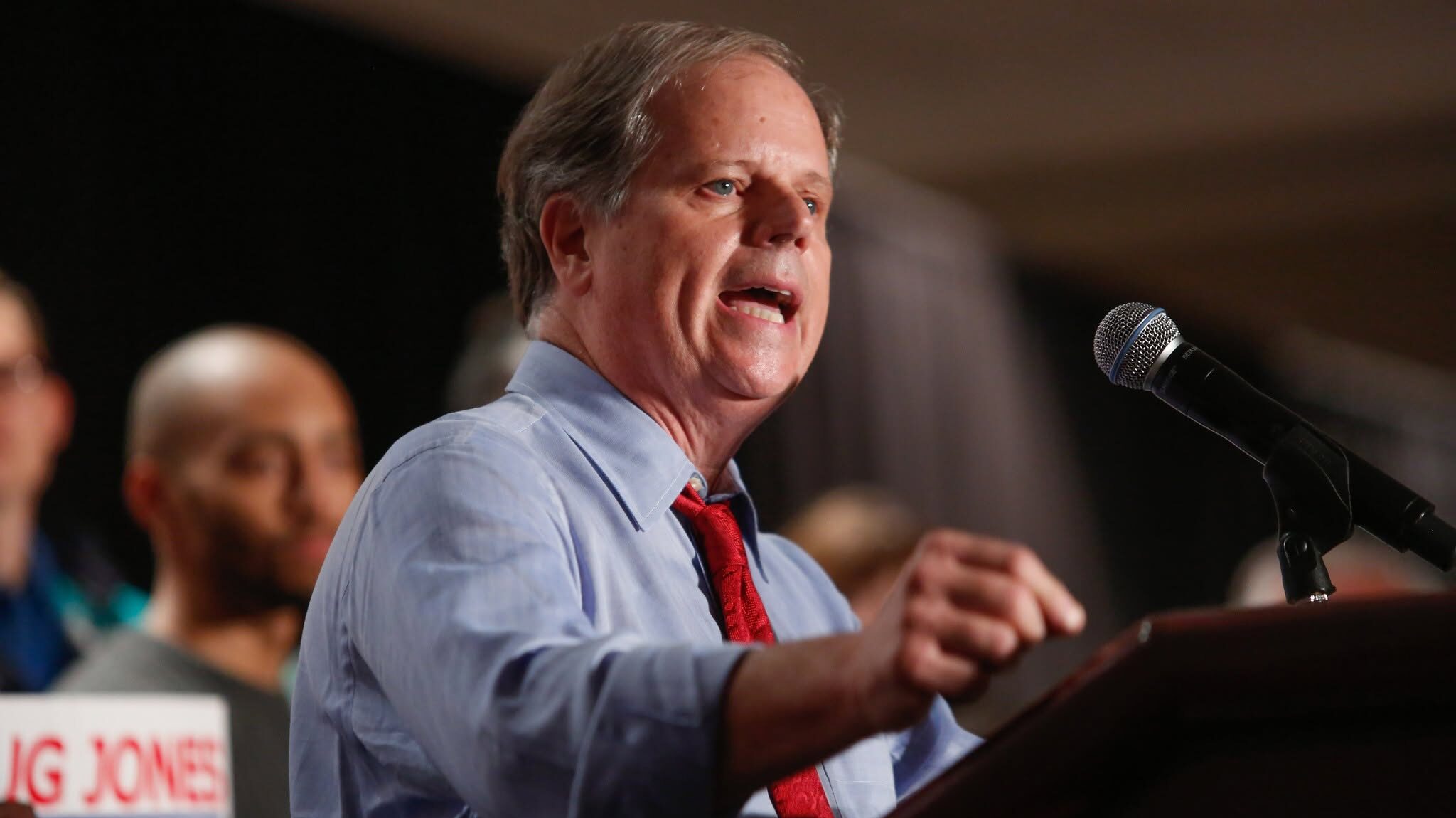
Democratic gubernatorial candidate Doug Jones on Wednesday criticized a U.S. Supreme Court ruling loosening campaign fundraising limits.
The court ruled 6-3 on Tuesday in favor of plaintiffs in National Republican Senatorial Committee v. Federal Election Commission, who challenged a federal law that limited the amount of money political parties may spend in coordination with candidates for office.
The case was brought in 2022 by the National Republican Congressional Committee and four Republican challengers, including then-U.S. Senator J.D. Vance, R-Ohio. Plaintiffs argued coordinated party spending limits violate the First Amendment by preventing committees from working with candidates.
The Supreme Court previously upheld the coordinated expenditure limits, enacted through the Federal Election Campaign Act of 1971, in its 2001 decision in Federal Election Commission v. Colorado Federal Republican Campaign Committee. The U.S. Court of Appeals for the 6th Circuit upheld the limits in light of the high court’s ruling.
Challengers later asked the Supreme Court to hear the case. The Trump administration also opposed the limits and urged justices to rule again on their constitutionality.
Jones, in a statement released Wednesday, described the Supreme Court ruling as opening the door for corporate donors and political parties to wield greater influence over U.S. elections.
“Once again the Supreme Court just made it even easier for big money to have outsized influence in our elections,” Jones said. “By lifting limits on how political parties can spend money in coordination with candidates, the Court has handed wealthy donors and special interests more ways to pour unlimited money into our elections.”
Jones described the ruling as “the most damaging decision for democracy” since the Supreme Court’s 2010 ruling in Citizens United v. FEC, which struck federal limits on independent political spending by corporations, labor unions and nonprofits.
“Fortunately, money doesn’t vote. We the People do. Our campaign is not intimidated by billionaires trying to hoard power. We’re building a grassroots campaign for the people of Alabama,” Jones said.
“No amount of money can stop neighbors talking to neighbors, volunteers making phone calls, or Alabamians committed to vote for change. That’s the work we’re doing, that’s how we’ll win in November, and that’s how we’ll change Alabama for the better,” Jones said.
Meanwhile, the chairs of the National Republican Congressional Committee and National Republican Senatorial Committee, U.S. Representative Richard Hudson, R-North Carolina, and U.S. Senator Tim Scott, R-South Carolina, praised the ruling, describing it as “a major win for the integrity of our political system.”
The court’s majority opinion, written by Justice Brett Kavanaugh, argued that limiting coordinated spending “imposes a severe and direct restriction on free speech and infringes fundamental First Amendment values.”
Kavanaugh wrote that the only rationale for the campaign finance restrictions is preventing “quid pro quo” corruption, or “contributions in exchange for official action.” Supporters of the limits argued they prevent donors from circumventing contribution limits by donating to a political party and earmarking the funds for a certain candidate.
Kavanaugh also argued that “‘no evidence of corruption’ via circumvention ‘has materialized’” and that “given the meaningful prophylactic measures available to combat quid pro quo corruption or its appearance, the Court concludes that the political-party coordinated-expenditure limits at issue here are ‘disproportionate’ and are not ‘necessary’ and ‘narrowly tailored.’”
Kavanaugh added that the ruling “treats all political parties equally.”
“It will allow all political parties—including the DNC and RNC and the respective Senate and House campaign committees, as well as other parties and party committees—to participate more freely and compete more fully in the political process, and to coordinate more closely with their candidates,” Kavanaugh wrote.
In a dissenting opinion, written by Justice Elena Kagan and joined by Justices Sonia Sotomayor and Ketanji Brown Jackson, Kagan pushed back against the majority’s argument that existing regulations on quid pro quo corruption are adequate without coordinated expenditure limits.
“Today, the Court rewrites the rules, to allow circumvention of the contribution limits. The majority invalidates Congress’s restriction of coordinated expenditures, thus enabling a party to serve as an alternative checking account for a campaign,” Kagan wrote. “The Court ushers back in the same opportunities for quid pro quo corruption that the contribution limits were meant to check.”