


































The Alabama Community College System outlined a new strategy Wednesday to reshape adult education around workforce participation, employment outcomes and employer partnerships.
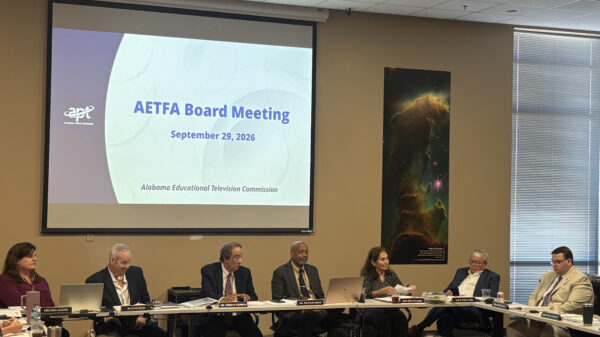
During the Alabama Community College System Board of Trustees meeting, Chief Adult Education and Learning Officer Nick Moore presented a plan to more closely integrate adult education, workforce development and employer engagement through what he described as “Alabama’s Workforce Academy.”
Moore said Alabama’s economic challenge is no longer unemployment but labor force participation, as employers struggle to fill jobs.
“Labor force participation is the measure that we really need to be focused on right now in this state,” Moore said. “We’re at nearly full employment. We’ve got a very strong economy.”
Rather than focus on unemployment rates, Moore said, the state must bring more people into the workforce, particularly adults who have left the labor market and young people who are disconnected from both school and work.
“We need to pull people off the sidelines,” Moore said.
Moore pointed to several demographic challenges facing Alabama, including low labor force participation, educational attainment gaps and literacy issues. He said approximately 1 in 10 Alabamians lacks a high school equivalency credential, about one-quarter of adults have low literacy levels and roughly 18 percent of young people are considered “not in education, employment or training,” known as NEET.
Those challenges come as workforce demands continue to grow. Moore said that by 2030, nearly three-quarters of available jobs will require some education or credential beyond high school, including industry certifications and apprenticeships.
Many state officials have emphasized workforce development as necessary to sustain economic growth, with the community college system serving as the state’s primary provider of workforce training.
Rather than focus solely on helping students earn a GED or other credential, Moore said the system intends to ensure students are connected to employment while still in training.
“We’re not just train and pray. We’re going to truly connect them to an employment opportunity while they’re in training,” Moore said.
Part of the strategy involves expanding use of the federal Supplemental Nutrition Assistance Program Employment and Training program, commonly known as SNAP E&T. The federally funded program allows states to receive reimbursement for qualifying workforce training and employment services provided to SNAP recipients.
According to the U.S. Department of Agriculture, states may receive a 50 percent federal reimbursement for eligible employment and training expenditures, allowing workforce agencies to draw additional federal funding for supportive services and job placement. Moore said Alabama should expand its participation.
Moore said those funds could help employers offset wages and provide support services that allow workers to remain employed long enough to transition off public assistance.
“We’re going to take that benefit cliff and turn it into a slope,” Moore said.
The division also plans to strengthen Integrated Education and Training programs, which combine adult education with occupational training and allow students to earn workforce credentials while improving academic skills.
Moore also emphasized that success should be measured not only by whether students earn credentials but by whether graduates secure jobs.
“We need to make sure that our rate of credential attainment isn’t outkicking our rate of job attainment,” Moore said.
Moore acknowledged that adult education programs nationwide have faced declining federal support in recent years, making it increasingly important to demonstrate measurable workforce results.
“In Alabama, that’s not going to be the case. We’ve got a good foundation to build from, but there’s always more to do,” Moore said.