













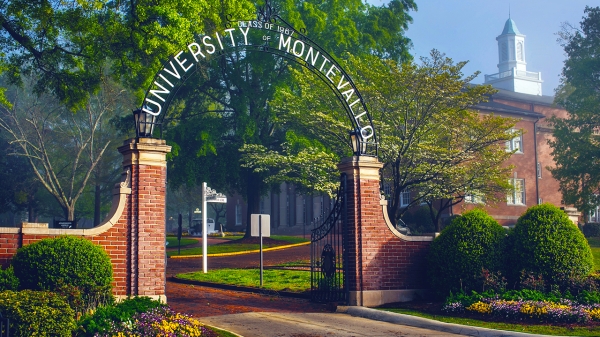













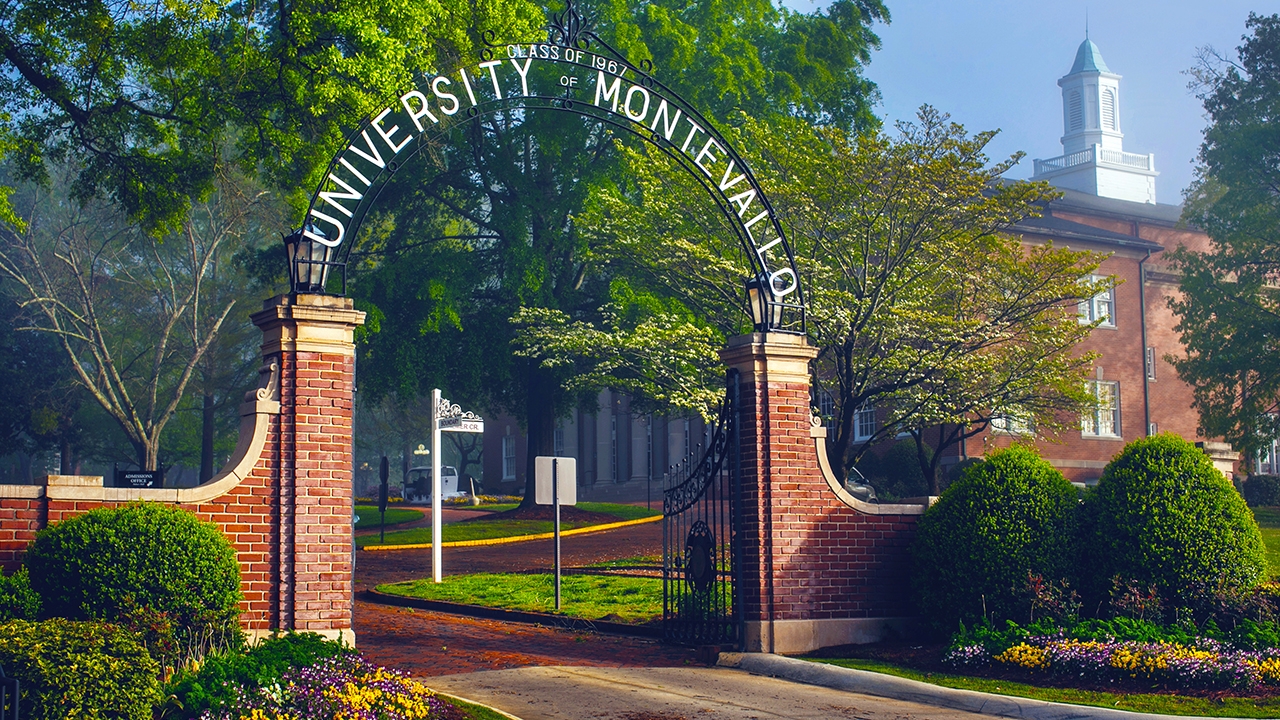
University of Montevallo leaders on Tuesday celebrated maintaining a strong revenue bond rating from credit rating agency S&P Global.
Revenue bond ratings are independently determined letter grades that measure the creditworthiness of municipal bonds backed by a particular project’s or institution’s income.
UM, Alabama’s only public liberal arts university, received an A- revenue bond rating from S&P Global on August 27, signifying what the agency described as a “strong” financial risk profile for the university.
“We’re incredibly proud to retain our S&P investment-grade rating,” UM President Michelle Johnston said in a Tuesday statement.
“The University of Montevallo has a unique mission in higher education in the state of Alabama, and we are getting a lot of attention for being the only college in the state ranked in the top 10 in U.S. News & World Report’s Best Value rankings in each of the past five years,” Johnston said. “That recognition reflects how focused we are on what matters most—sending graduates into the world equipped by a liberal arts education to lead in their professions, serve their communities and thrive in their personal lives.”
UM received an A- rating from S&P Global in its 2020 review of the university, down from its previous A rating.
“The downgrade reflects our opinion of the continued declines in enrollment and large operating deficits that have grown for the past four years and have affected the university’s balance sheet and made available resources ratios more comparable with those of ‘A-‘ rated peers,” S&P Global Ratings credit analyst Sean Wiley said at the time.
S&P Global cited enrollment increases and “solid and increasing state support for operations and capital” among the university’s strengths supporting the maintained rating.
From fall 2023 to fall 2025, UM saw a 7.5 percent increase in full-time equivalent enrollment, which S&P Global expects to remain stable into the 2026 school year.
S&P Global attributed some of the enrollment growth and financial improvement to the university’s introduction of a nursing program and its first doctoral program, a Doctor of Education in Education Leadership.
The university anticipates a 1 percent decrease in enrollment for fall 2026, driven in part by the elimination of its men’s and women’s tennis and swimming teams.
S&P Global also cited consistent improvement in graduation rates, which rose to 56 percent in fall 2025 from 49 percent in fall 2023. Retention improved to 76 percent from 73 percent during the same period.
“We assessed UM’s enterprise risk profile as adequate, characterized by stable full-time equivalent (FTE) enrollment and average first-year retention rates for the rating,” the agency report reads.
“These strengths are partially offset, in our view, by below-average selectivity, matriculation, and graduation rates for the rating,” S&P Global added. “We assessed the university’s financial risk profile as strong, with continued growth in state support for operations and capital that we expect will continue, a somewhat diversified revenue base, and a manageable maximum annual debt service (MADS) burden.”
S&P Global cited several weaknesses for UM:
- Significant full-accrual operating deficits of between 6 percent and 10 percent of expenditures in fiscal years 2023 through 2025.
- Weak selectivity and below-median matriculation rates despite improvement in recent years.
- A high tuition discount rate, particularly for a public university, of 53 percent in fiscal 2025.
According to UM’s fiscal 2025 financial audit, the university has approximately $57.4 million in total outstanding debt. S&P Global reported, however, that the university has no near-term plans to take on additional debt.
In April 2025, UM drew $4.5 million on a revolving line of credit for short-term cash needs. The university also borrowed $10 million through a private credit placement with Central State Bank and Bryant Bank “to pay down its line of credit balance and to reimburse the university for unrestricted funds used for significant capital improvements funded in the preceding five years.”
The series was scheduled to mature in September 2026, but UM fully repaid the borrowing in May.
S&P Global also expressed confidence in university leaders hired since its previous review of UM.
“Since our last review, leadership has experienced turnover at key positions, including the president, CFO, and chief information officer (CIO) positions; however, we believe the current team is highly experienced and we expect continued progress toward the university’s strategic goals over the outlook period,” S&P Global wrote.
The agency said a rating improvement “is unlikely over the outlook period given the university’s small enrollment size and trend of operating deficits,” but S&P Global Ratings could consider an upgrade “if UM increases enrollment consistent with its strategic goals, improves other demand metrics such as selectivity and retention, establishes a trend of full-accrual operating surpluses, and strengthens total financial resources to levels commensurate with a higher rating.”
In its downside scenario, S&P Global said it could consider lowering UM’s rating if the university’s full-accrual operating performance does not improve from 2025 to 2026 as expected.
“We could also consider a negative rating action if financial resources deteriorate or if UM issues additional debt without a commensurate increase in cash and investments,” S&P Global wrote.
The full S&P Global report on UM is available on the agency’s website.