




















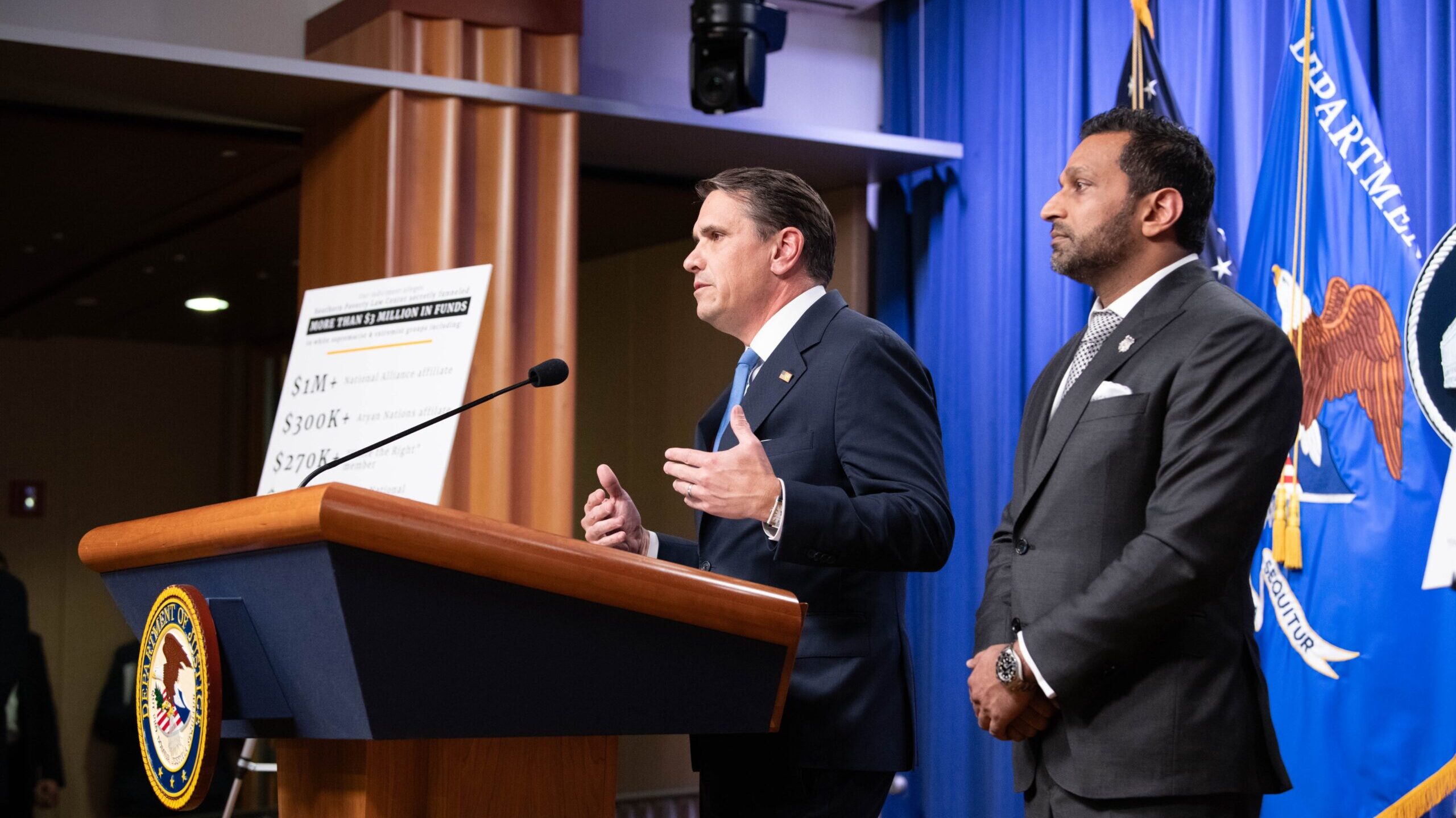
The Southern Poverty Law Center has filed two motions in federal court challenging both the basis of a recent grand jury indictment and public statements made by senior federal officials about the organization’s work.
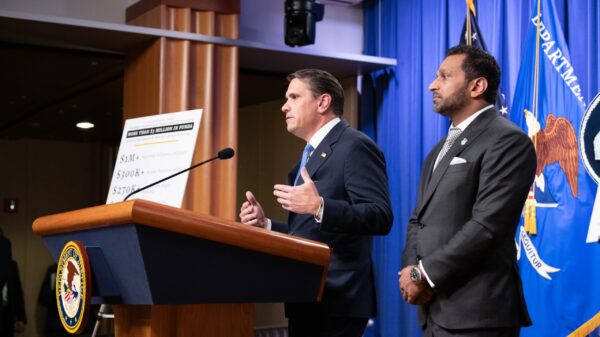
The filings come days after the Department of Justice announced an indictment against the SPLC, charging it with six counts of wire fraud, four counts of bank fraud, and one count of conspiracy to commit money laundering. In media appearances, acting U.S. Attorney General Todd Blanche said the government had “no information” suggesting that the SPLC shared intelligence gathered through its informant program with law enforcement.
In its motions, the SPLC calls that claim false and argues that the government either knew or should have known it was inaccurate. The organization contends that for decades it has regularly provided information from its informant program to local, state and federal authorities when threats of violence or criminal activity surfaced.
One example cited in the filings involves the 2017 “Unite the Right” rally in Charlottesville. According to the SPLC, it gathered detailed intelligence about the risk of violence, potential perpetrators and possible weapons ahead of the rally. The group says it compiled that information into a lengthy report and shared it with multiple law enforcement agencies, including the Federal Bureau of Investigation’s Mobile, Alabama office, before the event took place.
The SPLC also points to a 2019 case involving a member of the white supremacist extremist group Atomwaffen Division who was planning a large-scale terrorist attack in Las Vegas. The SPLC says that the information it provided to authorities led to charges and a conviction, preventing the planned attack.
In addition, the filings state that before the indictment was returned, SPLC attorneys met with prosecutors and presented documentation showing multiple instances in which the informant program’s intelligence was shared with law enforcement. The organization says that in at least one instance, cooperation led to the conviction of an individual whom the government identified as dangerous and who had lied about extremist affiliations while seeking a national security clearance.
The first motion asks the court to disclose a full or partial transcript of the grand jury proceedings. The SPLC argues it is entitled to know whether the same or similar allegedly false statements made publicly were also presented to the grand jury to secure the indictment.
“The risk that inaccurate and/or misleading information was presented to the grand jury is substantiated by the repeated public remarks made by officials at the highest level of the Administration (including the President himself) containing demonstrably false statements of material fact about the SPLC, its conduct, and its relationship to law enforcement. The risk that these falsities made their way into the grand jury room rises beyond the level of speculation,” the motion reads.
Grand jury proceedings are typically confidential, but courts can order disclosure in limited circumstances, particularly where there are concerns about misconduct or misleading testimony.
The second motion seeks to curb what the SPLC describes as prejudicial public statements by government officials pending the case. The SPLC argues that continued public commentary mischaracterizing its work could taint the proceedings and undermine its ability to receive a fair process.
“This risk of jeopardizing a defendant’s right to a fair trial could not be more salient than when the highest-ranking Justice Department official makes a demonstrably false statement about a criminal defendant’s conduct,” the motion reads.
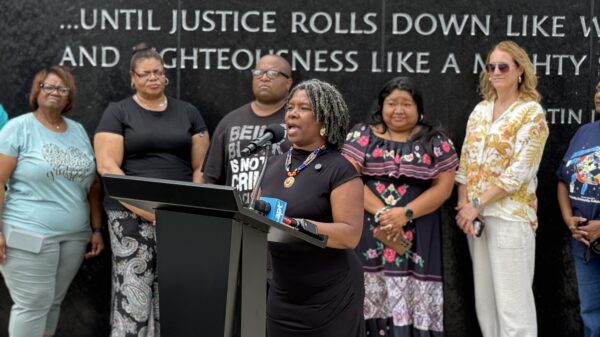
Bryan Fair, the SPLC’s interim president and CEO, said the group’s informant program dates back to a period when civil rights activists faced bombings, killings and other violence, often without meaningful intervention from authorities. He said the organization has consistently informed law enforcement of credible threats and evidence of unlawful activity in an effort to prevent violence.
Fair also sharply criticized what he called contradictory messaging from federal officials, saying that while the government has at times acknowledged the SPLC’s role in dismantling the Ku Klux Klan, it is now accusing the organization of funding or promoting extremist activity.
“The informant program was successful in accomplishing its purposes: Threats and attacks were prevented, criminal activity was stopped, and information was gathered to dismantle the efforts of hate and extremist groups. There is no question that what we learned from informants saved lives,” Fair said.
At this stage, the case centers less on the underlying charges and more on process: whether the grand jury was presented with complete and accurate information, and whether public statements by senior officials have crossed the line into prejudicial commentary.