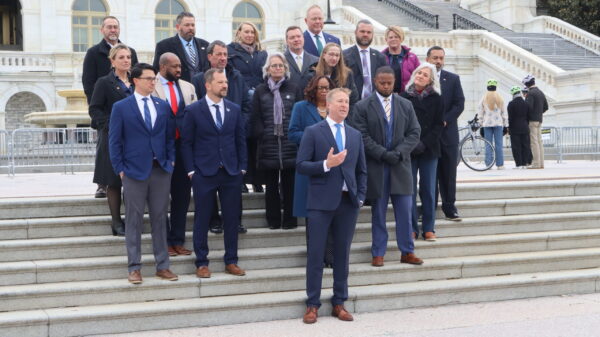

















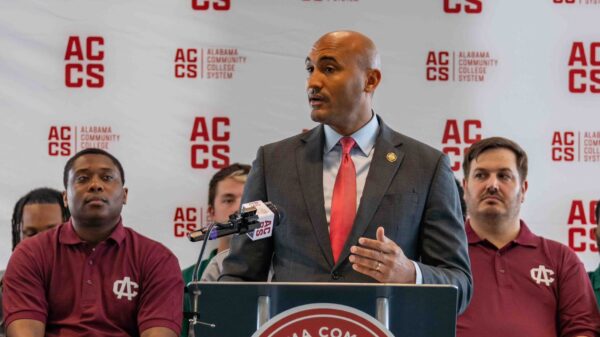












U.S. Representative Shomari Figures, D-Alabama, introduced a legislative package on Monday aimed at supporting rural healthcare and workforce development.
The “Rural Futures” package filed by Figures includes four pieces of legislation centered on nutrition assistance, rural healthcare, agriculture and veterinary education.
The package is cosponsored by Representative Terri Sewell, D-Alabama, Representative Joyce Beatty, D-Ohio, and Representative Bennie Thompson, D-Mississippi.
“I’m introducing the Rural Futures package because we need commonsense solutions for real problems impacting our districts,” Figures said in a written statement on Monday.
“Republicans continue to push policies that do more harm than good for our constituents. That is why I am fighting for reforms to help rural America receive the federal investment and attention they deserve,” the representative added.
The Save SNAP Act would mandate that states unable to meet SNAP cost-sharing requirements established by the One Big Beautiful Bill Act receive the full federal portion of their SNAP funding. The legislation was filed by Figures, alongside U.S. Representative Janelle Bynum, D-Oregon.
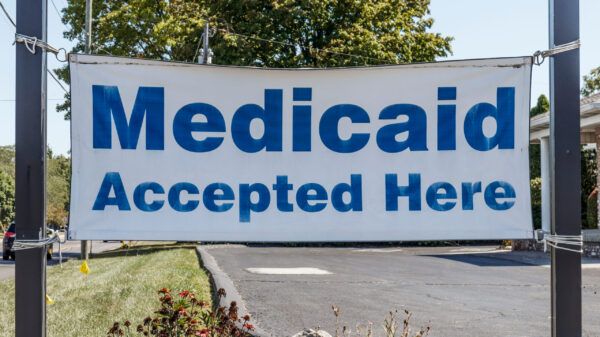
The Rural Health Resilience Act would establish a low-interest loan program for rural health centers facing financial stress.
The legislation filed by Figures and Bynum has received endorsements from the National Rural Health Association, the Alabama Hospital Association and the National Association of Rural Health Clinics.
Sarah Hohman, director of the National Association of Rural Health Clinics, described the legislation as “recognizing and addressing the pressing financial challenges of the more than 5,700 Rural Health Clinics and other providers across the country.”
“This opportunity for direct, tangible support is essential in allowing our providers to do what they do best—maintain access to essential services in rural communities,” Hohman said.
The Heirs’ Agriculture Resources Viability Education and Succession, or HARVEST Act, would require a “comprehensive report” on opportunities to expand land-grant colleges and universities’ role in providing technical assistance to improve land retention and generational wealth in agricultural communities.
The legislation, filed by Figures and Beatty, would be included in the Farm, Food, and National Security Act of 2026. The U.S. House is expected to vote on the 2026 Farm Bill this week.
The Veterinary Equity Act would prioritize 1890 land-grant universities, such as Alabama’s Tuskegee University, in the awarding of grants for veterinary education. Tuskegee is the only HBCU located in the South with a veterinary school.
“By increasing support for faculty recruitment, modern training facilities, research opportunities, and student scholarships, the bill would strengthen the pipeline of veterinarians entering the workforce,” Figures’ office wrote.
Figures’ package has also been endorsed by organizations such as the Rural Coalition, Tuskegee University, Feeding Alabama, Feeding the Gulf Coast and The Alliance to End Hunger.
“Feeding Alabama is in full support of the Save SNAP Act of 2026 to ensure the continued stability of the SNAP program in our state,” Feeding Alabama CEO Laura Lester said.
“Recent changes under the One Big Beautiful Bill Act have shifted a significant cost burden from the federal government to states, creating real risk for programs like SNAP in Alabama,” Lester said. “Without a workable solution, our state could face difficult decisions that threaten access to this critical support, leaving thousands of children, families, and seniors without enough to eat.”
Lester highlighted that nearly 5,000 authorized retailers participate in SNAP in Alabama. She described last year’s government shutdown and the resulting SNAP funding crisis as demonstrating the importance of funding for the program, stating that “even a short disruption to SNAP created immediate strain on families and the charitable food network.”
“For every one meal provided by the Feeding Alabama network of food banks and pantries, SNAP provides nine. This program is essential not only for the people it serves, but also for the strength of our local economies,” Lester said. “Any significant reduction in the program would have serious consequences, especially for rural grocers working every day to serve their communities.”
“Feeding the Gulf Coast supports the Rural Futures Package as a comprehensive approach to strengthening rural communities, recognizing the critical intersection of agriculture, food access, and health,” Feeding the Gulf Coast President and CEO Michael Ledger said. “We are particularly supportive of efforts to protect access to SNAP, strengthen rural health infrastructure, and ensure federal nutrition programs continue to serve as a reliable bridge for families during times of need. The stakes for states like Alabama are significant.”
Ledger went on to say his organization shared concerns with collaborators serving Alabamians regarding the impact of penalties imposed by the OBBBA for state payment error rates.
“Penalties are not an effective way to improve performance if states are not given a reasonable opportunity to strengthen systems and improve accuracy,” he stated.
“Implementation of these penalties should be delayed to allow that time and opportunity,” Ledger continued. “When a program as critical as SNAP is put at risk, the consequences extend far beyond a budget line. They place added pressure on children, seniors, and hardworking families, while also impacting rural communities and the local retailers that depend on SNAP’s stability.”
Lorette Picciano, executive director of the Rural Coalition, expressed support for the package’s focus on supporting land-grant universities while promoting generational wealth and ownership among agricultural workers.
“Rural Coalition applauds Representative Figures for advancing a policy vision for rural communities that places people at the center,” Picciano said. “The Rural Futures package of legislation announced today does just that, proposing meaningful policies to empower 1890 land-grant universities to address heirs’ property issues and support land retention and generational wealth and to expand career opportunities while mitigating rural veterinary shortages.”