
































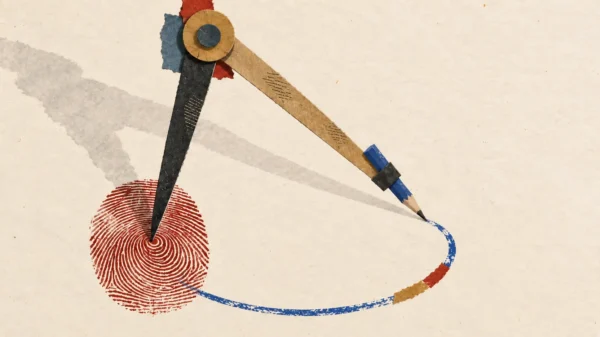

We once believed the future would move forward.
Not perfectly. Not evenly. But forward.
That belief shaped everything that followed. It was rooted in centuries of progress, from the ideals of the Enlightenment to the hard-won expansions of liberty that followed. Each generation built—imperfectly, unevenly, but persistently—on the last, expanding who belonged and what freedom meant.
In the United States, here in Alabama, and in places around the globe, a pattern is emerging. The future is being dragged backward.
Personal liberty is increasingly recast as a threat. Diversity is framed as disorder. Equality is treated not as a goal, but as an affront to those who feel the ground shifting beneath them. And the models being revived are not new innovations—they are old hierarchies, dressed up as moral clarity, pulling us toward the rigid social orders of the 16th century and the exclusions of the 19th.
That is the danger—not simply that progress has stalled, but that regression is being sold as restoration.
At the core of this moment is a backlash to change, and it is not difficult to understand why. Over the past several decades, society has moved faster than at almost any point since the Industrial Revolution—on identity, technology, culture, and power itself—reshaping how we live, how we work and how we understand one another. For some, that has been liberating. For others, it has been deeply destabilizing, leaving many caught between a world that no longer feels familiar and a future that does not yet feel secure.
When the ground shifts that quickly, not everyone looks forward for stability. Some look backward.
Layer onto that a sense of lost control. Economic shifts, globalization, automation and widening inequality have left many people feeling that the system no longer works for them. And when people feel powerless, they become more receptive to narratives that promise order, clarity and a return to something “known,” even if that past was never as stable—or as fair—as it is remembered.
The information environment has only intensified this dynamic. Platforms like Facebook and TikTok reward outrage over nuance, certainty over complexity, and division over understanding. Over time, that creates a feedback loop in which the loudest and most simplistic voices rise to the top, while more careful, more honest conversations are drowned out, reshaping political culture itself.
There is also a political incentive structure at work. Expanding freedom and equality tends to redistribute power, and those who feel that loss—whether cultural, economic or political—organize to push back. That pushback is no longer abstract. It is showing up in policy—at the federal level, across multiple states, and here in Alabama, where we are already seeing laws that do not just shape policy, but narrow what can be said, taught and even acknowledged about race, identity and inequality. Some leaders have learned that mobilizing fear, grievance and nostalgia is not just effective; it is often easier than governing.
There is something distinctly American at stake in this moment.
The American Dream was never about looking backward. It was built on the belief that each generation could move further—expand opportunity, widen freedom and define its own future. That belief was forward-looking by design. The vision of America as a “shining city on a hill” was not about preserving some fixed past. It was about striving toward something better.
At our best, that has been the throughline of American leadership. The country’s most effective presidents, governors and political leaders have not asked people to retreat into what was. They have pointed forward—toward a broader definition of freedom, a more inclusive vision of opportunity, and a deeper commitment to self-determination.
What we are seeing now is a departure from that tradition.
History tells us this is not new. The Enlightenment itself was not a stable triumph of reason. It felt like a breakthrough, but it was followed by backlash, upheaval and periods of regression. The same forces that pushed society forward also provoked reactions that tried to pull it back.
That is the pattern: progress, then resistance; expansion, then retrenchment.
And that is where the work of R. G. Collingwood becomes instructive. Collingwood argued that history is not just a record of events, but evidence of what human beings are capable of.
If you want to know what people are capable of, stop guessing. Look at what they’ve already done.
Because history does not just show us what happened; it shows us what can happen again. Democracies have failed before. Freedoms have been rolled back before. People have justified the unjustifiable before. But history also shows that people have defended liberty, rebuilt institutions and pushed society forward—even in moments that seemed lost.
That is the tension.
Every generation believes it is the exception—more advanced, more rational, less vulnerable to the failures of the past. History offers no evidence for that belief.
What feels different now is not the existence of this pattern, but the scale and speed at which it is unfolding. Technology amplifies it, political strategy reinforces it, and a culture that increasingly rewards certainty over truth accelerates it. The result is a collision between competing visions of the future—one that expands who belongs, and one that redraws the boundaries more tightly.
What makes this moment especially dangerous is the nature of the past being invoked. It is not a real past, grounded in the complexities and contradictions of history. It is an imagined past—order without conflict, unity without difference, strength without accountability. A memory shaped more by longing than by truth.
And when a society begins chasing an imagined past, it stops dealing honestly with the present. Worse, it risks dismantling the very freedoms it once fought to build.
Because progress does not carry its own momentum. It never has. It requires defense, vigilance and a willingness to confront uncomfortable truths.
The pull backward is constant. It waits for moments of uncertainty, moments of fear, moments of rapid change. And when it comes, it does not announce itself as regression. It calls itself restoration. But the difference between the two is everything.
And if we fail to see it clearly, we will not lose the future all at once.
We will give it away—piece by piece, decision by decision—until what once felt unthinkable begins to feel inevitable.