






















The University of Alabama at Birmingham recently announced that two professors in its School of Optometry received a patent for a lens design that could help slow or stop the progression of myopia in children and young adults.
Myopia, or nearsightedness, is a common condition typically diagnosed before age 20. It affects about 30 percent of the global population, and experts estimate that figure could rise to half the world’s population by 2050. Scientists now recognize that untreated myopia can lead to preventable blindness, particularly in developing countries.
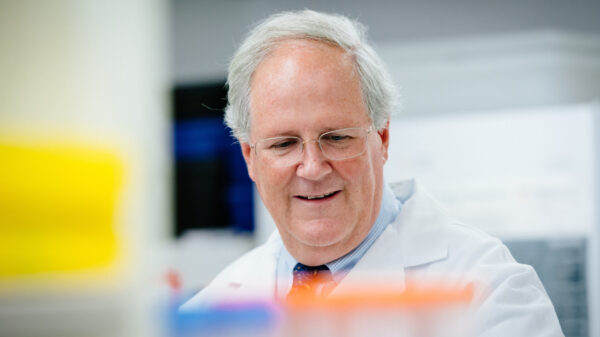
The new lens design was invented by Tim Gawne, a professor, and Thomas Norton, a professor emeritus, in the School of Optometry. The design aims to modify the chromatic structure of light to influence how a child’s eye develops and to prevent or slow the progression of myopia.
The lens is designed to adjust the visual cues the eye uses to regulate its growth and determine whether an image is in or out of focus. Gawne and Norton hope the approach will keep that process from failing and prevent myopia from developing or worsening in children and young adults.
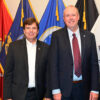
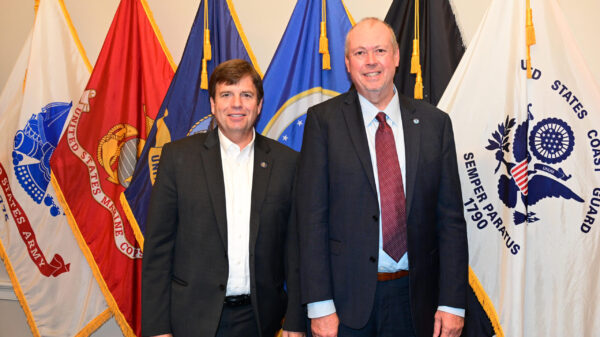
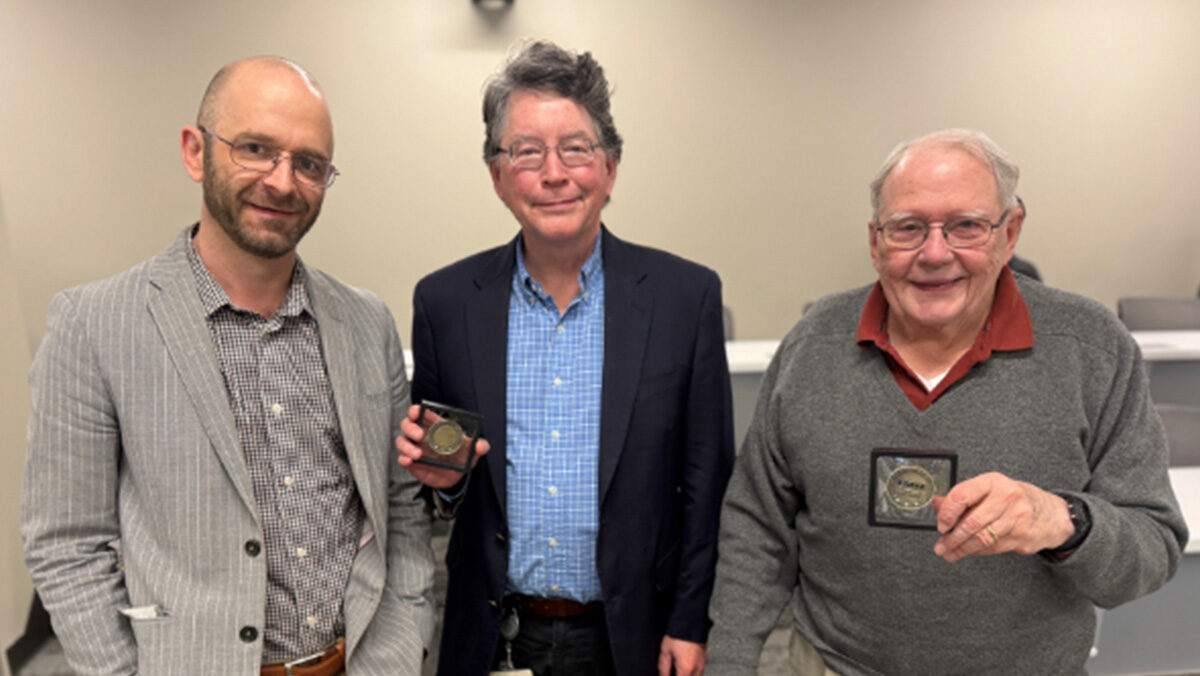
Wink Crittenden, a licensing associate at the Bill L. Harbert Institute for Innovation and Entrepreneurship, recently presented Gawne and Norton with a ceremonial Patent Coin in recognition of the achievement.
“Norton and Gawne are two of our most prolific inventors,” Crittenden said. “They continuously advance our understanding of myopia and are strengthening the care available to patients. We’re grateful for their work and proud to support the innovations that grow from it.”
While accepting the honor, Gawne said patent protection plays an important role in turning experimental achievements into practical clinical use.
“A patent creates the opportunity to move an idea into application,” Gawne said. “With patent protection in place, companies are more willing to invest the resources needed to further develop the technology and conduct clinical trials. Without that protection, it would be difficult to attract the support needed to move forward.”
This is Gawne’s first patent, and he has two others in progress, both of which also focus on treating and controlling myopia. He has worked with Norton, a leading scholar on the mechanisms underlying myopia development, for more than a decade.