























Alabama did not wait long because Alabama was never waiting for permission to comply.
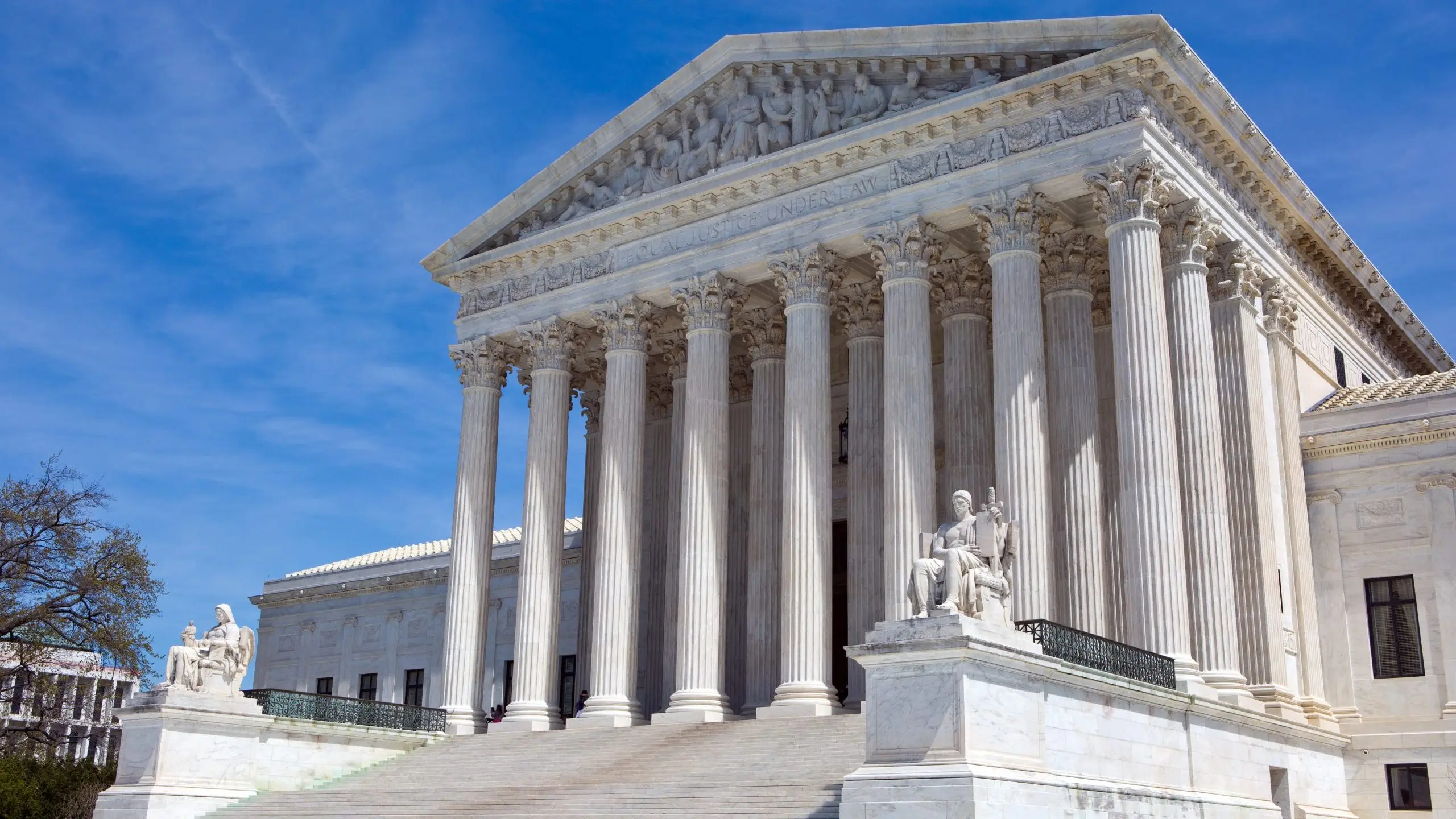
Within hours of a three-judge federal panel blocking the state from using its 2023 congressional map, Alabama headed back to the U.S. Supreme Court, asking the justices on an emergency basis to let it conduct the 2026 congressional elections under a map federal judges have now repeatedly found tainted by intentional race-based discrimination.
That is the story. This is Alabama’s latest effort to convert resistance into legal advantage.
The state’s message is plain: if the district court will not let Alabama use the map, perhaps the Supreme Court will.
The three-judge panel’s answer Tuesday morning was equally plain. After reviewing the case again in light of the Supreme Court’s recent decision in Louisiana v. Callais, the court said it still could not “see our way clear” to requiring Alabamians to vote under a districting plan “tainted by intentional race-based discrimination.” The judges also wrote that they could not understand the 2023 plan as “anything other than intentionally discriminatory.”
That is a warning flare.
Alabama’s response was another appeal to power.
This case is about whether Alabama’s political leadership can be told by a federal court, affirmed by the U.S. Supreme Court, that Black voters are entitled to a fair opportunity to elect a candidate of their choice and still answer with a map that denies them that opportunity.
After the 2020 Census, Alabama enacted a congressional map that preserved only one majority-Black district, even though Black Alabamians make up more than a quarter of the state’s population. Plaintiffs challenged the map under Section 2 of the Voting Rights Act, arguing that it diluted Black voting strength.
A three-judge federal court agreed. The U.S. Supreme Court affirmed that ruling in Allen v. Milligan. Alabama was ordered to draw a new map with either a second majority-Black district or a second district in which Black voters otherwise had an opportunity to elect a candidate of their choice.
Alabama’s answer was resistance dressed up as legislative process.
The Legislature came back in 2023 and passed another congressional map that still did not create a second Black-opportunity district. The state later conceded that the 2023 plan did not include the additional opportunity district the court had ordered. The panel noted that it was not aware of any other case in which a legislature, after being ordered by a federal court to remedy unlawful minority vote dilution, responded with a plan the state conceded did not provide that remedy.
That is the heart of this case.
Alabama was told what the law required. Alabama chose not to do it.
Now, after Callais, the state is trying to turn that choice into a second chance. Attorney General Steve Marshall previously filed emergency motions asking the U.S. Supreme Court to lift the injunctions blocking Alabama from using the 2023 map, arguing that the injunctions could not survive the Supreme Court’s ruling in Callais.
But Tuesday’s order makes clear that Callais does not solve Alabama’s problem.
The Supreme Court’s Louisiana decision altered the standard for proving a Section 2 claim under the Voting Rights Act. But the Alabama panel said Callais did not disturb its separate finding that the Legislature intentionally discriminated based on race when it enacted the 2023 map. Standing alone, the court said, that finding was sufficient to support a preliminary injunction.
In other words, Alabama may argue that Callais changed the Section 2 landscape, but it did not give the state a free pass on intentional discrimination under the Constitution.
That distinction matters.
Alabama wants this fight to sound technical. It wants to talk about compactness, communities of interest, incumbents, election timing, federalism and the latest Supreme Court standard. But the district court returned to something more basic: a state cannot hold elections under a congressional map tainted by intentional race-based discrimination.
That should not be controversial.
Yet in Alabama, it has become the entire fight.
The panel found that the Legislature did not accidentally stumble into another unlawful map. It made what the court called a calculated, purposeful decision to refuse the remedy required by the earlier order, an order the Supreme Court had already affirmed. The judges wrote that lawmakers knew a plan without an additional Black-opportunity district would dilute Black voters’ ability to participate in the political process, and that the Legislature enacted such a plan anyway.
This is where the old Alabama playbook shows itself.
Delay compliance. Reframe the issue. Invoke state sovereignty. Claim confusion. Ask Black voters to wait one more election.
Alabama’s redistricting fight cannot be separated from the state’s long history of resisting federal intervention on behalf of Black citizens seeking equal access to democracy. This is not 1965, and the symbols are different. But history does not disappear simply because it learns new vocabulary. When the state insists that voting rights must yield to legislative preference, administrative convenience or partisan advantage, it is telling us something about how little the old reflex has changed.
The court saw through it.
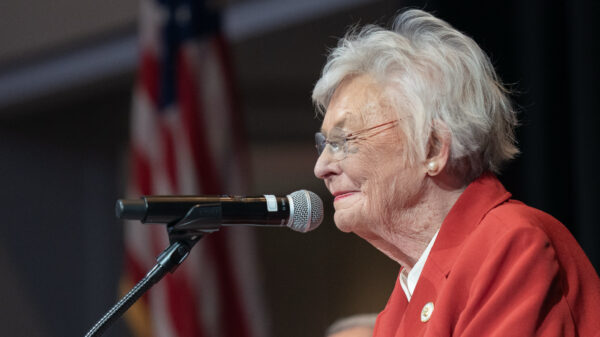
Alabama has special congressional primaries set for August 11 in Districts 1, 2, 6 and 7. Those special primaries were triggered after the Supreme Court vacated the prior injunction and Governor Kay Ivey called new elections in affected districts. Candidate qualifying was set for May 20 through May 22, with party certification by May 26. The special primaries affect 40 of Alabama’s 67 counties.
But the map for those elections is now the question.
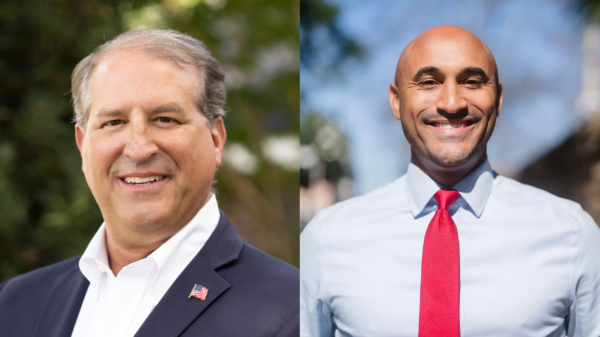
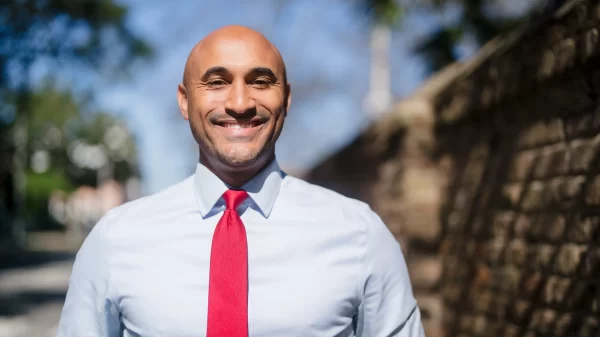
Alabama wants to use the 2023 legislative plan. The district court ordered the state to continue using the Special Master Plan, the court-ordered map used in 2024. That plan created a second Black-opportunity district and led to the election of Shomari Figures in Alabama’s 2nd Congressional District.
That result changed the political reality.
For decades, Alabama’s congressional map was engineered to produce six Republican seats and one majority-Black Democratic seat. The Special Master Plan disrupted that arrangement, giving Black voters something Alabama’s Legislature had denied them: a meaningful opportunity in a second district.
Under the 2023 plan, Alabama would return to a congressional map much closer to the old six-Republican, one-Democrat structure that federal courts had already found unlawfully diluted Black voting strength.
That is the political reality Alabama’s Republican leadership is trying to undo.
The court’s election-administration findings make Alabama’s argument even weaker. Federal courts are generally reluctant to change election rules close to an election. That principle, known as Purcell, is meant to avoid voter confusion and administrative chaos. Alabama tried to use that principle as a shield.
The panel turned it back on the state.
The Special Master Plan, the court found, remains the practical status quo in Alabama. It was used in the 2024 congressional elections. Candidates had qualified under it for 2026. Voters remained assigned under it in election systems. The state’s election machinery was already operating under that plan before the latest Supreme Court remand reopened the fight.
By contrast, switching to the 2023 plan would require a rushed, decentralized reassignment of voters. Alabama’s director of elections testified that state and county officials would have only seven days after voter rolls unlocked on May 27 to complete work that ordinarily takes weeks or months. He acknowledged that errors could include voters receiving the wrong ballots. The panel found a significant risk of large-scale election mismanagement and error if Alabama attempted to pivot to the 2023 plan.
So Alabama’s administrative argument collapses under its own weight.
Keeping the court-ordered map reduces confusion. Reviving the Legislature’s map creates it.
That is why Tuesday’s order is a ruling about governance, as well as voting rights. It says that a state cannot manufacture an emergency and then ask federal courts to reward it for the confusion it created.
Alabama is asking the Court to permit the use of a map the lower court says was born of defiance.
The panel’s language should be sobering for every Alabama official involved in this saga. The court rejected the state’s attempt to explain the 2023 map as partisan, writing that the record contained no evidence of a partisan motive and that the only evidence cut against one. Legislative leaders testified that overtures from national party leaders did not affect their work. The court said it rejected “in the strongest possible terms” the state’s attempt to finish an intentional decision to dilute minority votes “with a veneer of legislative regularity.”
That is devastating.
Alabama has long hidden behind the language of tradition, communities of interest, county lines and legislative discretion. But courts examine evidence. Here, the evidence showed a Legislature that knew what federal law required, knew what would happen if it refused, and refused anyway.
There is a moral clarity in this order that should not be missed.
This case is about stopping Alabama from keeping Black voters down. It is about whether a state with Alabama’s history can continue using the machinery of government to minimize Black political power while pretending the old playbook has been retired.
The answer from the federal court was no.
Now the question moves back to the Supreme Court.
Will the justices allow Alabama to use a map that the lower court says was intentionally designed to dilute Black voting strength? Or will they leave in place the Special Master Plan, the race-blind map already used in 2024 and already embedded in Alabama’s election systems for 2026?
That is the immediate legal question.
But the larger question is even more troubling: How many times must Alabama be told that Black voters are entitled to a fair opportunity before the state stops treating compliance as optional?
The litigation is not over. In Alabama redistricting cases, nothing ever seems to be over. The Legislature may still try to draw another map. The Supreme Court may intervene again. The August 11 special primaries remain a moving target depending on what the justices do next.
But for now, the message from the three-judge court is unmistakable.
Alabama had its chance to obey the law. It chose defiance.
Now it is asking the Supreme Court to make that defiance count.