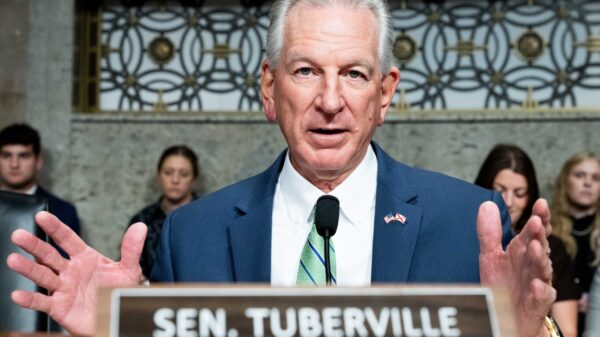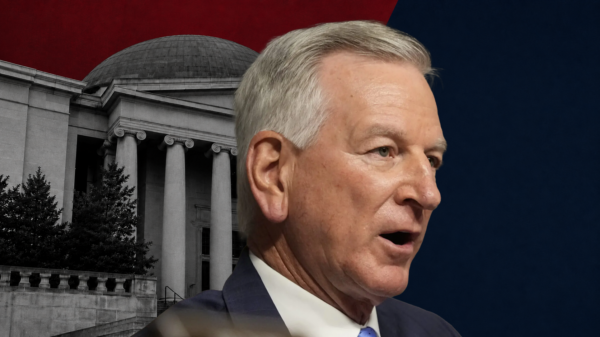
























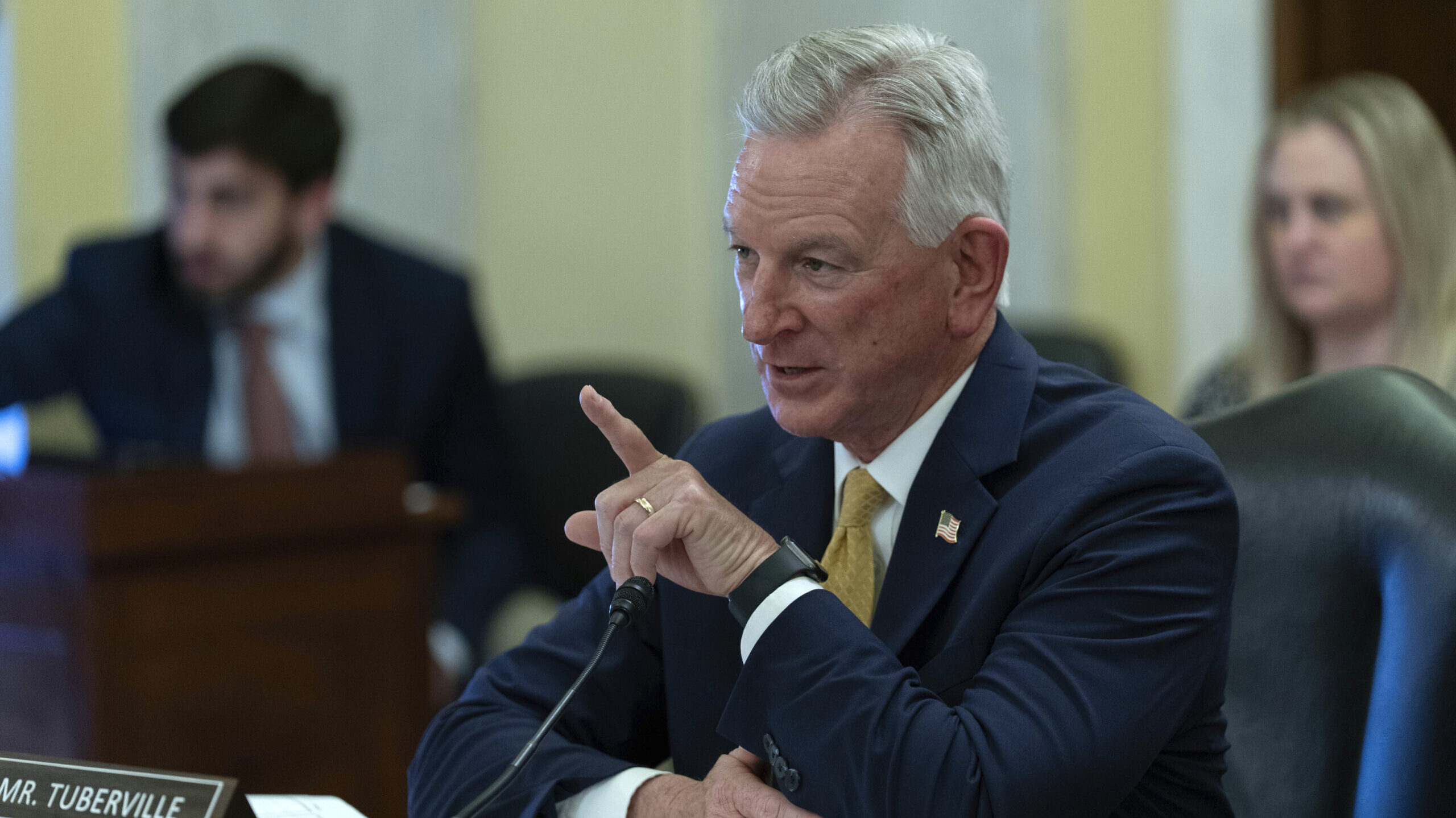
As the legal challenge to United States Senator Tommy Tuberville’s eligibility for governor moves through Montgomery County Circuit Court, another question is already taking shape: If the case reaches the Alabama Supreme Court, who will hear it?
Attorney Barry Ragsdale, who represents the voters challenging Tuberville’s eligibility, has said he believes the current justices should recuse if the case reaches them and allow a special court to decide it.
“What I think should play out when we get to the Supreme Court—most of those folks will have politicked with, hung around with, and buddied up with Senator Tuberville just because of the nature of elected Republican officials in this state,” Ragsdale said during an interview on the Alabama Politics This Week podcast. “I think that court ought to recuse itself and have a special court appointed.”
That would be rare. But Alabama precedent shows it would not be unprecedented.
While the Roy Moore cases are the best-known examples, Alabama case law shows they are not the only instances in which recusals or disqualifications led to special justices or a special Supreme Court.
The clearest discussion comes from the Alabama Supreme Court’s 2006 decision in City of Bessemer v. McClain, which reviewed the court’s practice of assigning special justices when recusals or disqualifications prevent the regular court from hearing a case. The court said Alabama’s chief justice has constitutional authority to assign special justices to temporary service on the state’s appellate courts.
In Duncan v. Johnson, a 1976 case, the chief justice and all justices of the Alabama Supreme Court recused themselves. Then-Chief Justice C.C. Torbert temporarily appointed a special Supreme Court, headed by a supernumerary circuit judge serving as special chief justice, to decide the case, according to the court’s later discussion in City of Bessemer.
The court also pointed to Pippin v. Brassell, a 1984 case, as involving “the appointment of a Special Chief Justice and Special Associate Justices following the recusal of all the sitting Justices.”
Another example is Hornsby v. Sessions, a 1997 case involving former Chief Justice E.C. “Sonny” Hornsby. In that case, the chief justice and all associate justices recused from considering Hornsby’s declaratory judgment action. A retired circuit judge was assigned to serve as special chief justice, and eight other retired circuit judges were assigned to serve as special justices.
The Moore cases are also part of that history, but they are not the whole history.
In Moore v. Judicial Inquiry Commission, the 2004 case arising from Roy Moore’s removal over his refusal to comply with a federal court order concerning the Ten Commandments monument in the Alabama Judicial Building, the remaining justices created a process for appointing a special court and then recused. Seven names were chosen at random, and those judges served as a special Supreme Court.
In Moore’s later judicial discipline appeal, the regular Alabama Supreme Court again did not sit. In the 2017 decision, the special court explained that the sitting justices had acknowledged that the Alabama Canons of Judicial Ethics required their recusal, and retired judges were drawn to hear Moore’s appeal from the Court of the Judiciary.
The point is not that every case is the same. They are not.
Some involved a former chief justice. Some involved full-court recusal. Some involved enough recusals or disqualifications to require special assignments. Some used different appointment mechanisms.
But Alabama precedent is clear on the narrower point: Full-court recusals are rare, but not unprecedented. And Alabama’s use of special justices or special Supreme Courts is not limited to Roy Moore.
Alabama law also addresses circumstances in which disqualification prevents the regular court from sitting. Alabama Code Section 12-2-14 provides that when no justice is competent to sit, or when disqualifications reduce the number of competent justices below six, the matter is certified so that members of the Supreme Court bar can be appointed to constitute a special court of seven members for that case.
But City of Bessemer also makes clear that the statute does not control to the extent it restricts the chief justice’s constitutional authority to assign special justices. In that case, the court held Section 12-2-14 invalid to the extent it improperly limited that constitutional power.
That distinction matters. Ragsdale’s argument is not that the Tuberville case is identical to Moore, Hornsby, Duncan or Pippin. His narrower point is that Alabama has used special Supreme Courts before when the regular justices could not sit, and that the Moore cases are not the only examples.
The pending challenge asks whether Tuberville meets Alabama’s constitutional requirement that a governor be a “resident citizen” of the state for seven years before election. Section 117 of the Alabama Constitution provides that the governor and lieutenant governor must be at least 30 years old, citizens of the United States for 10 years and resident citizens of Alabama for at least seven years before the date of their election.
Tuberville’s attorneys have argued that the case should be dismissed and that courts are not the proper forum for the challenge at this stage. The challengers argue that constitutional qualifications are legal questions courts can and should decide before voters cast ballots.
Montgomery County Circuit Judge Holbrook “Brooke” Reid heard arguments Monday on motions to dismiss the challenge but did not immediately rule. Reid said she needed more time to decide whether the court has jurisdiction over the residency challenge. Secretary of State Wes Allen, who had been named in his official capacity, has since been dropped from the lawsuit.
If the case reaches the Alabama Supreme Court, the justices would decide individually whether recusal is required. Tuberville’s side has not conceded any need for recusal, and the Alabama Supreme Court has not indicated how it would handle such an appeal.
But the record is clear on one point: The idea of a special Supreme Court is not a Roy Moore-only concept in Alabama law.
It is rare. It is extraordinary. But it has happened before.
The more precise question is whether the Tuberville eligibility case presents the kind of circumstances that would require or justify it.
At its core, the case is about whether Alabama’s constitutional qualifications for governor can be tested in court before voters cast ballots in November. If the case reaches the state’s highest court, a second question may come with it: who, exactly, should sit in judgment?