















A Democratic candidate for the Alabama Public Service Commission has filed a challenge against a state overhaul of the commission, arguing that lawmakers “changed the rules in the middle of the game” after campaigns for the 2026 election were already underway. The commission regulates electric, gas, water and telecommunications utilities across the state.
Sheila D. McNeil, D-Alabama, a candidate for Public Service Commission Place 2, filed the lawsuit in the U.S. District Court for the Middle District of Alabama against Governor Kay Ivey and Alabama Attorney General Steve Marshall over House Bill 475, which restructures the commission from three statewide elected members into seven district-based commissioners.
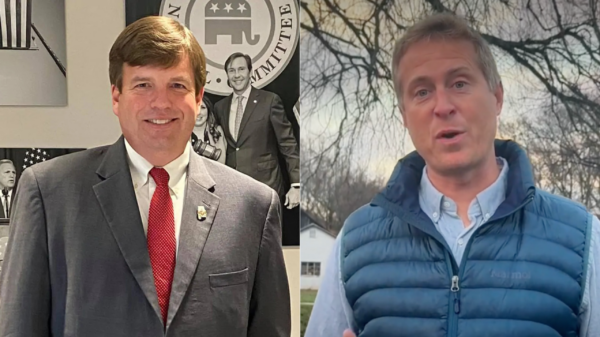
According to the complaint, McNeil qualified during the Alabama Democratic Party’s January qualifying period, paid her filing fee on January 20, and launched her campaign on January 22 in Montgomery. The suit states she has since campaigned across at least 14 Alabama counties. She is set to face the winner of a runoff between incumbent commissioner Chris Beeker, R-Alabama, and former state Auditor Jim Ziegler, R-Alabama. Republicans currently hold all commission seats.
The complaint argues that the state eliminated active statewide commission races “without any process to address the impact on candidates already in the field, and without any mechanism for those candidates to challenge the structural changes before they take effect.”
The lawsuit seeks a temporary restraining order and preliminary injunction blocking the law from taking effect before state officials begin making appointments under the new system.
Under HB475, the governor would appoint interim commissioners while lawmakers redraw district boundaries for the newly expanded commission. Legislative leaders are expected to submit an appointment list by June 1, and Ivey will appoint four interim commissioners by July 15. Two of these appointments will serve two-year terms and two will serve four-year terms. The law also creates a cabinet-level secretary of energy position to be appointed by the governor.
“Once four interim commissioners are appointed and seated, the structural reconstitution of the PSC cannot be undone regardless of the outcome of this litigation. Campaign investments lost cannot be recovered. Electoral momentum disrupted cannot be restored. Time is of the essence,” the complaint states.
Supporters of the legislation argued the overhaul would improve accountability and provide more regional representation on utility regulation issues. McNeil argues the law violates the First and Fourteenth Amendments by burdening ballot access and depriving candidates and voters of due process. The complaint also claims that the law improperly shortens the terms of existing and future commissioners.
“HB475 restructures a statewide elected commission mid-campaign, dilutes minority voting power by replacing an at-large system with district boundaries already under VRA scrutiny, deprives candidates of protected interests without due process, and vests the commission’s administrative authority in a gubernatorial appointee immune from democratic accountability,” the complaint states.
The lawsuit further alleges that lawmakers enacted the restructuring mid-election cycle during the 2026 Legislative Session, despite overseas and military absentee voting timelines already being underway for the 2026 election.
“Of additional constitutional significance is the fact that absentee voting in Alabama had already begun on March 25, 2026, eight days before the Governor signed HB 475 into law meaning that Alabama voters were actively casting ballots for PSC candidates under one legal framework while the Legislature was in the process of fundamentally restructuring the office those candidates sought,” the complaint states.
HB475 was introduced as a utility reform measure to increase oversight of Alabama Power and the commission. The original version included provisions requiring formal rate cases, limiting utility profit margins and preventing utilities from charging customers for lobbying and advertising expenses.
By the end of the legislative process, the bill had been significantly rewritten. The final version instead focused on restructuring the commission by expanding it, while removing many of the original consumer protection provisions.
The complaint asks the federal court to declare portions of the law unconstitutional and prevent Alabama officials from implementing the restructuring before appointment deadlines later this summer.