



















As deadlines for reassigning voters near, registrars across the state are standing ready to get the job done should the Supreme Court allow the process to move forward.
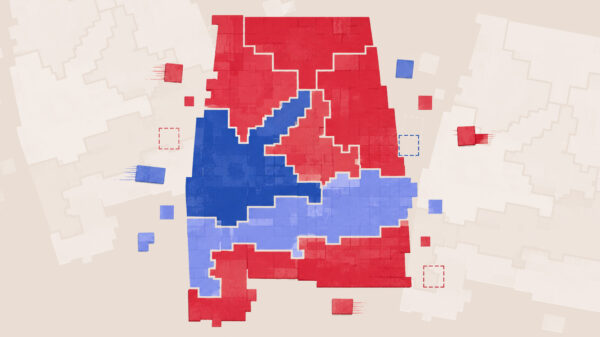
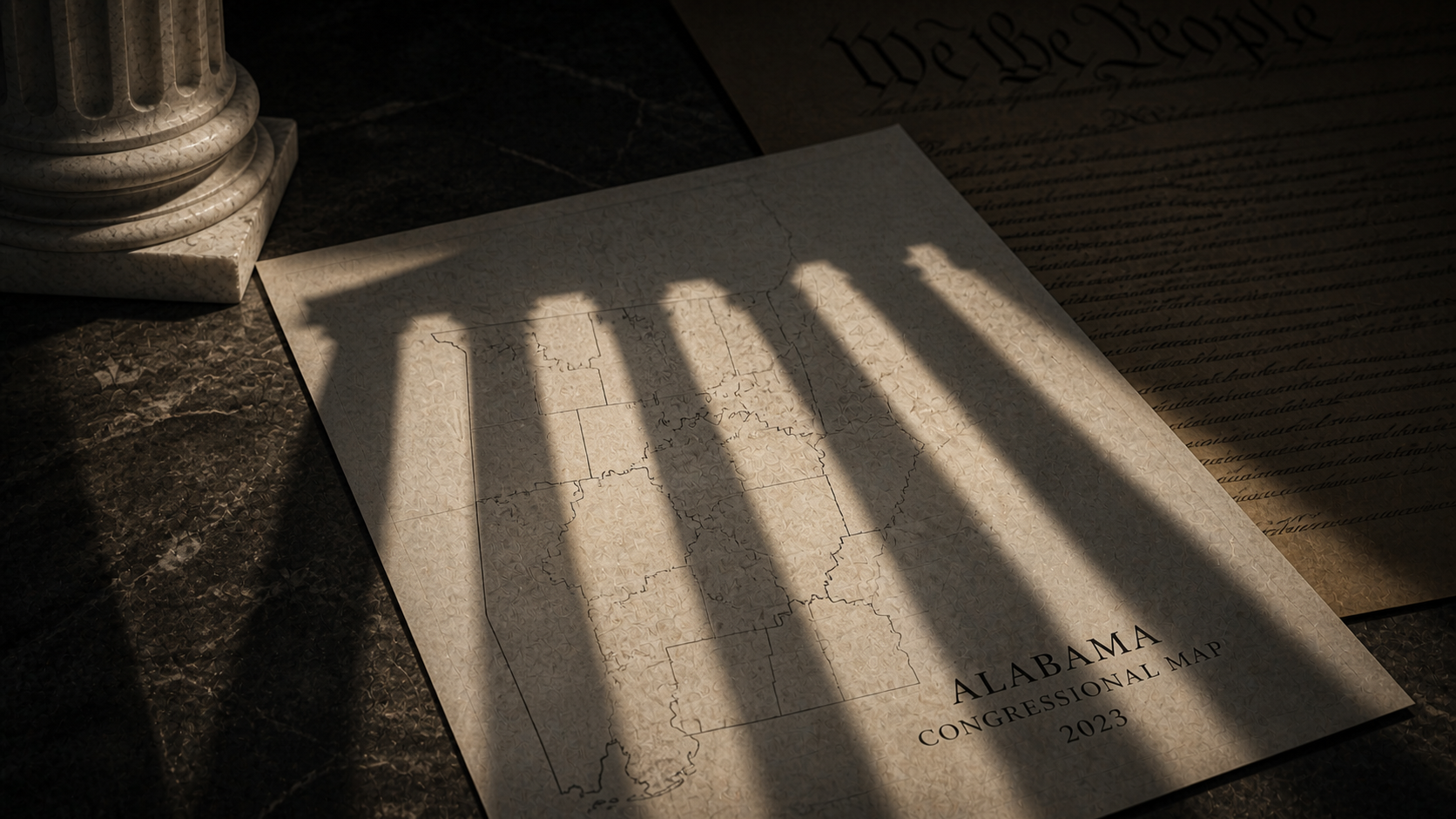
In addition to finding that the 2023 map is intentionally discriminatory against Black voters—the bedrock finding of the federal court in its injunction—the three-judge panel also questioned the ability of the state to administer the election with a tight seven-day window to reassign voters.
“Requiring the use of the Special Master Plan will forestall an expensive, aggressive, and perhaps logistically impossible voter reassignment effort,” the panel wrote. “… The record is crystal clear: administering Alabama’s 2026 congressional elections under the Special Master Plan is simpler by an order of magnitude than administering the elections under the 2023 Plan.”
Plaintiffs demonstrated that the process typically takes months, and that even with months of preparation the state has been shown to make mistakes.
But Barry Stephenson, chair of the Jefferson County Board of Registrars, told APR that his team could feasibly make the reassignments within just a couple of days.
“We have the shape files of the plan to implement for the standalone election for Aug. 11. If they were to rule that we could move forward with that we would implement the new shape files it would take a couple of days and start getting ready for that also,” Stephenson said. “We could move within a day or two to set up everything for Aug. 11. It doesn’t move that much territory … we’re not talking about a full-fledged election where we had dozens and dozens of ballot styles. This is a Congressional race, so it would be ballots for the sixth district and ballots for the seventh district. There’s a lot less to set up and a lot less to check.”
That backs up the position of Jeff Elrod, who heads the Elections divisions of the Alabama secretary of state’s office. He testified for nearly three hours Friday and conceded that the compressed timeline could lead to errors, but insisted registrars could meet the deadlines if the court allowed the state to move forward.
Jefferson County is one of 14 counties that would need to reassign voters if the state is allowed to use its 2023 map, and is one of the more complicated counties as both the current Remedial Map and the 2023 map split the county between Congressional districts.
Another county that would be split under the 2023 map, requiring more effort from registrars, is Elmore County. Jan Bennett, chair of the Elmore County board of registrars, said they are “not fretting over the timeline” and “will do what it takes to get it done” as soon as there is word from the Secretary of State.
Still, the window is closing tighter everyday, as the seven-day window began on May 27 and ends on June 2. The state has appealed to the U.S. Supreme Court, but plaintiffs have been given until 4 p.m. on June 1 to file a response. Even if the Supreme Court made a midnight ruling in the case on June 1, registrars would have a single day to reassign voters before the voter registration records are locked once again for the June 16 runoff.
It is unclear whether the state could implement reassignment after June 2, as it would be June 23 before the voter records are unlocked again, pushing closer to immutable deadlines related to the General Election.