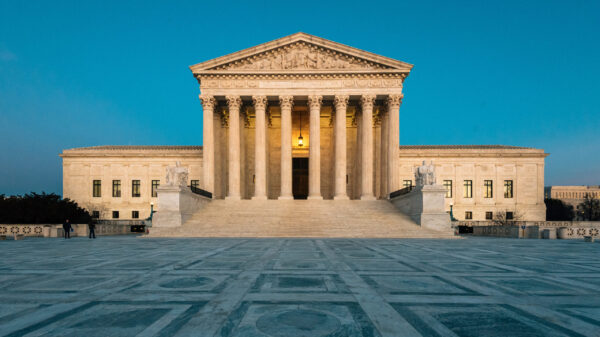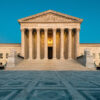














While you may be aware of the Supreme Court, you may not be aware of the Court’s clandestine “shadow docket.” It is supposed to be a rarely used judicial procedure that allows the Supreme Court to act in exceptional, emergency and time-sensitive matters. The primary function is to grant preliminary injunctions or stays on lower-court rulings to prevent immediate, irreparable harm while an appeal works its way through the standard judicial process.
In the shadow docket, rulings happen rapidly, completely bypassing the months-long timeline of briefs and oral arguments. Decisions are frequently issued as unsigned orders without thorough explanation, if any at all. In fact, the original reason this type of rarely used special docket was created was to deal with time-sensitive and urgent matters such as death penalty cases. Chief Justice John Roberts has commandeered the most prominent and prodigious expansion of the shadow docket.
The shadow docket is now used with ever-increasing frequency to allow the Supreme Court to rule in the shadows of their secluded chambers without having to explain their decisions, especially those decisions that are not necessarily based on the merits of the case or longstanding precedent.
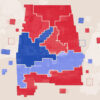
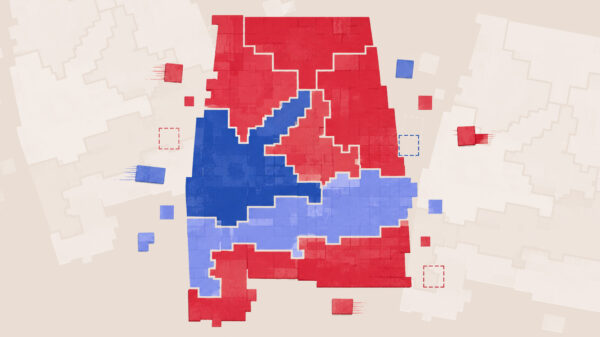
It was this secluded and nebulous backdrop that facilitated the overturning of a federal trial court’s injunction which prevented Alabama from using maps that were repeatedly determined to be racially gerrymandered. There was no explanation from the shadows, only deep dissent from Justices Sotomayor, Kagan and Jackson.
The majority offered no explanation as to why disenfranchising Black voters was somehow an “emergency” requiring immediate action in defiance of the longstanding Purcell doctrine, and Alabama law, that prohibits changes to an election six months prior to election day.
For me, this is personal as my family has been at the center of this fight for fair representation for Black voters for generations. In fact, my great grandmother, paternal grandparents, uncles, aunts and cousins were involved in the fight for freedom and the right to vote. The most prominent among them was J.L. Chestnut, Jr. who was attorney for Dr. Martin Luther King Jr., Ralph Abernathy, Joseph Lowery, Bernard LaFayette, John Lewis, James Foreman, Dick Gregory and a number of unsung heroes too numerous to count. He was my mentor and taught me that the fight never ends. His mentors were men like Adam Clayton Powell, Jr., J.F. Shields and Supreme Court Justice Thurgood Marshall. The Voting Rights Act of 1965 was a direct result of the Selma Voting Rights Movement, including Bloody Sunday and the 1965 Selma to Montgomery march.
For my part, as a state legislator representing the people of Selma and the Black Belt, I will continue to fight to ensure that Black voters have the ability to elect candidates of their choice and to remove all unnecessary obstacles to voting. Our efforts should be laser focused on dramatically increasing voter participation, not making it harder for people or diluting the power of their vote using racial gerrymandering.
The Supreme Court is the most powerful reclusive entity under the U.S. Constitution, and it is time for Congress to enact legislation to not only provide clear guidance and restrictions on when the shadow docket may be used. Under Article III of the U.S. Constitution the Court has appellate jurisdiction, “with such Exceptions, and under such Regulations as the Congress shall make.” As the adage goes, it will take an Act of Congress.
That’s how we vanquish the shadows and bring justice back into the light.