














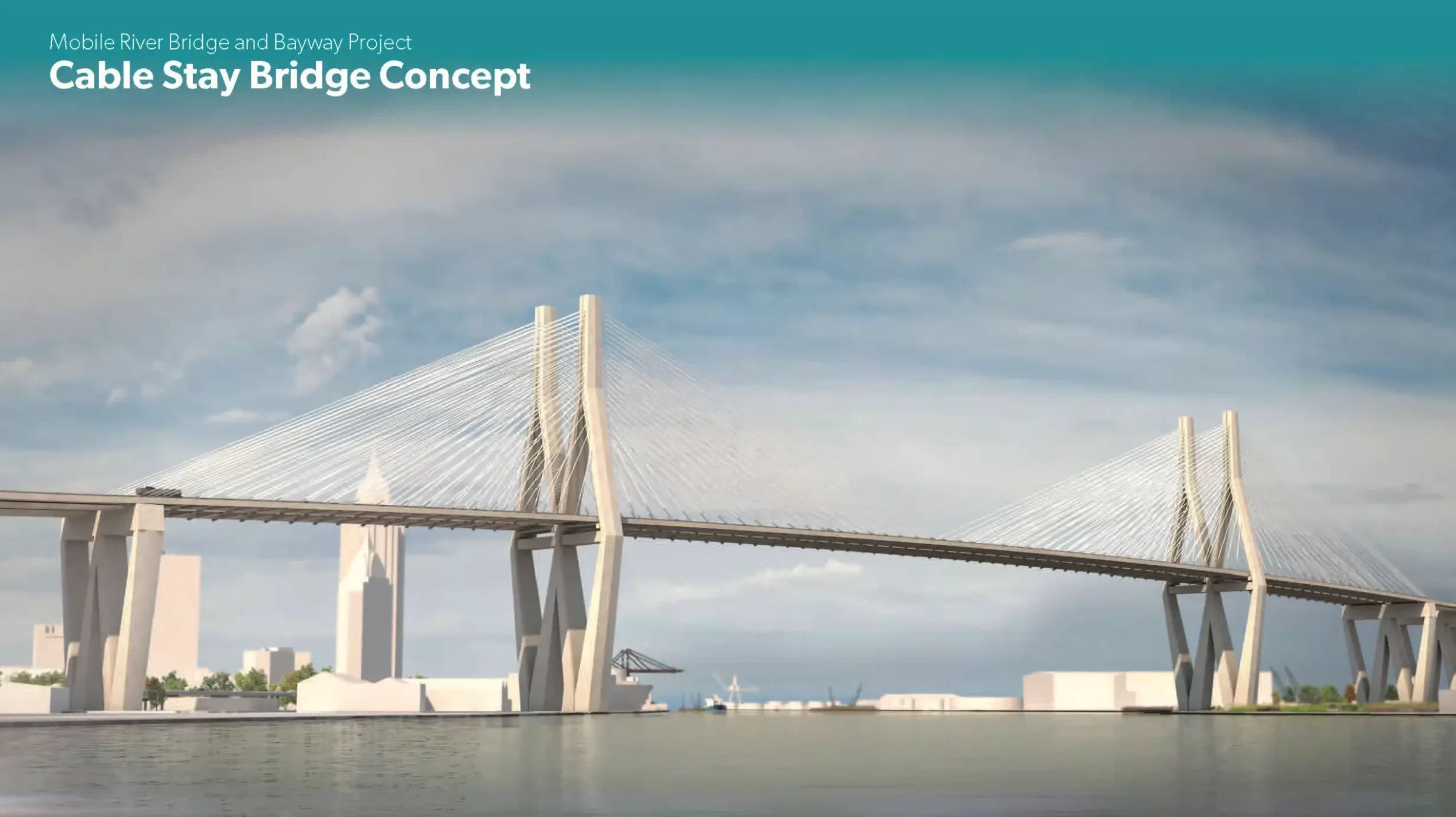
The Alabama Department of Transportation, Mobile Metropolitan Planning Organization and Eastern Shore Metropolitan Planning Organization announced Thursday that the Mobile River Bridge and Bayway Project has been revised, with construction now expected to begin by the end of the year.
The project will be divided into two phases. The first phase will include construction of a six-lane bridge, modifications to the existing Bayway and other traffic improvements.
The second phase will include construction of a new Bayway structure “as additional funding becomes available,” according to the announcement.
In 2024, the project received a $550 million federal grant authorized under the 2021 Bipartisan Infrastructure Law.
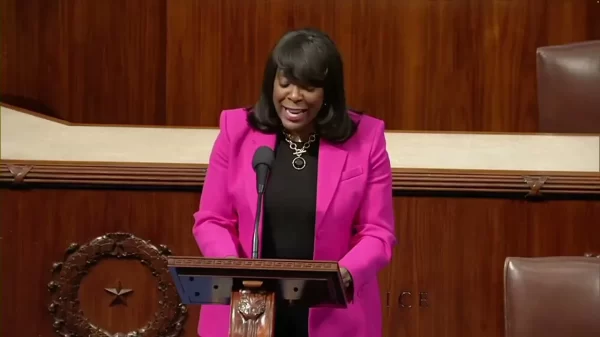
United States Representative Terri Sewell, D-Alabama, was the only member of Alabama’s congressional delegation to vote for the Biden-era law. Every Republican member of the delegation, including United States Senator Tommy Tuberville, R-Alabama, voted against the infrastructure package.
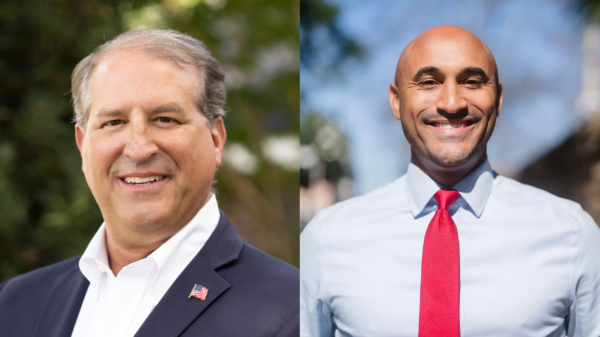
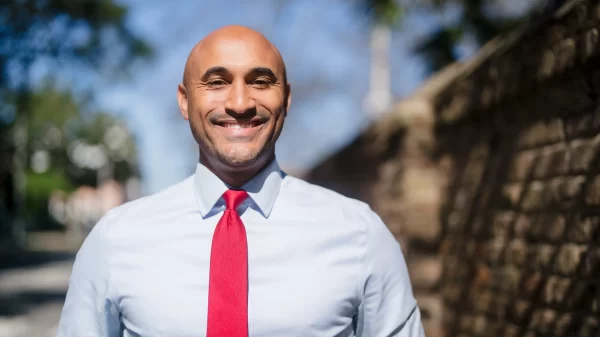
However, several Alabama officials, including United States Representative Shomari Figures, D-Alabama, and United States Senator Katie Britt, R-Alabama, have worked to keep the project moving forward.
In a joint opinion piece published Wednesday, Tuberville and Britt thanked President Donald Trump for ensuring that “the Mobile River Bridge and Bayway project is finally moving toward construction after 30 years of discussion, delay and doubt.”
They blamed previous delays on “bureaucratic red tape and unnecessary extras,” including requirements for pedestrian and bicycle infrastructure, and thanked the administration for allowing the project to rely more heavily on toll revenue.
According to ALDOT, the proposed toll options include a $60 unlimited monthly pass, a $3 per-trip charge with an ALGO Pass, a $7.70 per-trip charge with an interoperable transponder and a pay-by-plate option.
The proposed tolls represent a slight increase from previous plans and guidance, which said tolls for passenger vehicles should be “$2.50 or less.”
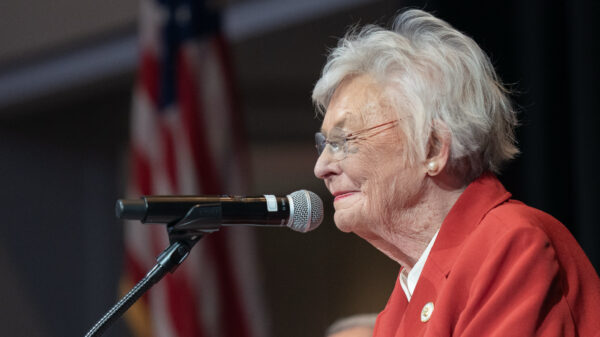
Governor Kay Ivey said in ALDOT’s announcement that “this project is essential to Alabama’s future and represents one of the most important infrastructure investments in our state’s history.”
“This transformative project will strengthen our economy, improve safety and ensure we are better prepared in times of emergency,” Ivey said.
Mobile Mayor Spiro Cheriogotis similarly called the bridge “the most significant infrastructure project in the history of our region” and said it is “not just a Mobile priority, it is an American priority.”