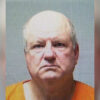
















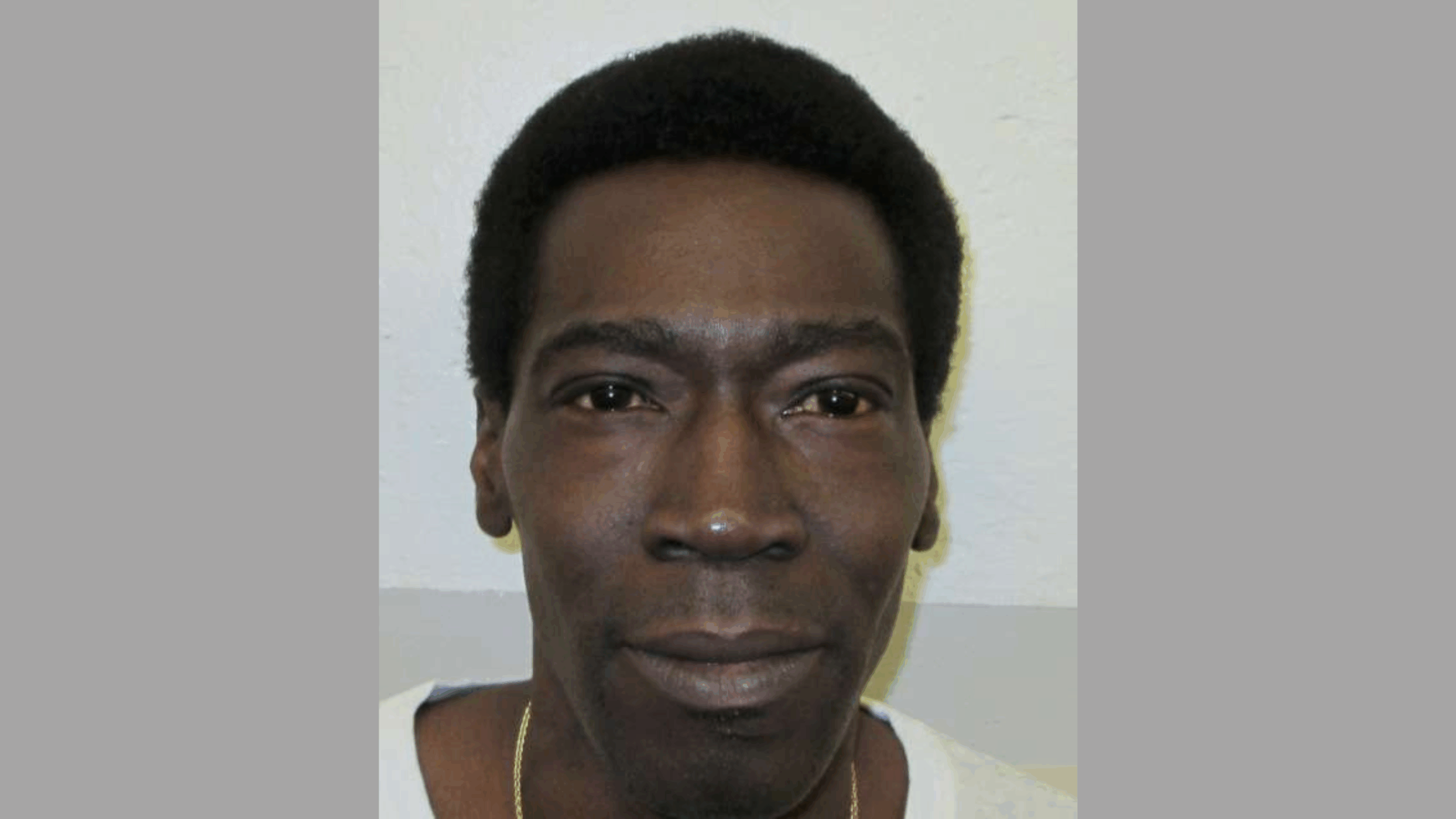
A federal judge rejected Alabama death row inmate Anthony Boyd’s request for a stay of execution on Thursday.
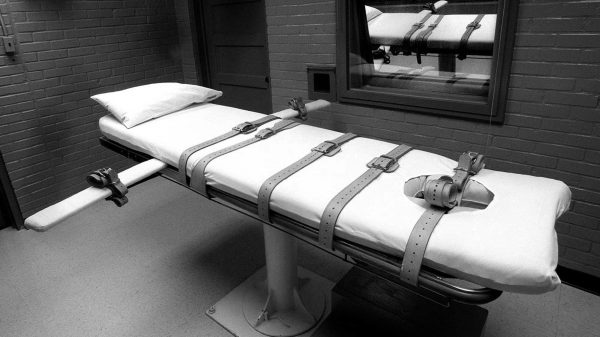
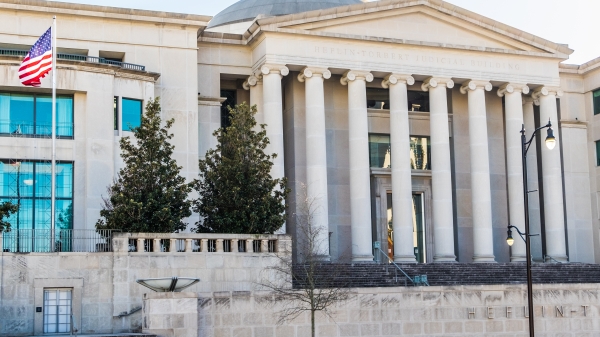
Middle District of Alabama Chief U.S. Judge Emily C. Marks denied a challenge put forth by Boyd’s legal team, which argued Boyd’s planned execution by nitrogen hypoxia would violate the inmate’s Eighth Amendment protection against cruel and unusual punishment.
Boyd argued that because of his asthma and vertigo, a nitrogen execution would cause him “extreme psychological distress and panic” and complicate the effectiveness of the execution.
The inmate’s request instead proposed he be executed by firing squad, hanging, or medical aid in dying; alternative methods, Boyd argued, would provide a less substantial risk of severe pain.
“Every person condemned to die likely experiences feelings of angst, anxiety, stress, or panic. For hundreds of years, condemned inmates—regardless of the execution method—have been placed in the unenviable position of confronting their final moments,” Marks argued. “The condemned inmate’s psychological and emotional pain likely increase as each step is complete—an unfortunate ‘but inescapable consequence of death.’”
“The Court does not doubt that a person consciously deprived of oxygen even for two minutes under the Protocol experiences discomfort, panic, and emotional distress,” the judge wrote. “Much of the psychological and emotional pain caused by either nitrogen hypoxia or the firing squad is pain which the inmate would inevitably experience because he knows he will soon die—an experience which attends every execution and cannot be avoided.”
Marks ruled that Boyd failed to show a nitrogen execution would add additional pain “well beyond what’s needed to effectuate a death sentence,” and failed to present a “feasible and readily alternative method of execution” which would significantly reduce his risk of severe pain.
“The Eighth Amendment does not guarantee Boyd a painless death,” Marks wrote.
“To date, the United States Supreme Court ‘has yet to hold that a State’s method of execution qualifies as cruel and unusual,’” she added.
Boyd was sentenced to death for the 1993 killing of Gregory Huguley in Talladega County. Boyd, Shawn Ingram, Marcel Ackles and Quintay Cox were charged with taping Huguley to a park bench and burning him to death for $200 he owed for cocaine.
Ingram also sits on death row for the killing, while Ackles is serving life without parole. Cox, who testified against the other three men, is serving life with the possibility of parole.
Boyd was first sentenced to death in 1995 when Alabama’s official method of execution was electrocution. In 2002, the state began using lethal injection for capital punishment, and in 2018, nitrogen hypoxia was adopted as an alternative method.
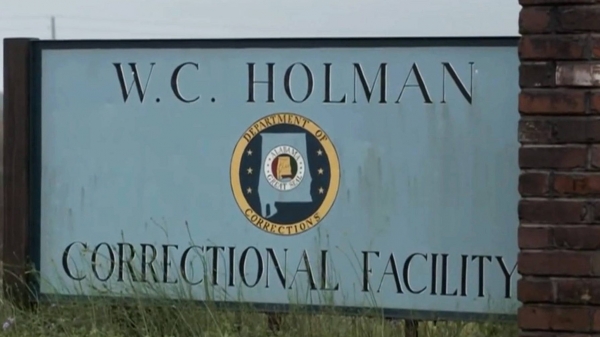
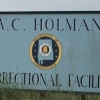
Earlier litigation against Boyd’s planned execution challenged the constitutionality of the lethal injection protocol employed by the Alabama Department of Corrections.
Boyd elected to be killed by inhaling pure nitrogen in 2018, during a one-month period in which death row inmates were given a choice to elect the newly approved execution method. At that time, no U.S. state or foreign government had officially tested nitrogen hypoxia as a method of executing a human being.
Alabama became the first U.S. state to execute a death row inmate by nitrogen hypoxia last January with the execution of Kenneth Smith. Boyd’s execution would mark the seventh conducted in Alabama using nitrogen hypoxia.
Boyd filed his challenge to the execution method in July, arguing, “each inmate consciously suffocated for an extended duration prior to losing consciousness.”
“Suffering is inherent in the Protocol[;] it is a feature, not a bug,” the challenge goes on to state.
Boyd alleged his innocence in the 1993 killing, a day prior to Marks’ ruling, on a phone call made during a rally held by nonprofit, the Execution Intervention Project.
The nonprofit, which demonstrated against Boyd’s proposed execution, also installed a Talladega billboard on October 8 reading “Save Anthony Boyd.”
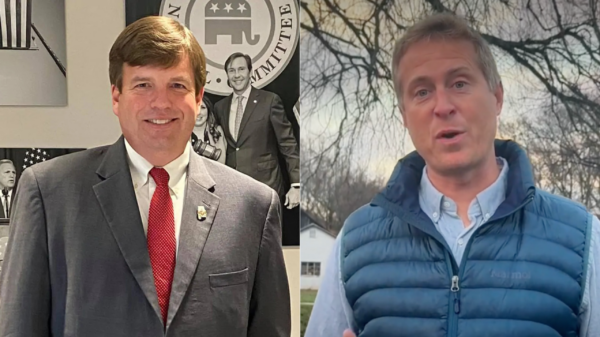
Alabama Attorney General Steve Marshall’s office said in a statement to the Associated Press that litigation attempting to stop Boyd’s execution “has yet to provide evidence to show the jury got it wrong.”
“There was no billboard campaign to save Huguley, and Boyd showed no concern for the ethics of execution when he helped murder Huguley,” the statement read.
Reverend Jeff Hood of the Execution Intervention Project, Boyd’s spiritual advisor, who was also present for Smith’s execution, condemned nitrogen hypoxia executions and urged Alabamians to oppose Boyd’s execution in a social media post released in late September.
“I am asking the people of Alabama to realize that you are better than this. You’re better than suffocating people to death. You’re better than pumping nitrogen into people’s lungs,” Hood said. “Jesus tells us to love our neighbor as we love ourselves. You cannot love your neighbor and suffocate them to death.”
Boyd’s execution is set to take place between the night of October 23 and the morning of October 24.