



















The dawn of a new year always invites reflection—a moment to look back at what has passed and to look forward with both hope and caution to what lies ahead.
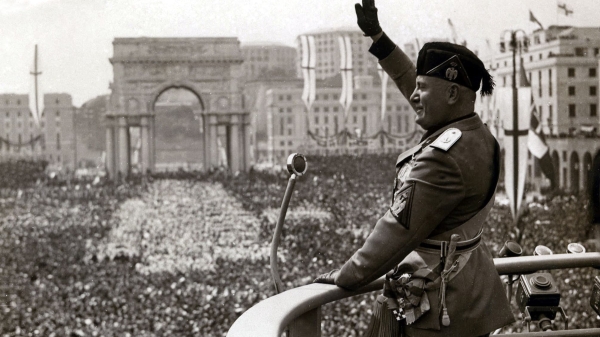
As I look back over 2025, I’m reminded not only of the decline and destruction that ended great nations and republics, but also of the remarkable resilience of democracy across the centuries.
My trip with Susan to Greece brought that truth into sharp focus. Standing among the broken stones and ancient streets, it was impossible to ignore the pattern of history: civilizations rise, they falter, and sometimes they rot from the inside out. Power is fragile. Freedom is fragile. Yet the human cry for liberty—again and again—refuses to die.
The ancient Greek philosopher Heraclitus warned that “a man’s character is his fate,” meaning the destiny of both individuals and nations inevitably bends—the very arc of history itself—toward the moral temperament of those who lead. When leaders rise to great power without the grounding virtues of truth, humility, restraint and service, their inner disorder never stays private—it becomes public life.
Grievance masquerades as strength. Deception corrodes trust. Cruelty is dressed up as necessity.
Under Heraclitus’ lens, this is not a personality flaw; it is a prophecy. When a republic rewards vice, in time it will be governed by it. We cannot outrun the moral deficits we elevate. In the end, the character of our leaders becomes the fate of the nation.
There is something dark and foreboding at work in our nation and our state—a turn away from our Republic’s first principles and a growing willingness to strip away the hard-won liberties of citizens, especially women, minorities, and immigrants.
We see religion being weaponized. We see voting rights deliberately targeted. We see equal justice threatened by corruption and raw ambition that no longer even pretends to be ashamed of itself.
And yet—just as every new year offers the possibility of renewal—so too does our hope for a just and free society.
So, as this year begins, I offer both a caution and an earnest hope.
This is not a Republican problem or a Democratic problem. It is a character problem—a collapse of moral truth—unfolding right here in the United States of America.
When those who hold power—or claw for it—lack moral grounding, the outcome is predictable: corruption, division and the slow decay of civic virtue.
Civic virtue is the quiet, everyday habit of putting the common good ahead of personal advantage. It is honesty in public life, responsibility in private life, and the willingness to accept limits so that a free society can endure. It looks like telling the truth even when it costs you. It looks like respecting institutions even when they restrain you. It looks like recognizing that rights come paired with duties.
Citizenship is not a spectator sport. Our words, our votes, our conduct and our treatment of one another shape the moral climate in which we all live. At its heart, civic virtue is simply this: the character of a people expressed in public life—and the commitment to pass down a society worthy of our children.
A free society does not survive on laws alone; it survives on the moral habits people carry within them.
- Truthfulness: The agreement that facts matter and reality cannot be bent to suit ambition. Without truth, freedom rots into propaganda.
- Justice: The conviction that the rules apply to everyone, especially the powerful.
- Responsibility: The willingness to accept consequences and do your part.
- Restraint: The discipline to say “no” to your worst impulses, even when you could get away with them.
- And finally, respect for human dignity: The recognition that every person is more than a tool for someone else’s gain.
It is a dangerous illusion to believe that virtue in government is guaranteed. Human nature, untethered, can be selfish, cruel and capable of every evil under the sun. When ambition outruns duty, nations drift from the principles that keep them free.
History is blunt about this. Athens did not fall because it lacked brilliance—it fell when power mattered more than principle. Rome did not fall because it lacked wealth—it fell when civic virtue surrendered to personal ambition.
And wisdom, carried across centuries, reminds us of a simple truth: People will follow honest leadership without needing to be driven. But when those at the top lack integrity, no amount of orders, slogans or laws can make the people trust them.
No free people remain free when justice is selective, truth is optional, and leadership serves itself instead of the public trust.
But decline is not inevitable.
A people can reclaim their bearings. We can insist that justice applies to everyone. We can reward honesty over outrage, competence over theater, service over self-promotion.
Virtue in government does not begin in Washington. It begins here—in Montgomery, in our courthouses and city halls, in our school boards and neighborhoods, and in the character of the citizens who choose their leaders.
And so, as we step into a new year, I choose hope—not a passive hope that things will somehow work themselves out, but a disciplined hope rooted in responsibility. The hope of citizens who still believe truth matters, justice must be fair, and the rule of law must bind the powerful as surely as it binds the weak.
If we remember these foundations, our nation—and our state—will remain strong, not because of wealth or weapons, but because the moral footing beneath us still holds.
If we forget them, the gravest dangers to a republic will never need to arrive from abroad. They will come from within—from the corrosion of truth, the cowardice of convenience, and the slow abandonment of justice and duty.
But if we choose courage over comfort, duty over ambition, and truth over noise, then the future need not be dark.
There is still light ahead.
And that, in this new year, is my faith and my hope.