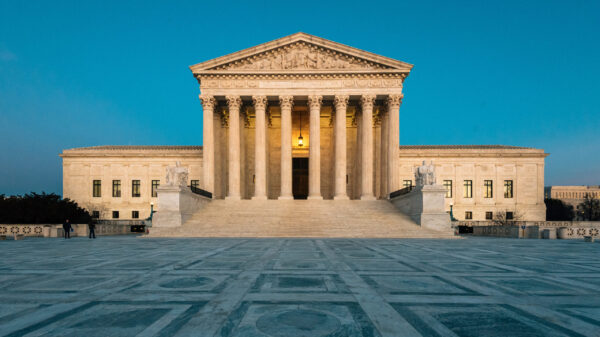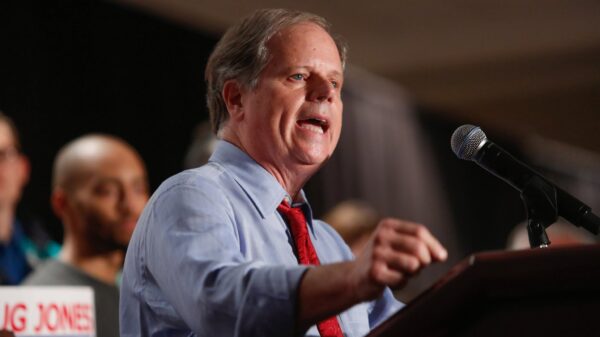




















On Wednesday, U.S. Solicitor General D. John Sauer filed an amicus brief in Milligan v. Allen, the redistricting court case that will determine Alabama’s congressional districts for the upcoming midterms.
A panel of three federal judges issued a preliminary injunction on Tuesday requiring Alabama to continue using the court imposed map with two Black-majority districts. The judges wrote that “we cannot see our way clear to requiring Alabamians to cast their votes in the 2026 elections under a districting plan tainted by intentional race-based discrimination.”
The state quickly appealed the decision, with Attorney General Steve Marshall claiming that there was nothing in the Supreme Court’s ruling in Louisiana v. Callais that would provide “a basis for this outcome.”
“The court treated Alabama’s failure to draw a second black opportunity district as proof of intentional racial discrimination, notwithstanding the obvious alternative explanations for Alabama’s actions: helping Republicans and protecting the Gulf Coast community of interest,” Sauer argues in the brief. “The whole point of Callais is that refusing to create a majority-minority district in such circumstances does not support even a strong inference of intentional discrimination, much less prove intentional discrimination.”
The brief additionally claims that the district court “flouted” Callais in issuing its injunction, failed to prove that redistricting was due to racial rather than partisan reasons, and “[refused] to apply the presumption of good faith to Alabama’s redistricting efforts.”
In the three judge panel’s order earlier this month, they wrote that they “again cannot understand the 2023 Plan as anything other than intentionally discriminatory.”
“When the Legislature enacted the 2023 Plan, it made a calculated, purposeful decision to refuse to provide the remedy for discriminatory vote dilution that our order (affirmed by the Supreme Court) required,” they wrote. “The Legislature well knew that a plan without an additional Black-opportunity district would dilute Black Alabamians’ opportunity to participate in the political process, and it intentionally enacted that very plan.”
If the Supreme Court blocks the injunction and Alabama is not required to use the 2023 maps, then reassigning voters into the new districts must be completed by June 2. The injunction order repeatedly stressed the difficulty of carrying this process out on such a compressed timeline.
Governor Kay Ivey recently extended the deadline for candidates to qualify for the August 11 special primary elections to allow for a potential Supreme Court response to the appeal, which could mean a stay on the district court’s preliminary injunction.
Alabama’s appeal to the Supreme Court requested a response from the Supreme Court by June 1.