

























The House Public Safety and Homeland Security Standing Committee considered legislation that would require the Alabama Law Enforcement Agency to offer driver’s examinations in English only.
Currently, the agency offers the exam in English and 11 additional languages. But all applicants must be able to communicate with examiners in English, and the road skills portion of the exam must be completed in English.
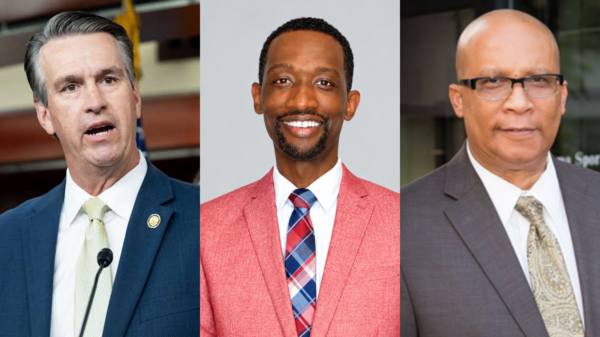
HB88, introduced by Rep. Phillip Pettus, R-Killen, would require “all written, oral, vision, and driving portions of the examination administered for purposes of obtaining or renewing a driver license must be in the English language only.”
Pettus said the policy change is necessary to improve road safety and ensure that licensed drivers can understand road signs and verbal instructions from law enforcement. Pettus argued that while the multilingual testing policy was implemented years ago under a court order, the legislature has a responsibility to revisit it.
“Sometimes the courts get it wrong. This is an effort to change that court ruling,” said Pettus.
Members of the committee voiced concerns about potential hindrances to residents across the state and questioned whether restricting the test language would meaningfully address traffic safety.
Representative TaShina Morris, D-Montgomery, suggested that the legislation was offering a sweeping change for an infrequent issue.
“We can find one or two incidents that have taken place, and we’ll come with full legislation to modify something for everyone who has come in. You’re gonna have people who coming in from everywhere. And just because you’re taking a test in your language, does not mean that you don’t understand English,” said Morris.
Representative Thomas Jackson, D-Thomasville, called the proposal “cruel and inhumane,” framing the debate in moral terms.
“In a state where we’ve got ‘In God We Trust’ in this chamber, what God are we trusting in if we’re going to be so cruel to people who don’t speak English?” said Jackson. “Why not help them learn the language instead of punishing them?”
Several lawmakers raised concerns that the bill would create additional barriers to obtaining a driver’s license, particularly for people who rely on driving to maintain employment. Rep. Tim Wadsworth, R-Arley, described the legislation as “completely wrong.”
“Our goal in the legislature should be to help people get licenses, not put roadblocks in their way. Once people get caught in the system—driving without a license, getting citations—they never get out of it.”
Wadsworth also pointed to language in the bill that says applicants “may not use a translation dictionary, an electronic device, or an interpreter to assist with the administration of the examination.”
“That’s a barrier, even if you want English-only testing, you’re not allowing tools that could help people through the process,” said Wadsworth.
Pettus explained that this language came from ALEA, and the restriction was intended to prevent cheating.
“If you allow one device, you’d have to allow them all,” said Pettus. “You could be looking up answers on a phone and claiming it’s translation.”
Wadsworth questioned whether the Legislature was attempting to override the courts rather than working within the existing legal framework.
“ALEA maybe doesn’t want to hire interpreters to help. Well, they’ve been court-ordered to do it, and if they want to change it, let them not go through the Legislature, let them go back to the court that issued that order and not go around the court system,” said Wadsworth.
The committee ultimately did not vote on the bill. The legislation was carried over to a future meeting, leaving open the possibility of amendments or further debate.